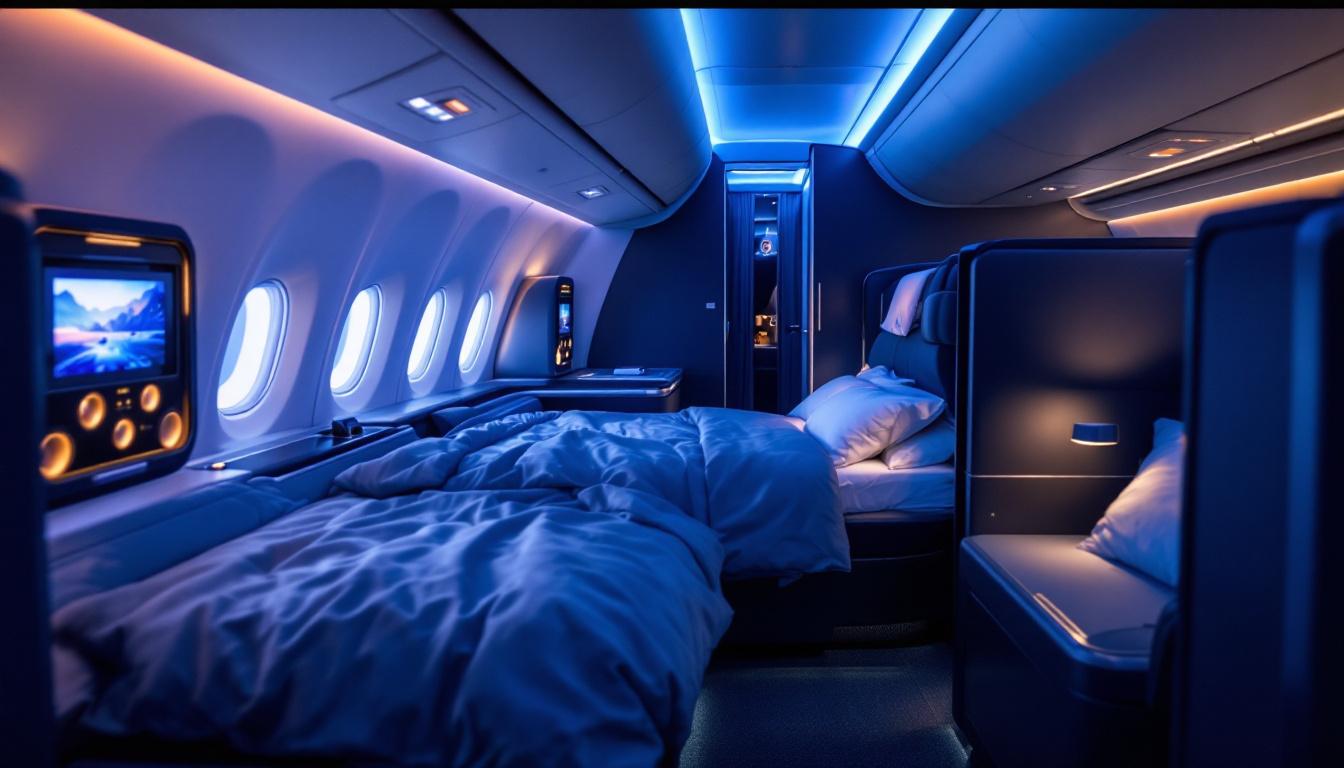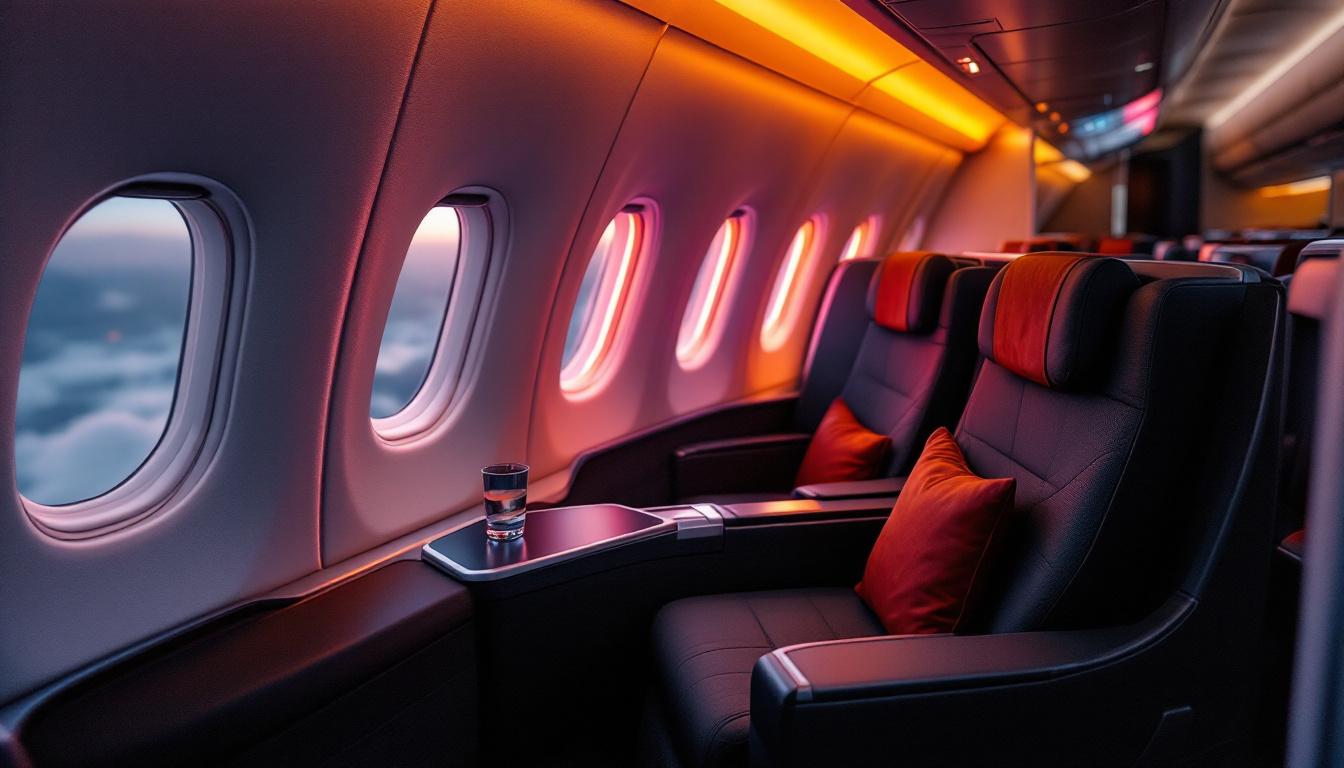
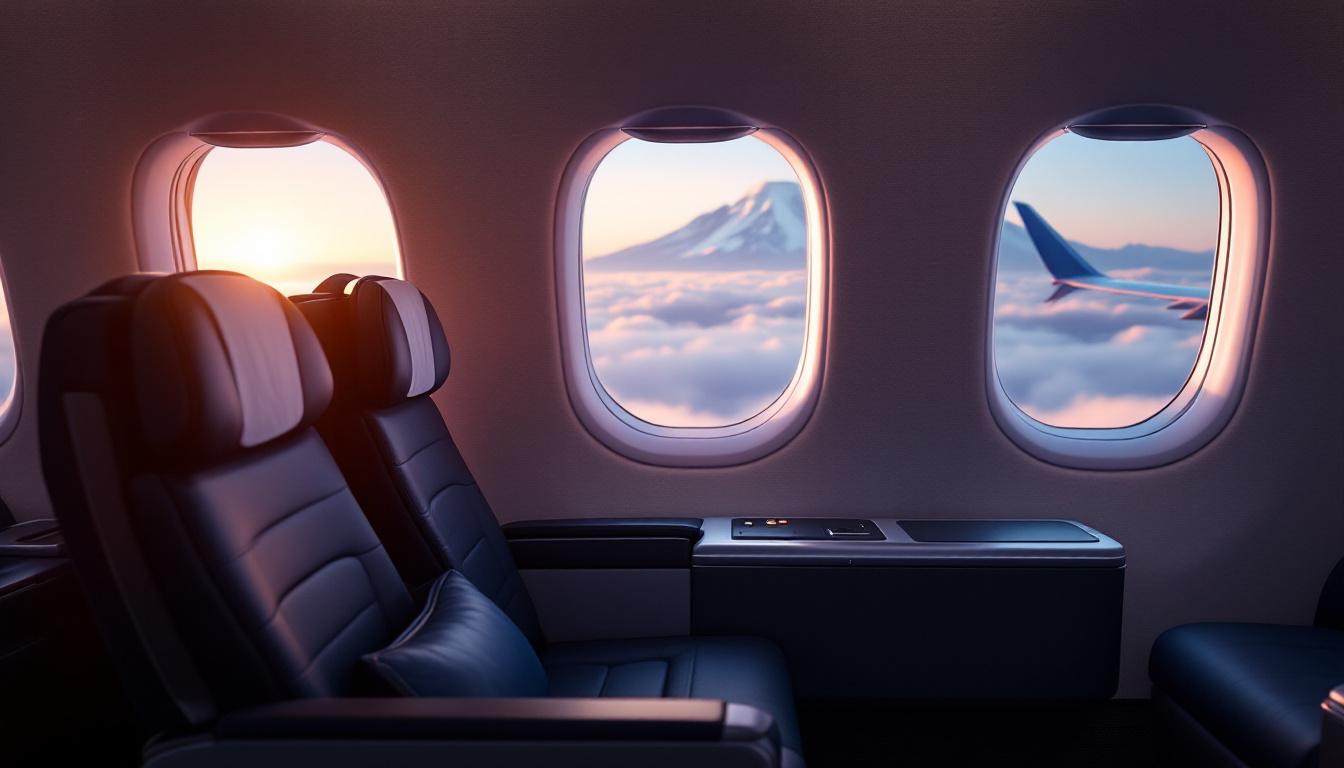
The bottom line: Hawaiian Airlines' Boeing 787-9 First Class cabin contains 34 Leihōkū Suites on the Adient Ascent seat platform, configured 1-2-1 across 9 rows of single seats on each side and 8 rows of centre pairs. Lie-flat beds are 77 inches long and 21 inches wide. The centre-suite pairs feature adjustable privacy dividers for travellers preferring to interact during the flight.
Hawaiian Airlines’ Boeing 787-9 First Class cabin — branded as Leihōkū Suites — is the carrier’s flagship long-haul premium product and the operational anchor of the post-2024 fleet renewal programme. The cabin contains 34 seats in a 1-2-1 configuration on the Adient Ascent platform, with fully lie-flat 77-inch beds, 18-inch IFE displays, and the brand’s signature Polynesian-inspired cabin finishes.
This piece is a 2026 configuration analysis of the Hawaiian 787-9 First Class — the seat platform specification, the cabin layout, the post-Alaska-merger operational context, and how the cabin sits against the peer US-carrier products on the principal Hawaii-mainland routes.
The Leihōkū Suite: Cabin Configuration
The 787-9 First Class cabin contains 34 Leihōkū Suites arranged in a 1-2-1 configuration. The cabin layout:
- 9 rows of single seats on each side of the aircraft (window-facing positions)
- 8 rows of centre seat pairs (with two seats per row)
- Total: 18 single seats on the sides plus 16 paired centre seats = 34
Every seat has direct aisle access via the 1-2-1 layout. The full 787-9 carries 300 seats: 34 First Class plus 266 Economy.
The Adient Ascent Platform
Hawaiian’s selection of the Adient Ascent platform is one of the few US-carrier deployments of the seat family. The Ascent delivers:
- Bed length: 77 inches fully lie-flat
- Seat width: 21 inches
- IFE: 18-inch personal display at every seat
- Bedding: Hawaiian-branded mattress topper, pillow, and duvet
- Centre-suite feature: Adjustable privacy dividers that can be raised or lowered between adjacent centre seats
The centre-suite privacy divider configuration is a deliberate design choice from Hawaiian, responding to the travelling-couples use case that is materially more common on Hawaii-bound routes than on most other long-haul corridors. Travellers can adjust the centre dividers to maintain privacy during sleep periods and lower them for conversation during waking hours.
The Alaska Air Group Integration
The Alaska Airlines acquisition of Hawaiian Airlines closed in September 2024. As of 2026, Hawaiian continues to operate as a distinct brand under the broader Alaska Air Group corporate structure, with integration across loyalty programmes (HawaiianMiles into Mileage Plan), network coordination, and operational alignment progressing across multi-year phases.
For travellers building Hawaii-bound premium programmes, the post-merger Hawaiian + Alaska combined network now provides one of the deeper US-mainland-to-Hawaii premium connecting networks in the market. Alaska’s mainland network feeds Hawaiian’s long-haul Pacific routes through joint scheduling and the integrating loyalty programmes, with the 787-9 Leihōkū Suite First Class as the principal premium-cabin anchor on the long-haul rotations.
Hawaiian First Class in the 2026 Hawaii-Mainland Competitive Set
The principal Hawaii-mainland competitive set for the 787-9 Leihōkū Suite cabin:
- United Polaris on selected wide-body Hawaii rotations (787-8/9, 777). United deploys variable equipment to Hawaii; specific Polaris availability depends on the day’s aircraft assignment.
- Delta One on selected wide-body Hawaii rotations (A330, 767). Delta’s Hawaii premium cabin is the Delta One reverse-herringbone or post-refresh suite, varying by frame.
- American Flagship Business on selected wide-body Hawaii rotations. American’s Hawaii premium cabin assignments rotate similarly with equipment assignment.
Hawaiian’s structural advantage on the Hawaii-mainland corridor is the dedicated 787-9 deployment as the long-haul fleet anchor. Where United, Delta, and American deploy variable equipment on Hawaii routes (sometimes wide-bodies with premium cabins, sometimes narrowbodies with First Class), Hawaiian’s 787-9 First Class is the consistent product on the rotations the aircraft operates.
For corporate travel managers building Hawaii-bound premium programmes, Hawaiian First Class on a confirmed 787-9 frame is the recommended choice on the routes the aircraft operates. On routes where Hawaiian deploys the older A330-200 fleet, the cabin product is structurally different and the comparison against the US-carrier alternatives is route-by-route.
Sources
Public reporting tracked for this analysis includes Hawaiian Airlines, The Points Guy, One Mile at a Time, Live and Let’s Fly, Aerolopa, and SeatMaps.com.
Frequently asked questions
- How is Hawaiian Airlines' 787-9 First Class configured?
- 34 Leihōkū Suites in a 1-2-1 configuration. The cabin spans 9 rows of single seats on each side of the aircraft plus 8 rows of centre seat pairs. Every seat has direct aisle access. Total 787-9 aircraft capacity is 300 seats: 34 First Class plus 266 Economy.
- What is the Adient Ascent seat platform?
- Hawaiian selected the Adient Ascent seat platform for its 787-9 Leihōkū Suites. The platform delivers fully lie-flat bed mode (77 inches long, 21 inches wide), an 18-inch IFE display at every seat, and the cabin furniture and trim that anchors the Hawaiian premium cabin brand experience. The centre-suite pairs feature adjustable privacy dividers that can be raised or lowered — a feature Hawaiian has positioned as a deliberate response to the travelling-couples use case common on Hawaii-bound routes.
- Which routes does the 787-9 operate?
- Hawaiian deploys the 787-9 on its principal long-haul international and US mainland routes from Honolulu, including selected services to East Coast US cities (JFK, BOS), West Coast US gateways (LAX, SFO, SEA), Pacific Asia (NRT, HND), and the South Pacific. Specific 787-9 route assignments rotate with the fleet's delivery cycle and the broader Hawaiian and post-merger Alaska Airlines network plan; current route assignments should be verified directly at hawaiianairlines.com.
- What is the Alaska Airlines merger status?
- The Alaska Airlines acquisition of Hawaiian Airlines closed in September 2024. Hawaiian continues to operate as a distinct brand within the Alaska Air Group corporate structure as of 2026, with network integration, loyalty programme integration (HawaiianMiles into Mileage Plan), and operational alignment progressing across multi-year phases. The 787-9 First Class product is unaffected by the merger structurally; the loyalty programme integration affects how passengers can earn and redeem miles for the cabin.
- How does Hawaiian First Class compare to peer US-carrier products on the same routes?
- On the principal Hawaii-mainland routes operated by United, Delta, and American, Hawaiian's 787-9 First Class with 1-2-1 lie-flat Leihōkū Suites is competitive against United Polaris (varies by aircraft type), Delta One (on selected wide-body assignments), and American Flagship Business deployments on the same corridors. Hawaiian's structural advantage on these routes is the consistent 787-9 deployment as the carrier's long-haul wide-body anchor; the US carriers' Hawaii route equipment is more variable.