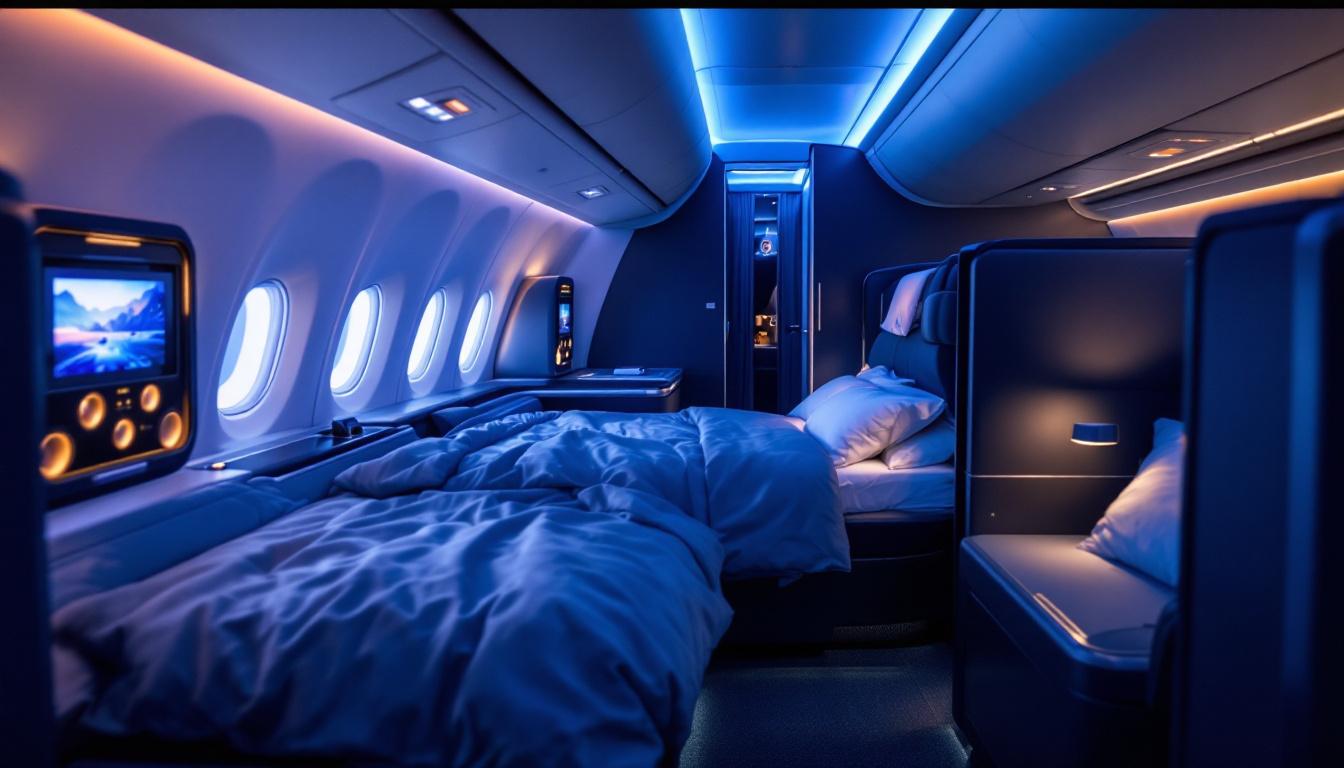
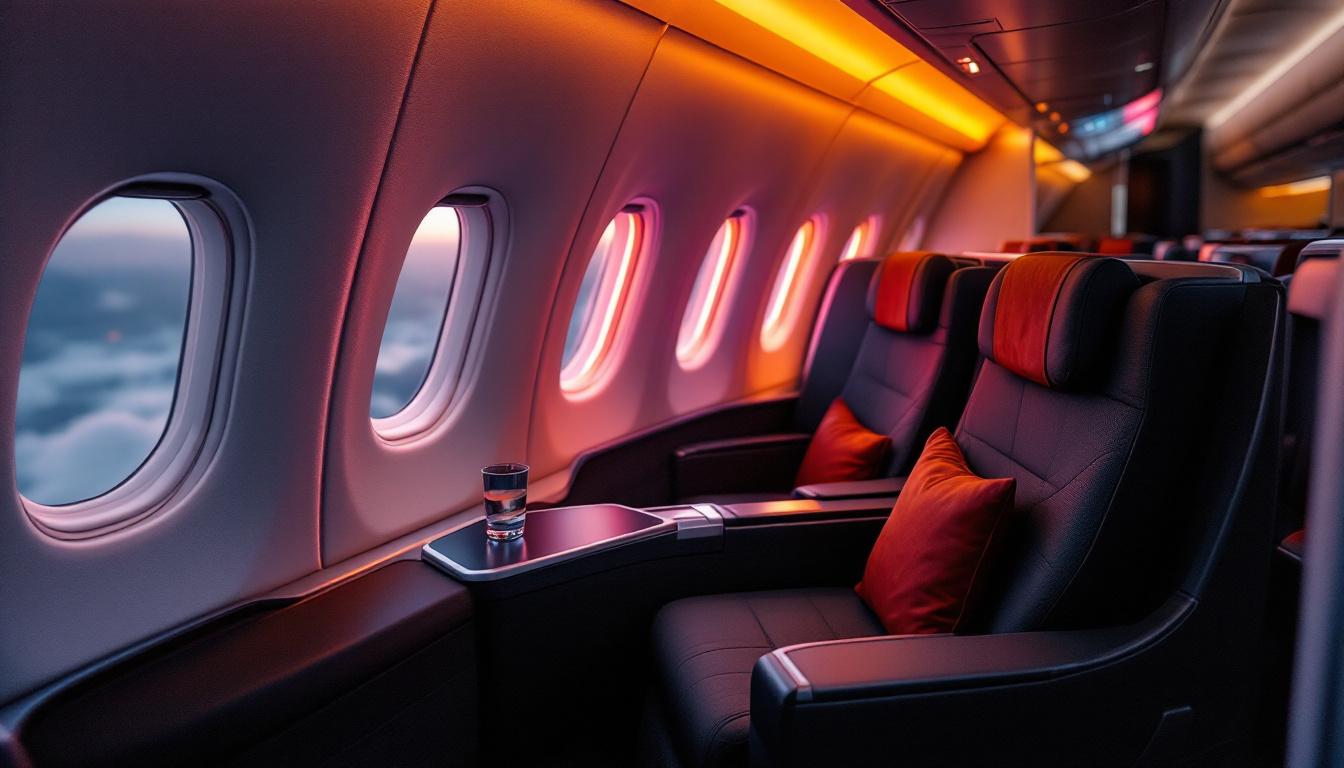
The bottom line: Clase Premier on the Aeromexico 787-9 is a 36-seat 1-2-1 reverse-herringbone cabin on the Collins Aerospace Super Diamond platform — 30 seats in the forward cabin and 6 in a small rear mini-cabin. Pitch is 60 inches; seat width 20 inches. Every seat has direct aisle access. The platform is competitive against Avianca and LATAM's South American business class peers, with the Delta-Aeromexico joint venture providing the principal SkyTeam loyalty differentiator.
Aeromexico’s Clase Premier on the Boeing 787-9 is the carrier’s principal long-haul premium-cabin product and the operational anchor of its post-Chapter 11 long-haul network. The cabin operates in a 1-2-1 reverse-herringbone configuration on the Collins Aerospace Super Diamond seat platform, with 36 total seats distributed across a 30-seat forward cabin and a 6-seat rear mini-cabin.
This piece is a 2026 configuration analysis of the Clase Premier 787-9 cabin — the seat platform specification, the operational context of the post-Chapter 11 Aeromexico, and how the cabin sits within the Delta-Aeromexico joint venture and the broader SkyTeam network.
The 787-9 Cabin Configuration
Aeromexico’s 787-9 Clase Premier cabin contains 36 seats arranged in a 1-2-1 reverse-herringbone configuration. The cabin splits into two zones: 30 seats in the forward cabin spanning the majority of the business class footprint, and 6 seats in a small rear mini-cabin behind the principal galley. The 1-2-1 layout provides direct aisle access from every seat.
The seat platform is the Collins Aerospace Super Diamond — the same underlying platform deployed by American Airlines on the 777-300ER Flagship Business, Cathay Pacific on the A330 business class, and several other operators globally. The Super Diamond is a mature, well-established reverse-herringbone seat that delivers reliable hardware quality without the closed-suite features of the newer Vantage XL Plus or Thompson VantageSolo platforms.
The published seat dimensions: 60 inches of pitch and 20 inches of seat width. The configuration delivers lie-flat bed mode for sleep on long-haul rotations, with the cabin styling using Aeromexico’s signature deep blue and accent purple colourway.
The Delta-Aeromexico Joint Venture
The Delta-Aeromexico joint venture is the principal commercial framework underwriting Aeromexico’s long-haul network. The JV coordinates schedule, pricing, and revenue share on US-Mexico cross-border services and provides the SkyTeam loyalty infrastructure that gives Aeromexico its principal differentiator against the South American carrier peer set.
For SkyMiles members building US-Mexico premium-cabin programmes, Clase Premier on a JV-coordinated Aeromexico route is structurally accessible through SkyMiles award redemption and the broader SkyTeam award framework. The redemption math varies across routes and calendar windows; the principal use case is the high-yield US-Mexico business corridor where SkyMiles balances can fund Clase Premier without committing to a Delta-metal rotation.
Clase Premier in the 2026 Latin America Carrier Set
In 2026, Clase Premier on the 787-9 is one of three principal South and Central American business class products operating with 1-2-1 direct-aisle-access seating. The peer set:
- LATAM Premium Business on the Vantage XL-equipped 787-9: 30 seats in 1-2-1 staggered configuration. Materially comparable on hardware to Aeromexico Clase Premier.
- Avianca Business Class on the Safran Cirrus-equipped 787-8: 28 seats in 1-2-1 reverse herringbone. Also competitive on hardware.
Copa Dreams Class on the 737 MAX 9 operates a structurally different narrowbody-based product and sits in a separate competitive category. The closed-suite competitive set (Delta One Suite, American Flagship Suite, Polaris 2.0, JetBlue Mint Suite, BA Club Suite, Qatar Qsuite) sits a tier above all three South American 1-2-1 platforms on the cabin hardware differentiation that closed doors provide.
For corporate travel managers building Mexico-bound or Central America-bound premium programmes, Clase Premier on the 787-9 is a competent recommendation with the Delta-Aeromexico JV loyalty economics adding structural value for SkyMiles-aligned travellers.
Sources
Public reporting tracked for this analysis includes Upgraded Points, The Points Guy, Aeromexico, SeatMaps.com, and AwardFares.
Frequently asked questions
- How is Aeromexico Clase Premier configured on the 787-9?
- 36 seats in 1-2-1 reverse-herringbone configuration, with 30 seats in the forward cabin and a 6-seat rear mini-cabin. The seat platform is the Collins Aerospace Super Diamond. Every seat has direct aisle access. Cabin pitch is 60 inches; seat width is 20 inches.
- Where does the Aeromexico 787-9 fit in the broader fleet?
- Aeromexico operates the 787-9 as the principal long-haul wide-body, alongside the older 787-8. Both feature the same Clase Premier reverse-herringbone product but on different sub-fleet seat platforms. The 787-9 is the carrier's most-deployed long-haul platform on routes from Mexico City to North America, Europe, and selected Asia-Pacific and South American destinations.
- How does Clase Premier compare to peer Latin American business class products?
- On hardware, Clase Premier on the 787-9 is broadly comparable to LATAM Premium Business on the Vantage XL-equipped 787-9 and to Avianca's Safran Cirrus-equipped 787-8. All three deliver 1-2-1 direct-aisle-access business class seating. The Delta-Aeromexico joint venture provides the principal SkyTeam loyalty linkage and differentiates Aeromexico from the broader South American carrier set on US-Mexico and connecting itineraries through the Delta SkyMiles network.
- What is the MEX-NLU split and how does it affect operations?
- Aeromexico operates a split-hub configuration between Mexico City International (MEX, also known as Benito Juárez) and Felipe Ángeles International (NLU), the secondary Mexico City airport that opened in 2022. The split is a function of federal aviation policy and capacity allocation rather than a carrier-driven operational choice. NLU-departing rotations require materially different ground-transport timing from central Mexico City versus MEX-departing rotations.