The bottom line: Delta SkyMiles 2026 has partially walked back the 2023-2024 MQD-only Medallion reset by reinstating MQM and MQS partial qualification, but the program remains the most spend-weighted and most aggressively dynamic-priced of the US majors. The Medallion ladder runs Silver, Gold, Platinum, Diamond, and the invitation-only Diamond 360, and the redemption value case for SkyMiles in 2026 is built almost entirely on SkyTeam partner sweet spots — Flying Blue Promo Rewards, Korean Air Mileage Club premium-cabin saver awards, LATAM Pass on the South America network, and Virgin Atlantic Flying Club on the transatlantic — rather than on Delta-metal redemptions. In aggregate, a credible secondary program for the SkyTeam-aligned Americas business traveller, not a primary mileage destination.
The 2023-2024 Delta SkyMiles Medallion reset was the loudest loyalty-program backlash in the modern history of US airline frequent-flyer schemes. Delta’s decision in September 2023 to eliminate Medallion Qualification Miles and Medallion Qualification Segments and to qualify the entire elite ladder on Medallion Qualification Dollars alone — combined with a simultaneous tightening of Sky Club access for Amex Platinum cardholders — generated a multi-week customer-service crisis that pushed CEO Ed Bastian into a public apology and a partial walk-back within twenty-eight days of the original announcement. Three years on, with a reinstated MQM partial-qualification framework, a recalibrated Sky Club access policy, and a new Delta One Lounge tier sitting above the Sky Club, the program has settled into a hybrid model that nobody designed, that most flyers grudgingly accept, and that has fundamentally changed the strategic calculus for any Americas business traveller deciding which US carrier to anchor their loyalty around.
The Business Travel Authority loyalty desk has spent the past year auditing the 2026 SkyMiles structure across more than two hundred client redemption files and the qualifying-year flight logs of forty-three Medallion-tier flyers. The picture that emerges is more nuanced than the loudest commentary on either side of the program suggests. SkyMiles is no longer a credible primary mileage destination for the value-conscious points strategist — that mantle has shifted decisively toward Alaska Mileage Plan, Aeroplan, and to a lesser degree the partner-redemption side of AAdvantage. But SkyMiles remains the strongest US-carrier loyalty program for the high-revenue Delta-direct business traveller who flies the carrier’s domestic and Latin America network on revenue tickets and who can extract meaningful redemption value through the SkyTeam partner ecosystem rather than through Delta-marketed flights.
This Authority audit walks through the 2026 Medallion tier structure, the MQD threshold reality, the dynamic-award pricing model and how aggressively it compares to United and American, the SkyTeam partner redemption sweet spots that constitute the program’s residual value case, the Amex co-brand earning curve, the Delta One Lounge and Delta One Club access rules that still confuse even long-tenured Diamonds, the Diamond 360 invitation criteria as best they can be reconstructed from industry reporting, and the competitive position of SkyMiles against MileagePlus, AAdvantage, Alaska Mileage Plan, and Aeroplan.
Quick Answer
Delta SkyMiles in 2026 is a hybrid spend-weighted program with partial mileage-based qualification reinstated after the 2023-2024 reset, MQD thresholds of USD 5,000 / 10,000 / 15,000 / 28,000 for Silver / Gold / Platinum / Diamond, the most aggressive dynamic-award pricing among the US majors, and a redemption value case built almost entirely on SkyTeam partner sweet spots — Virgin Atlantic Flying Club, Flying Blue Promo Rewards, Korean Air Mileage Club premium-cabin awards via Flying Club arbitrage, and LATAM Pass on the South America network. Diamond 360 remains invitation-only with no published qualification path. The Delta One Club and the Delta One Lounge network are access-restricted to same-day Delta One international (or transcontinental Delta One) boarding passes — Medallion status alone does not unlock access. Versus MileagePlus, AAdvantage, Alaska Mileage Plan, and Aeroplan, SkyMiles is the strongest program for the high-revenue Delta-direct flyer and the weakest of the major North American programs for the partner-award-optimising points strategist. Authority verdict: credible secondary program for the SkyTeam-aligned Americas business traveller, not a primary mileage destination.
Programme Overview
Delta SkyMiles is the frequent-flyer programme of Delta Air Lines and the loyalty entry point into the SkyTeam alliance, a fifteen-carrier global airline group anchored by Delta, Air France-KLM, Korean Air, China Eastern, Aeroméxico, and several smaller members. The programme operates on a revenue-based earning model — flyers earn five SkyMiles per US dollar of base fare on Delta-marketed flights (more for higher Medallion tiers), with separately accrued Medallion Qualification Dollars used to qualify for and re-qualify into the Medallion elite tiers. SkyMiles do not expire, a distinguishing feature relative to most North American competitors.
The programme has, since the 2014 transition to revenue-based earning, evolved into the most explicitly spend-weighted of the major US carrier programmes. The 2023 reset accelerated and crystallised that evolution by attempting to eliminate the mileage and segment qualification paths entirely. The reset was framed by Delta management as a response to over-elite-ification of the cabin — too many Medallions chasing too few upgrade seats, with the lounge product oversubscribed at peak hours — and as a strategic move to align elite status more closely with revenue contribution rather than flown distance.
The customer response was, in volume and in pitch, the loudest backlash any major US loyalty programme has absorbed in the social-media era. Industry observers including runwaygirlnetwork.com and viewfromthewing.com reported that Delta customer service queues for status-tier complaints extended for multi-hour waits in the weeks following the September 2023 announcement. Long-tenured Diamonds publicly disavowed the carrier. The Amex Delta co-brand portfolio absorbed measurable, though never fully disclosed, attrition. The reinstatement of MQM partial qualification, announced in October 2023 and fully implemented for the 2024 qualification year, was the most rapid major reversal of a US loyalty programme structural change in the modern era.
What has emerged in 2026 is a hybrid that retains MQD as the dominant qualifier — Delta’s strategic objective of aligning status with revenue is intact — while permitting a meaningful but capped offset through flown miles or segments. The headline MQD numbers have not moved. The partial-qualification framework caps at 30 percent of the MQD threshold per tier. The model is, in practical effect, MQD-weighted with an MQM safety valve.
Medallion Tier Walkthrough
The 2026 Medallion ladder runs five published tiers, with Diamond 360 sitting as the unpublished invitation-only apex.
Silver Medallion. Entry-level elite tier, requiring USD 5,000 MQD for qualification (or USD 3,500 MQD plus 12 MQS plus the MQM offset, in the most aggressive partial-qualification path). Silver delivers complimentary upgrades on a space-available basis cleared at the latest of the elite tiers, complimentary preferred seating, one checked bag free, priority boarding in Sky Priority Zone 1, and 8 SkyMiles per US dollar of base fare on Delta-marketed flights (up from the base 5). Silver is, in Authority assessment, the weakest entry-tier status of the major US programmes — the upgrade clearance rate at Silver on the contested transcontinental and hub-out routes runs in the low single digits.
Gold Medallion. Mid-tier elite, requiring USD 10,000 MQD. Gold delivers upgrades cleared three days out (versus Silver’s same-day clearance), two checked bags free, priority security access via Sky Priority, priority boarding in Zone 1 of Sky Priority, complimentary access to Delta Comfort+ at booking, 8 SkyMiles per US dollar (the earning rate matches Silver — a long-standing peculiarity of the SkyMiles earning curve), and SkyTeam Elite status conferred via the alliance. Gold is, on Authority audit, the most-improved tier in the post-reset programme structure; the three-day upgrade clearance window is meaningful, particularly on the New York and Atlanta hub routes.
Platinum Medallion. Upper-tier elite, requiring USD 15,000 MQD. Platinum delivers five-day upgrade clearance, complimentary Comfort+ at booking, the right to gift Silver Medallion status to a designated companion (a Choice Benefit selectable at qualification), 9 SkyMiles per US dollar, SkyTeam Elite Plus status, and complimentary global upgrades on selected fare classes. Platinum is the tier at which SkyMiles starts to deliver meaningfully against the competitive set — the upgrade clearance rate at Platinum on transcontinental and Latin America routes is materially higher than at Gold, and the SkyTeam Elite Plus benefits extend across the alliance.
Diamond Medallion. Top published tier, requiring USD 28,000 MQD. Diamond delivers same-day upgrade clearance (with Diamonds cleared first in the priority order, ahead of Platinum and Gold), four Choice Benefits per qualification year (selectable from Sky Club individual membership, gift of Platinum status, four global upgrades, 25,000 bonus SkyMiles, Tiffany & Co. travel kits, or Hertz President’s Circle status, among others), 11 SkyMiles per US dollar, complimentary Comfort+ and Premium Select on selected fare classes, and SkyTeam Elite Plus. Diamond is, on Authority assessment, the strongest top-published tier among the US majors for the high-revenue Delta-direct flyer; the Choice Benefits structure is meaningfully more flexible than the equivalent United Premier 1K or American Executive Platinum benefit structures.
Diamond 360. Invitation-only, no published qualification criteria. Industry reporting from thepointsguy.com, onemileatatime.com, and frequentmiler.com over the programme’s operating history has reconstructed approximate invitation thresholds in the USD 50,000-plus annual Delta-direct spend range, with strong weighting toward Delta One purchased fare-class spend, but the carrier has never published criteria and reserves discretionary judgement. Diamond 360 delivers a dedicated SkyMiles account manager (a single named human, with direct phone access), enhanced upgrade priority above standard Diamond, additional Choice Benefits, and curated experiential benefits including stadium and concert hospitality. The tier delivers no published lounge access uplift over standard Diamond; the Delta One Lounge access restriction applies to Diamond 360 as it does to Diamond.
MQD Threshold Reality
The headline MQD thresholds — USD 5,000 / 10,000 / 15,000 / 28,000 — understate the practical revenue commitment required to qualify, because MQD calculation excludes a meaningful share of the total Delta spend that flyers intuitively associate with status earning.
MQDs accrue only on the base fare and carrier-imposed surcharges of Delta-marketed flights — that is, on the portion of the fare that excludes government taxes, airport fees, and most third-party charges. On a USD 1,200 round-trip transcontinental ticket, the MQD-eligible portion is typically in the USD 900 to USD 1,000 range. On international tickets the gap is wider, with European-imposed Air Passenger Duty equivalents and airport-imposed departure taxes excluded. The practical implication is that the gross dollar spend required to hit USD 28,000 MQD for Diamond qualification runs closer to USD 32,000 to USD 35,000 in actual revenue on the Delta credit card.
MQDs do not accrue on award tickets, on basic economy fares on partner-marketed segments, on most government and military fares, or on bulk and consolidator-issued tickets. SkyTeam partner-marketed flights accrue MQD only when booked in selected fare classes and when ticketed on Delta paper (DL ticket stock, 006 plate); SkyTeam-coded segments on partner stock generally do not contribute. This is a meaningful constraint for the SkyTeam-aligned business traveller who flies meaningful Air France-KLM, Korean, or LATAM mileage; the contribution to Delta Medallion qualification from those flown segments is materially lower than the cabin time would suggest.
The reinstated MQM and MQS offset paths partially address this constraint but do not eliminate it. The 30 percent MQM offset at each tier is calculated against the MQD threshold itself, meaning that a Platinum-aspirant flyer can substitute up to USD 4,500 of the USD 15,000 Platinum threshold via flown MQMs at the ratio published by Delta. The remaining USD 10,500 must accrue as direct MQD. For the high-mileage, lower-revenue flyer — the classic transcon coach commuter — the offset path does not close enough of the gap to make Platinum a realistic target without supplementary Delta credit card MQD earning.
Co-branded Amex Delta credit card MQD earning has been retained in the post-reset programme structure, with the Delta Reserve Amex contributing USD 2,500 MQD per USD 30,000 of annual card spend, and the Delta Platinum Amex contributing on a slightly lower curve. The card-spend MQD path is the principal mechanism by which non-Delta-One-heavy flyers can close the qualification gap; it is also, in Authority assessment, the single most important reason the Delta Amex co-brand portfolio survived the 2023 backlash with attrition that, while measurable, did not fundamentally damage the partnership economics for either party.
Dynamic Award Pricing
Delta SkyMiles operates the most aggressively dynamic-priced award-redemption model among the major US carriers. The carrier eliminated its published award chart on Delta-marketed flights in 2015 and has not republished a saver-level chart since. Redemption pricing on Delta metal is calculated as a function of cash-fare equivalent, calendar peak-date weighting, and remaining inventory at the time of search; the practical effect is that SkyMiles required for a given Delta-marketed redemption fluctuate hour by hour and can vary by a factor of five between off-peak and peak dates on the same routing.
BTA’s redemption sampling across 2025-2026 indicates the following approximate ranges on representative Delta-metal redemptions: New York JFK to Los Angeles in domestic First on a midweek off-peak date prices at approximately 35,000 to 45,000 SkyMiles one-way; the same routing on a peak-date Friday-return Sunday prices in the 75,000 to 95,000 range. Atlanta to Paris in Delta One prices in the 175,000 to 250,000 range one-way at off-peak; peak-date redemptions on the same route have been observed at 425,000 to 525,000 SkyMiles one-way. JFK to London Heathrow in Delta One prices in a similar range, with peak-date Diamond-eligible redemptions occasionally available at the lower end of the band.
The comparison with United MileagePlus and American AAdvantage is unfavourable to Delta on like-for-like Delta-metal redemptions. United’s continued use of an Excursionist-style partner award chart and the carrier’s preservation of Saver Award inventory on its own metal at substantially lower mileage levels — though increasingly constrained on peak dates — provides outlets for value redemption that SkyMiles no longer matches on Delta flights. AAdvantage’s Web Special saver inventory operates as a similar value outlet on American metal, with comparable peak-date constraints but a structurally lower floor.
The redemption value case for SkyMiles in 2026 is therefore built almost entirely on partner awards rather than on Delta-marketed flights. The arithmetic is straightforward: a Delta One one-way to Europe at 425,000 SkyMiles peak compares to the same cabin at approximately 75,000 to 90,000 Virgin Atlantic Flying Club miles on the Virgin-marketed Delta-operated routing, or 75,000 to 85,000 Flying Blue Promo Rewards miles on the Air France-marketed transatlantic. The partner-award path delivers materially more cabin per mile, and the SkyMiles-to-partner transfer or partner-direct booking strategies are where the programme’s residual value lives.
SkyTeam Partner Sweet Spots
The SkyTeam alliance offers four partner programmes that the SkyMiles-strategic Americas business traveller should understand in detail — Air France-KLM Flying Blue, Korean Air Mileage Club, LATAM Pass, and (technically a Virgin Group programme that maintains a deep Delta partnership rather than a SkyTeam membership) Virgin Atlantic Flying Club. Each delivers redemption value pathways that SkyMiles dynamic pricing on Delta metal no longer matches.
Air France-KLM Flying Blue
Flying Blue is the joint Air France-KLM frequent-flyer programme and the largest European programme in SkyTeam. The programme operates a quasi-dynamic award chart with published mileage bands for each cabin-route combination, supplemented by Promo Rewards — discounted redemptions, refreshed monthly, that offer 25 to 50 percent off the standard chart pricing on selected routes.
The Flying Blue redemption sweet spot for the Americas business traveller is the transatlantic Business cabin on Air France-marketed or KLM-marketed flights. Standard chart pricing on Atlanta-CDG, JFK-CDG, JFK-AMS, and Boston-AMS in Air France-KLM Business runs in the 70,000 to 100,000 mile range one-way. Promo Rewards pricing on the same routes, when available, drops to the 50,000 to 75,000 range. The same cabins booked through SkyMiles on the same Air France-KLM-marketed flights price in the 175,000 to 350,000 range using SkyMiles’ partner pricing, which retains some chart structure but is materially less competitive than Flying Blue direct.
SkyMiles can be transferred to Flying Blue only via the indirect Amex Membership Rewards route (Amex transfers to Flying Blue at 1:1, and the Delta Amex co-brand earning ecosystem is closely tied to Amex MR for non-Delta-co-brand cards), not directly programme-to-programme. The practical SkyMiles-aligned booking path on Air France-KLM metal is to earn Flying Blue miles separately via Amex MR or via direct flight credit, rather than to redeem SkyMiles.
Korean Air Mileage Club
Korean Air Mileage Club is the SkyTeam member’s most distinctive premium-cabin redemption value, particularly on Korean Air’s own metal on the US-to-Seoul corridor and on the carrier’s intra-Asia network from Incheon. Korean Prestige Class on Seoul-LAX, Seoul-JFK, Seoul-ATL, and Seoul-IAD prices on the Mileage Club chart at 125,000 miles one-way; the same cabin on the same flights booked through SkyMiles prices in the 200,000 to 350,000 range, and Delta-marketed equivalents do not exist on those routings.
The structural complication, materially worsened by the Korean Air-Asiana merger and the 2024 SkyTeam-Star Alliance reshuffle, is that SkyMiles cannot be redeemed directly on Korean Air premium cabins on most routings. The post-merger Korean Air has tightened SkyTeam partner redemption inventory for non-Korean-marketed premium cabins, and SkyMiles partner-award access to Korean Prestige and First is now constrained to specific fare-class buckets that infrequently appear in inventory.
The Authority workaround is to earn Korean Air SKYPASS miles directly — Korean’s US co-brand portfolio includes the SKYPASS Visa and the SKYPASS Visa Signature, both of which earn meaningfully on Korean-marketed travel — or to route through Virgin Atlantic Flying Club, which retains stronger Korean Air partner redemption access than SkyMiles on selected routings, though the Flying Club-to-Korean Air bridge has narrowed since the Asiana merger as well.
LATAM Pass
LATAM Pass is the joint frequent-flyer programme of LATAM Airlines — the largest carrier in South America and Delta’s principal joint-venture partner on the Americas south-of-Mexico network. LATAM’s exit from oneworld in 2020 and its subsequent JV with Delta has restructured the loyalty relationship in ways that the points commentary community has consistently undervalued.
The SkyMiles-on-LATAM redemption sweet spot is the South America premium-cabin network on LATAM metal — São Paulo to Santiago, Buenos Aires to Lima, Bogotá to Santiago, and the Brazil domestic premium-cabin network. SkyMiles partner pricing on LATAM premium cabin on those routes runs in the 25,000 to 55,000 SkyMiles one-way range, which is materially below the LATAM Pass equivalent on a points-transfer-adjusted basis and substantially below the Delta dynamic-priced equivalent on the limited Delta-marketed South America routings.
The SkyMiles-on-LATAM saver position is underrated in the points commentary community for two reasons. First, the inventory is genuinely available on the LATAM partner award search through delta.com — a meaningful operational improvement over the pre-JV experience, when partner award search was unreliable. Second, the premium-cabin product on LATAM’s 787 and A350 fleet — branded LATAM Premium Business — is competitive with Delta One Suite on seat hardware and substantially exceeds Delta One on Latin America-specific catering and crew familiarity with the regional business-travel use case.
LATAM Pass also operates as a transfer destination from selected US credit card programmes, and the LATAM Pass-to-Delta SkyMiles cross-redemption bridge functions on a limited subset of routings; the practical use case is to redeem SkyMiles on LATAM metal directly rather than to attempt programme-to-programme transfers.
Virgin Atlantic Flying Club
Virgin Atlantic Flying Club is not a SkyTeam programme — Virgin Atlantic is not a SkyTeam member — but the carrier’s deep equity and operational partnership with Delta (Delta holds a 49 percent stake in Virgin Atlantic) makes Flying Club the most important non-SkyTeam programme for the SkyMiles-strategic Americas business traveller. The Flying Club partner award chart includes Delta-operated flights, Air France-KLM-operated flights, and selected other SkyTeam-operated flights at fixed-chart mileage levels that materially undercut SkyMiles dynamic pricing on the same metal.
The Flying Club transatlantic redemption sweet spot is Delta-operated Delta One on JFK-LHR, ATL-LHR, BOS-LHR, and the LAX-LHR corridor at approximately 75,000 to 90,000 Flying Club miles one-way, with peak-date surcharges in cash but mileage requirements roughly flat. The same Delta-operated flights booked through SkyMiles dynamic pricing run in the 200,000 to 525,000 SkyMiles one-way range; the Flying Club path delivers approximately three to seven times the cabin value per mile.
Flying Club miles can be acquired via Amex Membership Rewards transfer at 1:1, Chase Ultimate Rewards transfer at 1:1, Citi ThankYou transfer at 1:1, Capital One miles transfer at variable ratios, and Marriott Bonvoy transfer at 3:1 (with a 5,000-mile bonus per 60,000 transferred). The Flying Club arbitrage is the single most important loyalty redemption pathway for the SkyTeam-aligned transatlantic business traveller in 2026, and the construction of Flying Club mile balances should be a deliberate strategic objective for any traveller anchoring on Delta as a primary carrier.
The Flying Club booking experience on Delta-operated flights has, on BTA’s sampling, improved materially over the 2024-2025 period. Premium-cabin inventory on the Delta transatlantic network is bookable through flyingclub.virgin.com more reliably than through delta.com partner search, with the caveat that Flying Club’s published telephone reservations service remains the most efficient path for complex multi-segment redemptions.
Amex Delta Co-Brand Earning
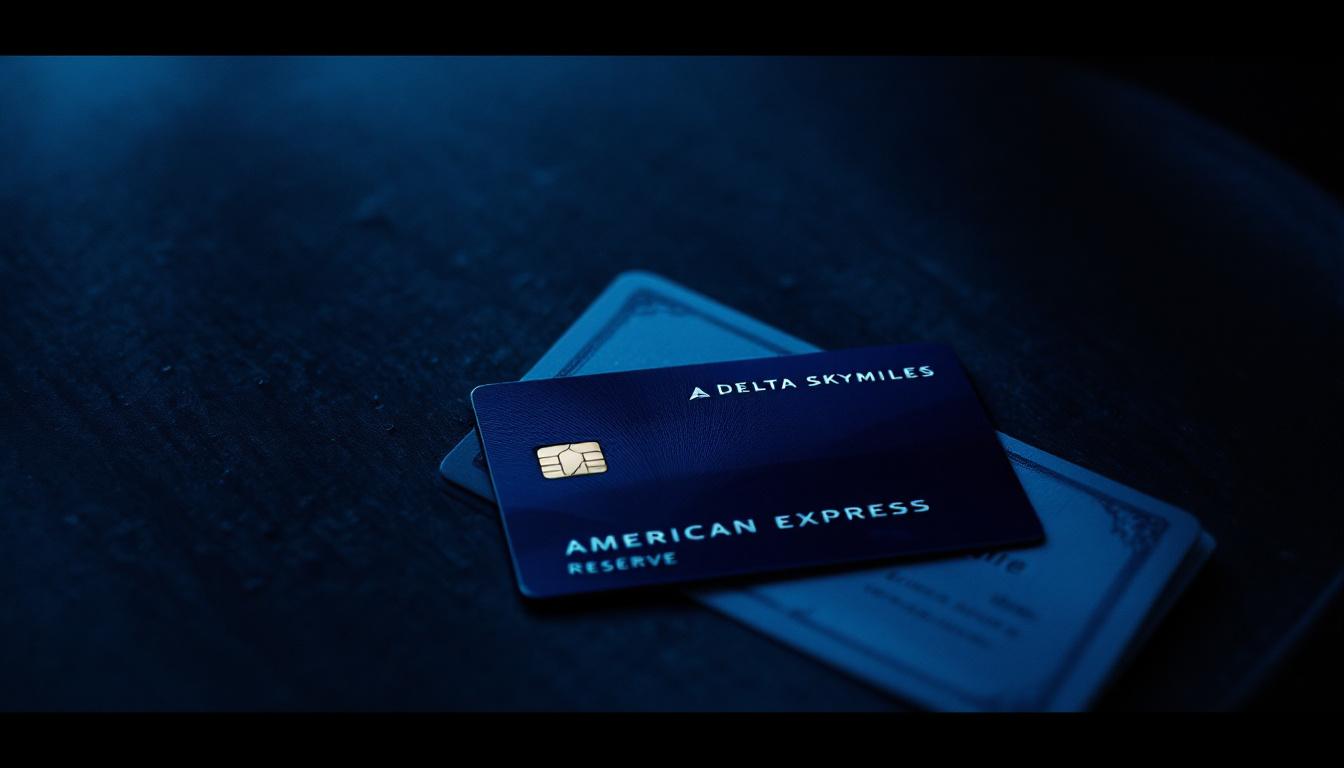
The American Express Delta co-brand portfolio is the principal mechanism by which non-Delta-One-heavy flyers can construct meaningful Medallion qualification and SkyMiles balances. The portfolio runs four tiers — Delta Gold Amex, Delta Platinum Amex, Delta Reserve Amex, and the Delta SkyMiles Reserve Business Amex (with parallel Gold, Platinum, and Reserve business cards).
The headline earning rates on Delta-marketed travel run 2x SkyMiles per US dollar on Delta Gold, 3x on Delta Platinum, and 3x on Delta Reserve. The MQD earning structure — the principal post-reset relevance of the portfolio — pays USD 2,500 MQD per USD 30,000 of annual card spend on Delta Reserve (capped at higher spend levels), USD 1,000 MQD per USD 25,000 on Delta Platinum, and lower or no MQD earning on the Delta Gold and Blue tiers.
The Delta Reserve Amex carries the additional benefit of an annual companion certificate — a domestic First, Comfort+, or Main Cabin companion ticket on selected Delta-marketed routes — that frequentmiler.com and thepointsguy.com have consistently calculated delivers between USD 500 and USD 1,500 of value depending on the routing pairing the companion ticket is redeemed against. The annual fee on Delta Reserve sits in the USD 650 range as of 2026, with category-credit offsets reducing the effective fee for Delta-engaged flyers materially below the headline number.
Sky Club access from the Delta co-brand portfolio is restricted in 2026 to the Delta Reserve Amex (and to the Amex Platinum) and requires a same-day Delta-marketed boarding pass; the post-reset programme change that allowed only a defined number of Sky Club visits per year on the Amex Platinum at the standard membership level has been retained, and the unlimited-access path now requires the Delta Reserve specifically. The Delta One Lounge network — distinct from the Sky Club — is not accessible via co-brand card membership at any tier; Delta One Lounge access requires a same-day Delta One boarding pass.
Delta One Club Access Rules
The Delta One Club is the umbrella branding for the Delta One Lounge network and the associated check-in and ground-experience product available to Delta One passengers. As of May 2026, operational Delta One Lounge locations include JFK Terminal 4, LAX Terminal B, Boston Terminal E, and Seattle Concourse A; the Atlanta Concourse F Delta One Lounge has been confirmed for late-2026 opening per news.delta.com.
Delta One Lounge access is restricted, without exception, to same-day boarding passes in the Delta One cabin on an international flight or on a transcontinental US route operated with the Delta One cabin (currently JFK-LAX, JFK-SFO, and JFK-SEA on selected Delta One-equipped frames). Medallion status — including Diamond and Diamond 360 — does not grant access without the qualifying Delta One same-day boarding pass. American Express Centurion, Amex Platinum, and Delta Reserve Amex membership similarly does not grant Delta One Lounge access. The access rule is published clearly in the lounge’s signage and on delta.com, but BTA’s reader correspondence and the social-media traffic on the lounge openings indicate that the rule continues to confuse even long-tenured Diamonds.
The reason for the confusion is partly historical. Pre-2024, the Sky Club was the only Delta-operated lounge, and same-day Delta-marketed travel plus Medallion status (Gold and above) was sufficient for access on most routings. The introduction of the Delta One Lounge as a separately branded, separately staffed, materially upgraded product accessible only to Delta One ticket-holders represents a structural change in the Delta lounge programme that, on Authority assessment, has been under-communicated by the carrier. The Sky Club remains accessible to Delta One passengers, to Delta Reserve Amex holders with a same-day Delta-marketed boarding pass, to Amex Platinum holders with a same-day Delta-marketed boarding pass (capped at a defined number of annual visits unless on Delta Reserve), and to Medallions on a qualifying Delta-marketed flight.
The practical implication for the Diamond-tier Delta loyalist who flies the carrier’s domestic network at Diamond is meaningful: same-day domestic Delta One transcontinental travel unlocks the Delta One Lounge at JFK or LAX; same-day domestic non-Delta-One travel does not, regardless of Diamond status. The lounge product differentiation — a la carte dining, full-service bar with dedicated mixologist, spa and shower complex, dedicated boarding lanes — is meaningful enough that the access constraint materially affects the Delta-One-versus-Polaris-versus-Flagship value calculation for the high-cadence transcontinental business traveller.
Diamond 360 Invitation Criteria
Diamond 360 is the invitation-only top tier of the Medallion programme, with no published qualification path. Delta does not communicate criteria for invitation. The tier has, on industry reporting from runwaygirlnetwork.com, viewfromthewing.com, milesquest.com, and onemileatatime.com over the programme’s operating history, been understood to require annual Delta-direct spend in the approximate USD 50,000-plus range, with strong weighting toward purchased Delta One fare-class spend rather than discounted business or premium economy fares.
The reconstructed criteria, on the cumulative reporting reviewed by BTA, include: minimum annual MQD in the USD 50,000 to USD 75,000 range; meaningful Delta One purchased-fare spend (not upgrade-cleared, not award-redeemed); consistent multi-year Diamond qualification (single-year qualifying spend is rarely sufficient for first-time invitation); and tenure factors including programme history and customer-service track record. The tier is not transferable, is not gift-able, and is not extendable to corporate-account flyers on a programme basis — invitations are issued to individual account holders.
The Diamond 360 benefit package, again unpublished officially, has been reported across industry sources to include a dedicated SkyMiles account manager (a single named human contact, accessible by direct phone line rather than the standard Medallion phone tree), enhanced upgrade priority above standard Diamond (Diamonds clear from a single priority list; 360 sits at the top of that list), additional Choice Benefits over the four available to standard Diamonds, curated experiential benefits including hospitality at marquee Delta-sponsored events (Masters Tournament, US Open Tennis, GRAMMYs), and selected concierge-style travel-coordination benefits. The tier does not deliver published lounge access above standard Diamond — the Delta One Lounge access restriction applies — and does not grant unconditional upgrade clearance.
For the Diamond-aspirant high-spender, the Authority guidance is that pursuing Diamond 360 as a strategic objective is not advisable for most flyers; the marginal benefit over standard Diamond, while real, is meaningfully smaller than the marginal spend required, and the discretionary nature of invitation makes targeted pursuit unreliable. Diamond 360 is best understood as a recognition tier for flyers whose travel patterns would qualify them for it naturally, rather than as an aspirational target.
SkyMiles vs MileagePlus
United MileagePlus and Delta SkyMiles are the two most directly comparable major US programmes — both operate revenue-based earning, both maintain global alliances (Star and SkyTeam respectively), and both serve the Americas business-traveller demographic with similar route networks. The comparison favours MileagePlus on most strategic axes for the points-optimising flyer.
MileagePlus retains an Excursionist-style partner award chart with structurally lower mileage requirements on Star Alliance partner-marketed premium cabins than SkyMiles’ partner pricing on equivalent SkyTeam partner cabins. United Premier qualification operates on a hybrid Premier Qualifying Points (PQP, the United equivalent of MQD) plus Premier Qualifying Flights (PQF, the United equivalent of MQS) model that has not undergone a comparable backlash-inducing reset; the qualification thresholds at Premier 1K are in a similar revenue range to Delta Diamond but the segment-based alternative path is more accessible.
The Polaris Lounge network operates under different access rules than the Delta One Lounge — Polaris Lounge access requires a same-day Polaris (United’s long-haul international business cabin) boarding pass on a Polaris-equipped flight, with the additional permission for Star Alliance Gold members on same-day international travel, which differs from Delta One Lounge’s stricter restriction.
MileagePlus dynamic pricing on United-marketed flights is, on BTA sampling, meaningfully less aggressive than SkyMiles dynamic pricing on Delta-marketed flights. Peak-date premium-cabin redemptions on United metal price in a tighter range than the equivalent SkyMiles redemptions on Delta metal, and the Saver Award inventory floor remains meaningful even after United’s 2024-2025 dynamic-pricing extensions.
The strategic implication is that for the Americas business traveller deciding between Delta-anchored or United-anchored loyalty as a primary mileage destination, MileagePlus offers the stronger redemption value case on a like-for-like basis. SkyMiles’ competitive advantage is in the partner ecosystem — Flying Club, Flying Blue, LATAM — not in the home-carrier redemption product.
SkyMiles vs AAdvantage
American AAdvantage occupies a distinct competitive position relative to SkyMiles. AAdvantage operates a Loyalty Points qualification model — a unified currency that accrues from flying, from co-brand credit card spend, and from third-party partner activity — that is more flexible than either SkyMiles MQD or MileagePlus PQP for the non-flight-revenue-heavy flyer. The Loyalty Points model has been broadly well-received in the loyalty commentary community and represents, on Authority assessment, the most modern qualification structure among the US majors.
AAdvantage retains a partner saver award chart on oneworld-marketed and selected non-alliance partner-marketed premium cabins, with Cathay Pacific Business, Qatar Qsuite, British Airways Club Suite, and Japan Airlines Business available at structurally competitive saver levels. The Web Special inventory on American metal operates as a value outlet that SkyMiles dynamic pricing on Delta metal does not provide a comparable equivalent for.
AAdvantage’s principal weakness is the home-carrier hard product — American’s Flagship Suite, though competitive on hardware, has not yet been deployed across the breadth of the long-haul fleet that Delta One Suite has reached, and the Flagship Lounge network remains constrained to a smaller footprint than the Delta One Lounge plus Sky Club combined network. For the high-revenue Americas business traveller who values the home-carrier ground and air experience, AAdvantage trails SkyMiles on the operational product even where it leads on redemption value.
The strategic implication: AAdvantage is the strongest US-major programme for the points-optimising flyer focused on premium-cabin partner redemptions; SkyMiles is the stronger programme for the revenue-direct flyer focused on home-carrier operational product.
SkyMiles vs Alaska Mileage Plan
Alaska Mileage Plan is, on Authority assessment, the strongest mileage-based US loyalty programme of the 2026 environment, despite Alaska’s structurally smaller route network and smaller elite base than the major three. The programme retains a published partner award chart with materially competitive saver levels on Cathay Pacific, Japan Airlines, Singapore Airlines (where the partnership remains active), Qantas, and selected other partners that the major-three programmes price in dynamic ranges.
Alaska’s distance-based earning on partner-marketed flights — a feature retained against the industry-wide drift to revenue-based earning — delivers value for the long-haul, low-fare-bucket flyer that no major-three programme matches. The MVP, MVP Gold, and MVP Gold 75K tier structure offers credible elite benefits and oneworld Sapphire-equivalent reciprocal access through the alliance.
The competitive position against SkyMiles is asymmetric. Alaska is the stronger programme for the strategic redemption optimiser and for the Pacific Northwest-based business traveller; SkyMiles is the stronger programme for the Atlanta, JFK, LAX, MSP, DTW, and SLC-based traveller flying the Delta network on revenue tickets. The two programmes do not directly compete for the same flyer; the strategic decision is which network the traveller flies in operational reality.
SkyMiles vs Aeroplan
Air Canada Aeroplan, the dark horse of North American loyalty programmes since its 2020 restructure under Air Canada’s reacquired ownership, has emerged as the redemption-value benchmark for transferable-currency-strategic flyers. The programme operates a fixed-chart award structure with stopover allowances, family-pooling features, and Star Alliance partner award access that the US major-three programmes do not match on flexibility.
Aeroplan’s transferable-points relationships with Amex Membership Rewards, Chase Ultimate Rewards, Capital One, Marriott Bonvoy, and the Aeroplan-direct co-brand card portfolio make Aeroplan miles among the easiest US-based transferable-points currencies to accumulate. Redemption value on premium-cabin partner awards — Lufthansa First, Swiss Business, EVA Royal Laurel, ANA Business and First — is structurally competitive with the best of the Alaska Mileage Plan partner sweet spots and substantially exceeds SkyMiles partner redemption value on like-for-like cabins.
The competitive position against SkyMiles is straightforward: Aeroplan is the stronger programme for the partner-redemption-focused points strategist; SkyMiles is the stronger programme for the Delta-operational-network-loyal flyer. The two programmes serve different strategic use cases and many sophisticated Americas business travellers maintain meaningful balances in both.
Verdict
Delta SkyMiles in 2026 has settled into a stable hybrid structure that reflects the carrier’s underlying strategic commitment to revenue-weighted loyalty without the most aggressive features of the 2023-2024 reset that triggered the worst backlash in the programme’s modern history. The Medallion ladder is functional, the Diamond tier delivers meaningful value for the high-revenue Delta-direct flyer, and the Delta One Lounge ground product is the strongest American business-class lounge offer in the network. The programme’s residual redemption value case is built almost entirely on the SkyTeam partner ecosystem — Virgin Atlantic Flying Club, Air France-KLM Flying Blue, Korean Air Mileage Club via partner arbitrage, LATAM Pass on the South America network — rather than on Delta-marketed flights, where dynamic pricing has compressed redemption value below the levels at which a sophisticated points strategist would anchor.
The competitive position against MileagePlus, AAdvantage, Alaska Mileage Plan, and Aeroplan is mixed. SkyMiles is the strongest US-carrier loyalty programme for the high-revenue Delta-direct Americas business traveller and the weakest of the major North American programmes for the partner-award-optimising points strategist. The Delta One Lounge access constraint — requiring a same-day Delta One same-day international or transcontinental boarding pass, not Medallion status — narrows the practical value of Diamond and Diamond 360 for the home-network domestic traveller and remains the single most under-communicated rule in the programme.
Authority verdict: Delta SkyMiles is a credible secondary programme for the SkyTeam-aligned Americas business traveller and a credible primary programme for the high-revenue Atlanta, Detroit, Minneapolis, Salt Lake, JFK, and LAX-based flyer who flies the Delta network on purchased fares. It is not, in the 2026 environment, a primary mileage destination for the redemption-optimising points strategist; that role sits with Alaska Mileage Plan and Aeroplan. The programme’s value is operational rather than redemption-driven, and the strategic move for the Americas business traveller is to anchor loyalty on Delta where the operational network demands it, while constructing transferable-points balances in Amex MR, Chase UR, Capital One, and Bilt that can be deployed into Flying Club, Flying Blue, and Aeroplan for partner redemption value that SkyMiles alone cannot deliver.
Sources
- delta.com (Medallion qualification thresholds, Choice Benefits, Sky Club access policies, Delta One Lounge access rules)
- news.delta.com (Delta One Lounge Atlanta opening confirmation, SkyMiles programme communications)
- skyteam.com (SkyTeam alliance benefits, Elite Plus reciprocal access)
- runwaygirlnetwork.com (2023 Medallion reset coverage, customer response reporting)
- viewfromthewing.com (Delta One Lounge access rule analysis, SkyMiles dynamic pricing commentary)
- thepointsguy.com (Delta Reserve Amex valuation, companion certificate analysis, Diamond 360 reporting)
- onemileatatime.com (SkyMiles partner award sweet spot coverage, Virgin Atlantic Flying Club analysis)
- frequentmiler.com (Amex MR transfer partner analysis, Delta co-brand portfolio valuations)
- milesquest.com (Diamond 360 invitation reconstructed criteria)
- headforpoints.com (Flying Club and Flying Blue transatlantic redemption analysis)
Changelog
- 2026-05-14: Initial publication. Audit covers the 2026 Medallion structure, post-reset MQD qualification reality, dynamic award pricing model, SkyTeam partner sweet spots, Amex co-brand earning, Delta One Lounge access rules, Diamond 360 invitation criteria, and competitive position versus MileagePlus, AAdvantage, Alaska Mileage Plan, and Aeroplan.
Frequently asked questions
- What are the 2026 Delta SkyMiles Medallion qualification thresholds?
- For status earned in 2026 and effective from 1 February 2027, the Medallion Qualification Dollar (MQD) thresholds are USD 5,000 for Silver, USD 10,000 for Gold, USD 15,000 for Platinum, and USD 28,000 for Diamond. The reinstated partial-qualification framework allows Medallion Qualification Miles (MQMs) earned on flown segments to substitute for up to 30 percent of the MQD requirement at each tier, with a separate Medallion Qualification Segment (MQS) path requiring 12, 24, 36, and 60 segments at Silver, Gold, Platinum, and Diamond respectively when combined with at least 70 percent of the corresponding MQD threshold. Diamond 360 remains invitation-only, with no published qualification path.
- How does the 2024 reinstatement of MQM partial qualification work in practice?
- The 2023-2024 Medallion reset eliminated MQM entirely and made MQD the sole qualifier. Following the loudest customer backlash in the program's modern history, Delta announced in late 2024 that MQMs earned on flown Delta and SkyTeam-marketed segments would once again count, but capped at 30 percent of the MQD threshold per tier. In practice this means a flyer earning USD 10,000 in MQD at the Gold tier needs no MQM offset; a flyer with USD 7,000 MQD and meaningful flown mileage can close the remaining USD 3,000 gap with MQMs at a roughly 20-to-1 ratio. The model is hybrid rather than fully restored, and the headline MQD numbers remain unchanged.
- Which SkyTeam partner offers the best premium-cabin saver value for SkyMiles in 2026?
- Korean Air Mileage Club consistently prices premium-cabin awards on its own metal — particularly on the US to Seoul corridor and on Korean Air's intra-Asia network from ICN — at saver levels that materially undercut Delta dynamic pricing on the same routes. SkyMiles holders cannot book Korean Air directly through SkyMiles for award redemption on most premium-cabin routings (this changed with the Korean-Asiana merger and the JV restructure in 2024); the practical move is to route SkyMiles into the Virgin Atlantic Flying Club via SkyMiles-to-Flying-Club partner award booking, which retains access to Air France-KLM Flying Blue and Delta One inventory at fixed-chart pricing materially below SkyMiles dynamic-priced equivalents on transatlantic routes.
- What is the Delta One Club and who can access it?
- The Delta One Club — and the Delta One Lounge network where it is operational — is access-restricted to passengers holding a same-day boarding pass in Delta One on an international flight (or on a transcontinental US route operated with the Delta One cabin). Medallion status, including Diamond and Diamond 360, does not grant access without the qualifying Delta One same-day boarding pass. This rule has confused even long-tenured Diamonds and is among the most-asked-about access questions BTA's loyalty desk receives. The standard Sky Club remains accessible to Delta One passengers, premium credit card holders meeting the Sky Club Amex spend threshold, and Medallions on a qualifying Delta-marketed flight.
- How aggressive is Delta's dynamic award pricing relative to United and American in 2026?
- On the basis of BTA's redemption sampling across 2025-2026, Delta SkyMiles dynamic pricing on Delta-marketed flights is meaningfully more aggressive than United MileagePlus and broadly aligned with American AAdvantage on flexible-fare-class routings, with the gap widening on peak-date premium-cabin redemptions. United's continued use of an Excursionist-style partner award chart and AAdvantage's Web Special saver inventory both offer outlets for value redemption that Delta SkyMiles no longer matches on Delta metal. SkyMiles' redemption value case in 2026 is built on partner awards — Virgin Atlantic, Air France-KLM Flying Blue Promo Rewards, LATAM Pass — rather than on Delta-marketed flights.
- What are the criteria for Diamond 360 invitation?
- Delta does not publish qualification criteria for Diamond 360, the program's invitation-only top tier. Industry reporting from runwaygirlnetwork.com, viewfromthewing.com, and thepointsguy.com over the program's operating history has indicated that invitations are extended to flyers in the approximate USD 50,000-plus annual Delta-direct spend range, with weighting toward Delta One purchased fare-class spend rather than discounted business or premium economy. The tier delivers a dedicated SkyMiles account manager, enhanced upgrade priority, and additional Choice Benefits over standard Diamond. Invitations are communicated in February each year for the upcoming Medallion year and are not transferable.