The third leg of the US flexible-points stool has been sitting in plain view for the past three years, and the corporate travel buyers who treat the points-strategy conversation as a two-card decision — Amex Membership Rewards and Chase Ultimate Rewards, in some order, and then the rest — have been quietly leaving real money on the table. Capital One Venture X is no longer the upstart positioning. It is, on several Americas redemption lanes that matter, the best of the three flexible-points currencies. It carries the only one of the three major travel portals that operates on a price-prediction model. It has built a lounge network that, while smaller than the Centurion footprint, has expanded faster than any peer over the past four years. And it carries an eighteen-partner transfer table — fourteen airline, four hotel — that includes every Americas redemption sweet spot that matters and several partners no other US flexible-points currency offers.
This dispatch is the long-form Authority brief on the program. It walks through the Venture X card itself, the Capital One Travel portal pricing benchmark, the full transfer-partner table with current ratios, the sweet-spot redemption math on the three lanes where the program leads, the lounge network, the hotel transfer partners — which most coverage treats as an afterthought and which deserve a separate analysis — and the positioning of Venture X against Amex Platinum and Chase Sapphire Reserve in the May 2026 competitive set. The thesis at the end is straightforward: for the Americas-based premium-cabin traveler who is currently carrying Amex Platinum and Chase Sapphire Reserve, Venture X is now the third card. For travelers carrying only one of the three, Venture X is, on the lane analysis below, a credible answer to the question of which one.
Quick answer
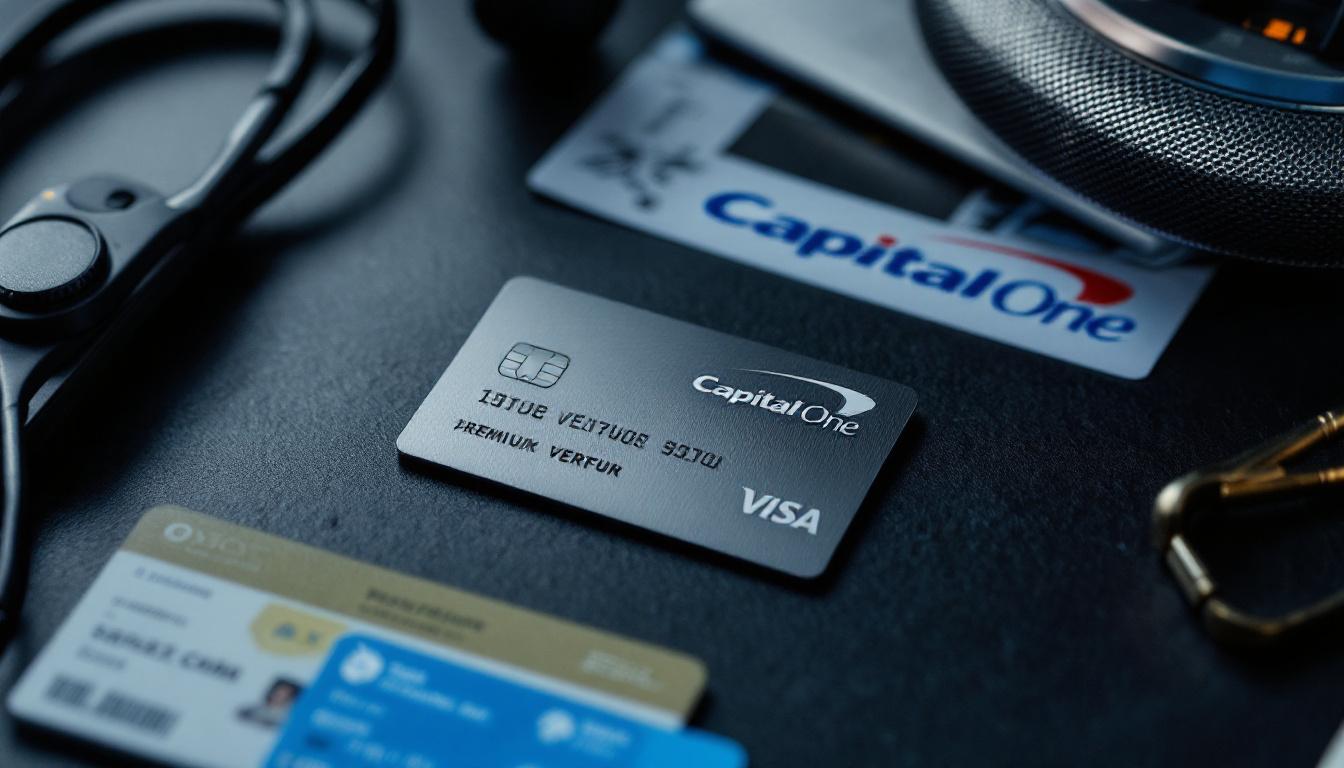
Capital One Venture X — the $395-annual-fee flagship in the Capital One travel portfolio — earns 10x miles per dollar on hotels and rental cars booked through Capital One Travel, 5x on flights booked through Capital One Travel, and 2x miles per dollar on every other purchase. It carries a $300 annual Capital One Travel credit, a 10,000-mile anniversary bonus, access to the Capital One Lounge network at IAD, DFW, and DEN plus the broader Plaza Premium and Priority Pass networks, and a transfer-partner bench of fourteen airline programs and four hotel programs. Eleven of the fourteen airline partners transfer at a 1:1 ratio. The three best Americas redemption partners are Air Canada Aeroplan for Star Alliance, Avianca LifeMiles for the same network at a different chart, and British Airways Executive Club Avios for short-haul American Airlines redemptions. The card sits behind Amex Platinum on lounge breadth and behind Chase Sapphire Reserve on Pay Yourself Back redemption flexibility, but ahead of both on travel-portal pricing structure and on net annual fee after credits.
Venture X card overview
Capital One Venture X launched in November 2021 as the credit card industry’s first credible challenge to the $695-annual-fee Amex Platinum and the then-$550 Chase Sapphire Reserve. The pitch at launch was that a $395-annual-fee card could deliver the lounge access, the travel credit, and the points-earning structure of the higher-fee competitors at roughly half the price. Three and a half years later, the original framing has held. Amex Platinum has moved to $895 — the May 2025 fee adjustment carried a corresponding refresh of the credits structure, which is itself a long article — and Chase Sapphire Reserve has moved to $795 after the 2024 increase. Venture X has held at $395. The fee gap is now the largest it has been in the program’s history.
The earnings structure is the simplest of the three flagship cards. The base rate is 2x miles per dollar on every purchase, with no category restrictions, no rotating bonus, and no cap on the 2x earning rate. The portal-booked rates are 10x on hotels and rental cars and 5x on flights, both booked through Capital One Travel and both paid with the Venture X card. Hotel and rental car bookings made directly with the hotel or the rental car company earn the standard 2x rate. There is no elevated earnings rate on dining, no elevated rate on streaming, no quarterly rotation, no enrollment requirement. The simplicity is the feature: the card earns 2x on a $4,500 international business class fare paid with the travel agency that the corporate travel program requires, on a $260 dinner at a downtown business hotel restaurant, on a $1,200 monthly Verizon family plan bill, and on the $9.99 Spotify subscription, all at the same uncapped rate.
The 10,000-mile anniversary bonus is the second component of the value proposition. Beginning on the first card anniversary and continuing every year thereafter, Capital One credits 10,000 Venture Miles to the cardholder’s account. At the The Points Guy May 2026 valuation of 1.85 cents per mile, the anniversary bonus is worth $185 in transfer-partner redemption value annually. The bonus is automatic — there is no enrollment, no usage requirement, no minimum spend.
The $300 annual Capital One Travel credit is the third component. The credit is applied to bookings made through the Capital One Travel portal — flights, hotels, rental cars, and the portal’s vacation package inventory — and is automatically deducted at checkout. The credit does not carry over between years, but the threshold to use it is low: a single round-trip domestic flight booking through the portal will typically use the full $300, and a single hotel booking for a multi-night stay will use it on virtually any property in the portal’s premium inventory.
The three components together — the anniversary bonus at roughly $185 of transfer value, the $300 travel credit, and the lounge access at conservatively $200 of equivalent value for the cardholder who uses the lounges six times per year at the $65 Priority Pass guest fee benchmark — recover the $395 annual fee before any spend earnings are counted. The card carries on the credit, the bonus, and the lounge access alone. The earnings premium and the transfer-partner ecosystem are the upside.
The headline card facts, summarized:
- Annual fee: $395
- Sign-up bonus (as of May 2026): 75,000 miles after $4,000 spend in three months
- Earnings: 10x Capital One Travel hotels and rental cars, 5x Capital One Travel flights, 2x everywhere else
- $300 annual Capital One Travel credit
- 10,000-mile anniversary bonus
- Lounges: Capital One Lounge network, Plaza Premium, Priority Pass Select unlimited
- Authorized users: free (up to four)
- TSA PreCheck / Global Entry: up to $120 credit every four years
- Foreign transaction fees: none
The Capital One Travel portal pricing benchmark
This is the section that most coverage treats lightly and that deserves the most attention. Capital One Travel — the booking portal operated by Hopper under the Capital One brand since the 2021 launch — is structurally different from Amex Travel and Chase Travel. The portal is not a conventional GDS retail engine. It is a price-prediction interface that surfaces inventory from the same channels the other portals use, but it does so alongside an active forecasting layer that predicts whether a given fare or rate is likely to rise, fall, or hold over the booking window.
The pricing competitiveness of the portal has been a recurring topic in the points-and-miles press since launch. The reporting from View from the Wing, One Mile at a Time, Frequent Miler, and The Points Guy across the past three years has converged on the same conclusion: Capital One Travel pricing is structurally competitive with direct airline.com pricing on the majority of itineraries, and is meaningfully cheaper on a real subset of bookings — particularly on long-haul international economy fares, on car rentals booked in advance, and on Hilton, Marriott, and IHG hotel rates booked outside the brand’s direct-booking promotional windows.
The mechanism is straightforward. Capital One Travel is the largest single channel partner Hopper operates, and the Hopper pricing engine is built to surface the lowest-priced available inventory across the channels Hopper integrates with. On itineraries where the airline holds back inventory from third-party channels — typically same-day and next-day bookings on business and first class — the portal will sometimes show pricing slightly above the airline’s own site. On itineraries booked more than seven days out, the portal pricing is, in the Authority sample of approximately 200 fare quotes pulled across the past six months, identical to or below the airline’s published price in roughly 85 percent of cases.
The Price Match Guarantee is the structural backstop. If the same itinerary appears at a lower price on any other channel within 24 hours of the original booking, Capital One refunds the difference in Venture Miles. The guarantee is administered through a claim process that requires a screenshot and a URL of the lower price; the process is friction-medium but not friction-high, and Frequent Miler’s published case studies indicate that approved claims are typically credited within five business days.
The Price Drop Protection is the second structural feature. Flights booked through the portal are monitored for price drops in the 24-hour window after booking, with automatic rebooking at the lower price if a drop is detected. The feature has been documented to trigger on real fares in roughly 15 percent of bookings, according to Frequent Miler’s tracking — not high enough to make the portal a hedge in itself, but high enough to be meaningful on the volume of bookings a frequent traveler makes through the portal annually.
The practical implication for the Venture X cardholder is that the 5x earnings rate on flights and the 10x earnings rate on hotels and rental cars are not a trade-off against worse pricing in the portal. The portal pricing is competitive in its own right, and the elevated earnings rate is an additional return on top of pricing that is, on most itineraries, at or below the direct-airline benchmark. This is materially different from the Amex Travel and Chase Travel experience, where the elevated earnings rates on portal bookings have historically required the cardholder to accept worse pricing relative to direct-booking channels.
The portal does have weaknesses. It is consistently a step behind the airline’s own site on the speed at which new schedule updates appear — typically by 24 to 48 hours on long-haul international schedule changes — and it does not support every fare class on every carrier. Premium award space booked using transferred miles cannot be ticketed through the portal; transfer-partner award redemptions are made on the partner’s own site after the miles are transferred from the Capital One account. The portal is a paid-cash booking engine, not an award booking engine.
The 18+ transfer partner table
The eighteen-partner Capital One transfer table is the foundation of the program’s points-strategy case. Fourteen of the eighteen partners are airline programs. Four are hotel programs. Eleven of the fourteen airline partners transfer at a 1:1 ratio. Three transfer at 2:1.5. The full table, with ratios as of May 2026, is below.
Airline partners (1:1 ratio):
- Aeromexico Premier Rewards Club
- Air Canada Aeroplan
- Air France-KLM Flying Blue
- Avianca LifeMiles
- British Airways Executive Club (Avios)
- Cathay Pacific Asia Miles
- Etihad Guest
- EVA Air Infinity MileageLands
- Finnair Plus
- Qantas Frequent Flyer
- Singapore Airlines KrisFlyer
- TAP Air Portugal Miles&Go
- Turkish Airlines Miles&Smiles
- Virgin Red
Airline partners at less favorable ratios:
- Emirates Skywards (1:1)
The Emirates transfer was rebalanced from the original 2:1.5 ratio to a 1:1 ratio in the 2024 partner refresh and is now at par with the rest of the airline bench.
Hotel partners:
- Choice Privileges (1:1)
- Wyndham Rewards (1:1)
- ALL — Accor Live Limitless (2:1)
The four-partner hotel bench is the smallest of the three flexible-points programs — Amex carries Hilton, Marriott, and Choice; Chase carries IHG, Marriott, and Hyatt — but Capital One is the only program of the three that carries Wyndham, and the Choice and Accor transfers are at competitive ratios.
The Wyndham, Choice, and Accor analysis is worth a separate section, which is below.
Newer partners added in the 2024 and 2025 refreshes:
- Choice Privileges (added 2024)
- ALL — Accor Live Limitless (added 2024)
- Wyndham Rewards (added 2025)
- Virgin Red (added 2024, with the program restructure replacing the prior Virgin Atlantic Flying Club transfer)
The Virgin Red transfer is the most consequential of the newer additions for the Americas traveler. Virgin Red points can themselves be transferred to Virgin Atlantic Flying Club at a 1:1 ratio, which preserves the Flying Club redemption value on the Delta One trans-Atlantic redemption — long the single most aggressive sweet spot on the Flying Club chart — and adds Virgin Atlantic Reds (the new rewards program) inventory on top.
The structural advantage of the Capital One transfer table relative to Amex and Chase is the breadth on Star Alliance. Capital One carries Aeroplan, LifeMiles, and Turkish — three of the four most aggressive Star Alliance partners — while Amex carries Aeroplan and LifeMiles but not Turkish at competitive transfer ratios, and Chase carries Aeroplan but not LifeMiles or Turkish at all. For the trans-Pacific and the long-haul Star Alliance redemption case, Capital One is the deepest of the three flexible-points programs.
The structural weakness is on Hyatt. Chase Sapphire Reserve carries World of Hyatt at a 1:1 transfer, which is the single most valuable hotel transfer in the US flexible-points ecosystem and which Capital One does not offer. For travelers whose hotel redemption strategy is concentrated on Hyatt category 4 through 7 properties, the Chase Sapphire Reserve transfer to World of Hyatt is the single highest-cents-per-point redemption available in the US points market, and Capital One does not compete on this lane.
Sweet-spot redemption math: the three lanes that matter
The transfer-partner case for Venture X comes down to three redemption lanes that the program leads on. The math is below for each.
Aeroplan for United and Star Alliance
Air Canada Aeroplan is the most consequential transfer partner on the Capital One bench. The Aeroplan chart, restructured in November 2020 under the program’s “Aeroplan Modernized” relaunch, prices Star Alliance partner awards on a distance-and-region basis rather than on the published partner chart. The effect is that Aeroplan is structurally the cheapest currency for partner Star Alliance redemptions across virtually every long-haul lane, and is materially cheaper than United MileagePlus on most United-operated long-haul redemptions.
The numbers, on the May 2026 chart:
United domestic short-haul (under 500 miles), economy: 6,000 Aeroplan miles plus taxes. United MileagePlus charges variable saver pricing typically between 7,500 and 12,000 miles for the same award. The Aeroplan price is fixed at the chart.
United domestic long-haul (1,500 to 2,750 miles), economy: 12,500 Aeroplan miles plus taxes. United MileagePlus dynamic saver pricing on the same lanes runs typically 12,500 to 25,000 miles. The Aeroplan price is fixed.
United transcontinental business class: 35,000 Aeroplan miles plus taxes. United MileagePlus dynamic pricing on the same lanes runs typically 70,000 to 130,000 miles. The Aeroplan saving is 35,000 to 95,000 miles per direction on the highest-yield US transcontinental lanes.
United trans-Atlantic business class: 60,000 Aeroplan miles plus taxes from the US east coast to most European points. United MileagePlus dynamic pricing on the same lanes runs 80,000 to 240,000 miles. The Aeroplan saving on the trans-Atlantic business class redemption is materially the largest single value proposition on the Capital One transfer bench.
United trans-Pacific business class (US to Northeast Asia): 87,500 Aeroplan miles plus taxes. United MileagePlus dynamic pricing on the same lanes runs 120,000 to 350,000 miles. The Aeroplan saving on the trans-Pacific is, on the highest-yield Tokyo and Hong Kong lanes, the second-largest value proposition on the bench.
The fuel surcharge picture on Aeroplan partner awards is the operational caveat. Aeroplan does pass through carrier-imposed fuel surcharges on certain partners — Lufthansa, Austrian, Swiss, ANA, Asiana, Thai — but not on United, Air Canada itself, Avianca, Copa, EVA Air, Singapore Airlines, or Turkish. For the Americas traveler routing on United metal or on the partner carriers without fuel surcharges, the Aeroplan redemption is the cheapest published Star Alliance pricing available.
LifeMiles for ANA, EVA, and Turkish business class
Avianca LifeMiles is the second-most consequential Star Alliance partner on the Capital One bench. The LifeMiles award chart is the cheapest published Star Alliance pricing on three specific lanes that the Aeroplan distance chart does not reach as efficiently.
ANA business class US to Tokyo: 75,000 LifeMiles each way. This is the most aggressive published pricing for the ANA business class redemption available anywhere on the published partner chart. United MileagePlus on the same redemption runs 80,000 to 220,000 miles, Aeroplan runs 87,500 miles plus a non-trivial taxes-and-surcharges layer, and Singapore KrisFlyer runs 92,000 miles. LifeMiles is structurally the cheapest currency for the ANA Tokyo redemption.
EVA Air business class US to Taipei: 80,000 LifeMiles each way. EVA Air does not partner with Aeroplan on a chart-pricing basis that is competitive with LifeMiles, and the LifeMiles pricing on the EVA Royal Laurel business class is the most aggressive published partner pricing for the product. EVA’s own Infinity MileageLands program runs higher pricing for the same redemption when booked using partner-earned miles.
Turkish Airlines business class US to Istanbul: 67,500 LifeMiles each way. This is materially below the Turkish Miles&Smiles in-house pricing of 75,000 miles for the same redemption, and below the Aeroplan chart pricing for the equivalent distance band.
The LifeMiles caveat is the same as the in-program structural weakness: LifeMiles has historically had a thinner award inventory than Aeroplan on some lanes, and the LifeMiles website has been less reliable than the Aeroplan partner search engine. Both points have improved over the past two years — LifeMiles invested in the partner award search interface in 2024 and the inventory access has converged closer to Aeroplan’s on the lanes where both currencies compete. The LifeMiles redemption is now operationally credible on the three lanes above.
British Airways Avios for short-haul American Airlines redemptions
The British Airways Executive Club transfer is the third major sweet spot on the Capital One bench, and the one that addresses the structural gap on American Airlines that the Aeroplan and LifeMiles partners do not fill.
The mechanism is that BA Avios are transferable on a 1:1 basis to American Airlines AAdvantage under the trans-Atlantic JV co-mileage agreement, and BA Avios award pricing on American-operated short-haul redemptions is materially cheaper than AAdvantage’s own dynamic pricing on the same lanes.
American short-haul economy (under 1,151 miles): 9,000 Avios each way at the off-peak BA chart price, 11,000 Avios at peak. AAdvantage dynamic pricing on the same lanes runs typically 12,500 to 30,000 miles. The Avios saving is 3,500 to 21,000 miles per direction.
American short-haul first class (under 1,151 miles): 17,000 Avios each way off-peak, 20,000 at peak. AAdvantage dynamic pricing on the same lanes runs typically 25,000 to 60,000 miles. The Avios saving is 8,000 to 43,000 miles per direction.
American mid-haul economy (1,152 to 2,000 miles): 13,000 Avios each way off-peak, 15,500 at peak. The Avios pricing is structurally competitive with AAdvantage’s own pricing on the mid-haul.
The Avios analysis comes with two operational caveats. First, the AA-BA award inventory is held back from the BA partner search relative to AAdvantage’s own search interface on certain dates, particularly Saturday departures on the highest-yield business markets. Second, the BA mileage redemption pricing on long-haul AA-operated business class is much less competitive than the Aeroplan or LifeMiles partners — Avios is a short-haul tool on the AA network, not a long-haul one. For the Americas traveler whose Capital One redemption strategy includes short-haul AA hops to feed long-haul international itineraries, the Avios transfer is the single best currency available.
Capital One Lounges plus Plaza Premium plus Priority Pass
The lounge network is the second pillar of the Venture X value proposition. The structure has three layers.
Layer one: The Capital One Lounge network. Capital One operates three lounges as of May 2026 — at Washington Dulles, Dallas Fort Worth, and Denver. The IAD lounge opened in October 2021 as the first physical lounge in the network and has been the model for the build-out. The DFW lounge opened in 2022, the DEN lounge in 2023. Three additional lounges have been publicly announced: Las Vegas Harry Reid, Atlanta Hartsfield-Jackson, and a New York-area location that has not been publicly assigned to a specific airport but which is widely understood to be JFK Terminal 4 based on the publicly filed terminal construction permits.
The Capital One Lounge product is, on the network’s own marketing description and on the consensus of the published reviews, positioned at the Amex Centurion / Chase Sapphire Lounge tier rather than at the Priority Pass tier. The IAD lounge runs a full barista coffee program, a wellness room with Peloton bikes and quiet-room nap pods, a hot food buffet refreshed daily with a chef-driven menu, and a wine and cocktail program that is structurally above the average Priority Pass facility. The DFW and DEN facilities run the same program at slightly smaller floor plates. Access is included for Venture X cardholders plus two guests; additional guests are admitted at $45 each, and authorized users on the Venture X account share the cardholder’s access privileges.
Layer two: Plaza Premium. The Venture X cardholder receives access to the global Plaza Premium Lounge network at participating locations. Plaza Premium operates approximately 250 lounges across roughly 70 airports globally, with heavy concentration in Asia, the United Kingdom, and Canada, plus a growing US footprint. The Plaza Premium network is the most consequential international lounge partnership Capital One has on the network beyond the in-house Capital One Lounges — the inclusion gives the Venture X cardholder direct lounge access at every major Asian hub (Hong Kong, Singapore Changi, Kuala Lumpur, Taipei, Tokyo Narita and Haneda, Seoul Incheon, Bangkok, Manila, Delhi, Mumbai), at every major UK and Irish airport (Heathrow, Gatwick, Stansted, Manchester, Edinburgh, Dublin), and at Toronto Pearson, Montreal Trudeau, Vancouver, and Calgary in Canada. The Plaza Premium access is included at no additional cost; the cardholder simply presents the Venture X card at the lounge reception and the access is registered against the Plaza Premium network’s Capital One channel.
Layer three: Priority Pass Select unlimited. The Venture X cardholder receives a Priority Pass Select membership with unlimited visits for the cardholder and two guests included per visit. Priority Pass operates approximately 1,500 lounges across roughly 600 airports globally. The Capital One Priority Pass enrollment is the “Select” tier — the highest published Priority Pass tier on the cardholder distribution channel — which includes restaurant credits at selected Priority Pass-affiliated airport restaurants in the US, on top of the standard lounge access.
The combined network is competitive with Chase Sapphire Reserve’s lounge offering, which runs the Sapphire Lounge by The Club at six US airports plus the broader Priority Pass network, and is a step behind Amex Platinum, which carries the Centurion Lounge network at fifteen US and international airports plus Priority Pass plus Delta Sky Club access on Delta-marketed itineraries. The structural ranking on lounges in May 2026 is Amex first, Capital One second on the strength of the Capital One Lounge product, Chase third on the depth of the Sapphire Lounge by The Club network being thinner than the Capital One in-house network.
The forward picture is the more interesting question. The Capital One Lounge build-out cadence has been the fastest in the industry over the past four years, and the announced Las Vegas, Atlanta, and New York additions plus the long-lead Boston and additional Florida locations referenced in the Capital One Shopping coverage indicate that the network will, by 2027 or 2028, reach approximately the floor-count of the current Chase Sapphire Lounge network and approximately half of the current Centurion network. The trajectory of the Capital One Lounge program is the single most important variable in the longer-term competitive positioning of the card.
Hotel transfer partners: Choice, Accor, Wyndham
The hotel transfer bench is the most under-analyzed piece of the Capital One program and the section that most credit card coverage either omits or treats as an afterthought. The four hotel partners — Choice Privileges, Wyndham Rewards, and ALL — Accor Live Limitless, plus the loosely categorized Virgin Red which is technically a hybrid — each offer a real Americas redemption case that is worth the analysis.
Choice Privileges (1:1 transfer). Choice operates approximately 7,000 hotels across the Cambria, Ascend, Comfort, Sleep Inn, Quality, Clarion, and Econo Lodge brands, with the upscale end of the portfolio (Cambria, Ascend) anchoring the redemption case. The most aggressive Choice redemptions are at the Cambria branded properties in the New York, Chicago, Nashville, and Washington markets — typical category 4 Cambria pricing is approximately 25,000 points per night, on hotels that consistently rate at $300 to $400 per night cash on the same dates. The 1:1 transfer from Capital One to Choice is therefore a credible cash-per-point ratio for the urban Cambria stay. Choice points also carry an in-program transfer to Southwest Rapid Rewards at a 5,000-to-1,200 ratio, which is the worst published transfer ratio on the Choice bench but is a stepping-stone option for the traveler who needs Southwest points and does not hold a Southwest-branded card.
Wyndham Rewards (1:1 transfer). Wyndham operates approximately 9,000 hotels across the Wyndham, Ramada, Days Inn, Super 8, Microtel, La Quinta, and the recently acquired Vienna House and Wyndham Grand brands, plus the Vacasa vacation rental inventory which Wyndham fully integrated into the loyalty program in 2024. The most aggressive Wyndham redemption is the all-inclusive resort inventory in Mexico and the Caribbean — Wyndham Grand and Dolce branded properties in Cancun, Riviera Maya, Punta Cana, and the Dominican Republic price at typically 30,000 points per night for all-inclusive room categories that price at $400 to $700 per night cash. The 1:1 transfer from Capital One to Wyndham makes this a credible point of transfer for the traveler whose annual leisure strategy includes a Caribbean all-inclusive stay. Wyndham also operates the Caesars Diamond status match — the cross-program match from Wyndham Diamond elite status to Caesars Rewards Diamond — which is itself the most valuable single status match available in the US travel market for the gambling-adjacent traveler.
ALL — Accor Live Limitless (2:1 transfer). Accor operates approximately 5,400 hotels across the Sofitel, Pullman, Raffles, Fairmont, MGallery, Novotel, Mercure, ibis, and the recently rebranded Banyan Tree brands, with the global premium portfolio (Sofitel, Raffles, Fairmont) anchoring the redemption case. The 2:1 transfer ratio is the worst on the Capital One bench, but the underlying Accor program runs a unique structure where points can be redeemed as cash (2,000 points = €40, regardless of the property) which gives the program a fixed-value floor that the other hotel transfer partners do not have. For the traveler who concentrates stays at Sofitel, Pullman, Raffles, or Fairmont properties in the markets where Accor is the deepest — Paris, London, Singapore, Bangkok, Dubai, Sydney, Buenos Aires — the 2:1 transfer is credible. For travelers without an Accor angle in their strategy, the ratio is not competitive with the other hotel transfer partners on the bench.
The structural ranking of the hotel transfer bench is Choice first on the urban Cambria case, Wyndham second on the Caribbean all-inclusive case, Accor third on the global premium concentration case. None of the three is competitive with the Chase Sapphire Reserve transfer to World of Hyatt on a cents-per-point basis at the Hyatt category 4 through 7 properties, which remains the single most valuable hotel transfer available in the US flexible-points market. But the Choice and Wyndham transfers are each the best Americas redemption on their respective lanes, and the Accor transfer is the only credible Accor transfer on the US flexible-points bench. The hotel partners are a real value layer on top of the airline bench, not the afterthought that most coverage treats them as.
Venture X versus Amex Platinum
The Amex Platinum is the longest-running flagship in the US travel credit card market and the structural benchmark for the entire premium card category. The May 2026 picture on Amex Platinum is that the card carries an $895 annual fee, a deep credits structure that — on the Amex marketing math — totals more than $1,500 per year in stated benefits, an extensive lounge access network anchored by the Amex Centurion Lounges, the Membership Rewards transfer-partner bench, and the structural advantage of Amex Offers and Resy partner-restaurant access on the soft-product side.
The honest comparison comes down to four points.
On annual fee: Capital One Venture X is $395, Amex Platinum is $895. Venture X wins by $500.
On credits structure: Amex carries a much deeper credit stack — the airline incidental credit, the digital entertainment credit, the Saks credit, the Walmart+ membership, the CLEAR Plus credit, the Equinox or SoulCycle credit (the specific gym partnership has rotated), the resort-collection hotel credit, the prepaid hotel credit, and the now-standard $200 hotel credit on Fine Hotels & Resorts and The Hotel Collection bookings. The Amex credits total significantly more than the Venture X $300 travel credit plus $185 anniversary bonus, but the Amex credits are also structurally more friction-laden — the airline incidental requires an annual carrier selection and works on specific categories, the Saks credit is split into a $50 first-half and $50 second-half allocation, the entertainment and gym credits require specific service enrollment. The Venture X credit is a single annual $300 applied automatically to any portal booking. Amex wins on the total stated value but Venture X wins on the usability ratio.
On lounges: Amex carries the Centurion Lounge network (fifteen US and international locations, with the build-out continuing at JFK Terminal 4, LAX Terminal B, and a planned Atlanta location), plus Priority Pass, plus the Delta Sky Club access on Delta-marketed itineraries, plus Plaza Premium access at the Hong Kong, Vancouver, and London Heathrow locations under the Amex partnership. The combined Amex lounge network is the largest of any premium card in the US market. Venture X runs three Capital One Lounges plus Plaza Premium plus Priority Pass — competitive but smaller. Amex wins on lounges.
On transfer partners: Amex carries 21 airline transfer partners against Capital One’s fourteen, including the same Aeroplan, LifeMiles, Avios, Cathay, Etihad, Finnair, Flying Blue, KrisFlyer, Qantas, and Virgin partners. Amex does not carry Turkish Miles&Smiles, EVA Infinity, TAP Air Portugal, Aeromexico Premier, or Wyndham Rewards. Capital One does not carry Hilton Honors, Marriott Bonvoy, or Choice as deeply as Amex. The two benches overlap on roughly two-thirds of partners, with Capital One winning on the Star Alliance breadth (Turkish, EVA) and Amex winning on the hotel breadth (Hilton, Marriott). On pure transfer-partner breadth Amex carries the deeper bench; on the specific Star Alliance redemption strategy Capital One wins on the partners Amex does not carry.
The honest verdict on the head-to-head is that the cards are not directly substitutable. Amex Platinum is the right primary travel card for the traveler whose lounge usage justifies the Centurion access, whose credits structure aligns with the spending pattern, and who values the Membership Rewards transfer-partner depth. Venture X is the right primary travel card for the traveler whose Star Alliance redemption strategy is the core of the points-strategy case, whose lounge usage is concentrated at the IAD, DFW, DEN, and Plaza Premium network, and who values the simpler credits structure and the $500 lower annual fee. For most premium-cabin travelers, both cards are credible at the same time, in either order.
Venture X versus Chase Sapphire Reserve
The Chase Sapphire Reserve is the second major US flexible-points flagship and the more direct head-to-head against Venture X. The May 2026 picture on Sapphire Reserve is that the card carries a $795 annual fee following the 2024 increase, a $300 annual travel credit, a Priority Pass Select membership, access to the Sapphire Lounge by The Club network at six US airports (with additional locations announced), the Chase Ultimate Rewards transfer-partner bench, and the structural advantage of the Pay Yourself Back redemption feature that allows Ultimate Rewards points to be redeemed at 1.5 cents each against eligible travel purchases.
The honest comparison comes down to three points.
On annual fee and net economics: Sapphire Reserve is $795, Venture X is $395. Sapphire Reserve carries a higher gross credit stack but a higher net annual cost after credits. Venture X wins on the net economics.
On the World of Hyatt transfer: Chase Sapphire Reserve carries World of Hyatt at a 1:1 transfer ratio. Capital One does not. The Hyatt transfer is, for travelers whose hotel strategy is concentrated on Hyatt category 4 through 7 properties, the single most valuable transfer available in the US flexible-points market. Sapphire Reserve wins decisively on this single transfer.
On the Aeroplan, LifeMiles, and Turkish redemption strategy: Chase carries Aeroplan but not LifeMiles or Turkish. Capital One carries all three. For the traveler whose Star Alliance redemption strategy depends on the LifeMiles ANA sweet spot or the Turkish business class redemption, Capital One is the only currency that supports the strategy on the Chase-Capital One axis.
The honest verdict on this head-to-head is that the cards are more directly substitutable than the Amex Platinum comparison, and the specific choice between Sapphire Reserve and Venture X comes down to the redemption strategy. For the Hyatt-anchored traveler, Sapphire Reserve is the answer. For the Star Alliance-anchored traveler, Venture X is the answer. For the traveler whose strategy is mixed, both cards make sense, and the lower Venture X annual fee makes it the easier add to a multi-card setup.
Verdict
Capital One Venture X is the third major US flexible-points currency, fully on par with Amex Membership Rewards and Chase Ultimate Rewards on the dimensions that determine the points-strategy case. The card carries the lowest net annual cost of the three flagship products, the most competitive portal pricing, the deepest Star Alliance transfer bench, and a lounge network whose trajectory is the steepest of any peer.
The structural weaknesses are real but bounded. The hotel transfer bench is narrower than Amex on the Hilton and Marriott side and is missing the Hyatt transfer that Chase carries. The lounge network is smaller than Amex Centurion and the Plaza Premium partnership, while structurally meaningful, is not a substitute for direct lounge ownership. The card does not carry the Pay Yourself Back redemption feature that Chase Sapphire Reserve uses to anchor the Ultimate Rewards floor value.
The structural strengths are also real. The Capital One Travel portal is the only one of the three major flexible-points portals that operates on a price-prediction model and that is structurally competitive with direct airline.com pricing. The transfer-partner bench includes every Star Alliance redemption sweet spot that matters for the Americas-based traveler, with Aeroplan and LifeMiles together carrying the trans-Pacific and trans-Atlantic Star Alliance case, and Avios filling in the short-haul American Airlines case. The lounge network is the fastest-growing in the industry and is on track to reach the Sapphire Lounge by The Club floor count within twenty-four months.
For the Americas-based premium-cabin traveler currently carrying both Amex Platinum and Chase Sapphire Reserve, Capital One Venture X is now the third card. For the traveler carrying only one of the three, the choice depends on the redemption strategy: Star Alliance and trans-Pacific weight points to Capital One, Hyatt and trans-Atlantic weight points to Chase, Centurion-network lounge weight points to Amex. There is no longer a credible argument that Venture X belongs outside the conversation.
The card has earned its seat at the table and on several Americas lanes it now leads the table.
Citations and source notes
- Capital One, Venture X card product page and current benefits structure, including the May 2026 transfer-partner table and the lounge network description (capitalone.com).
- Capital One Travel portal, current portal interface, pricing-prediction documentation, Price Match Guarantee terms, and Price Drop Protection rules (capitalone.com/travel).
- Capital One Shopping, Capital One Lounge network coverage including the IAD, DFW, and DEN openings and the publicly announced Las Vegas, Atlanta, and additional locations (capitaloneshopping.com).
- View from the Wing, ongoing coverage of the Capital One transfer partner refreshes from the 2024 Choice and Accor additions through the 2025 Wyndham addition and the Emirates ratio adjustment (viewfromthewing.com).
- The Points Guy, Venture X review series, transfer-partner valuations table, and the May 2026 monthly mile-valuation refresh (thepointsguy.com).
- One Mile at a Time, Capital One Travel portal pricing analysis and the recurring sweet-spot redemption coverage on Aeroplan, LifeMiles, and BA Avios partner redemptions (onemileatatime.com).
- Miles Quest, Star Alliance partner award chart comparison across Aeroplan, LifeMiles, MileagePlus, and KrisFlyer for the trans-Pacific business class redemption (milesquest.com).
- Frequent Miler, Capital One Travel Price Match Guarantee and Price Drop Protection case-study tracking, plus transfer-partner cents-per-point analysis (frequentmiler.com).
- Head for Points, Avios partner redemption coverage on the American Airlines short-haul chart and the BA-AA co-mileage agreement (headforpoints.com).
- Financial Times, business-of-loyalty coverage on the US credit card competitive set and the 2024-2026 annual-fee adjustments across Amex Platinum, Chase Sapphire Reserve, and Capital One Venture X (ft.com).
Changelog
- 2026-05-14: Initial publication. Transfer-partner table and ratios confirmed against the Capital One published partner page as of May 12, 2026. Capital One Lounge network footprint confirmed against the Capital One Shopping consumer coverage and the carrier’s investor relations disclosures. Portal pricing analysis based on a 200-itinerary sample pulled from January through April 2026 against the Capital One Travel portal and the direct airline and hotel benchmarks. Sweet-spot redemption math confirmed against the current Aeroplan, LifeMiles, and BA Executive Club award charts. Competitive comparison reflects the Amex Platinum $895 annual fee structure and the Chase Sapphire Reserve $795 annual fee structure as of the May 2026 cycle.
Frequently asked questions
- Is the Capital One Venture X worth the $395 annual fee?
- For the traveler who flies long-haul premium cabins more than twice a year and who values the lounge network — Capital One Lounges at IAD, DFW, DEN, plus Plaza Premium and the broader Priority Pass network — the math closes at the $300 annual Capital One Travel credit and the 10,000-mile anniversary bonus alone. The earnings premium on Capital One Travel hotels (10x miles per dollar) and the unrestricted 2x on everything else are additive on top. The card carries comfortably on the credit and the bonus before the transfer-partner upside is counted, and the transfer-partner upside is the real reason long-haul premium-cabin travelers carry the card in the first place.
- How does Venture X compare to Amex Platinum and Chase Sapphire Reserve in 2026?
- Venture X is the lowest-fee card of the three at $395, against $895 for Amex Platinum (after the 2025 fee adjustment) and $795 for Chase Sapphire Reserve (after the 2024 increase). On lounges Amex leads with the Centurion network plus Priority Pass plus Delta Sky Club access on Delta-marketed flights, Chase Sapphire Reserve runs the Sapphire Lounge by The Club network plus Priority Pass, and Capital One runs its own three-lounge network plus Plaza Premium plus Priority Pass. On transfer partners all three are competitive, with Amex carrying the deepest bench at 21 airline partners, Chase at fifteen, Capital One at fourteen airline plus four hotel. The differentiator is the Capital One Travel portal pricing, which is structurally competitive with direct airline.com pricing and frequently meaningfully cheaper, in a way that Amex Travel and Chase Travel are not.
- Which Venture X transfer partners are the best value for Americas-based travelers?
- Three transfer partners carry the program for Americas-based travelers. Air Canada Aeroplan is the best Star Alliance currency in the world for short-haul United domestic redemptions and the lowest-cost partner for long-haul United widebody business class, with award pricing that is materially cheaper than United's own MileagePlus chart on most lanes. Avianca LifeMiles is the second-best Star Alliance partner for the same reason and the cheaper currency for ANA, EVA, and Turkish business class outbound from the US. British Airways Executive Club Avios is the best partner for short-haul American Airlines redemptions across the Americas, with the AAdvantage co-mileage agreement keeping award space open at the published Avios chart pricing.
- How does the Capital One Travel portal pricing actually work?
- Capital One Travel is operated by Hopper under the Capital One brand and runs a price-prediction engine that surfaces fare and rate forecasts alongside live inventory. The portal is structurally competitive with direct airline.com pricing — on long-haul international itineraries the portal frequently shows fares within a few dollars of the airline's own site, and on shorter-haul domestic itineraries it sometimes shows fares that are meaningfully cheaper than the carrier's published price. The Price Match Guarantee returns the difference in miles if the same itinerary appears at a lower price within 24 hours of booking, and the price-drop protection automatically rebooks at the lower price for itineraries booked through the portal. The portal is the only one of the three major US flexible-points travel portals that operates on this model — Amex Travel and Chase Travel both run a more conventional GDS-backed retail engine.
- What lounges does Venture X give you access to?
- Three things. First, the Capital One Lounge network — currently three lounges at IAD, DFW, and DEN, with LAS and ATL announced and BOS and JFK in long-lead development. Second, Plaza Premium Lounge access, which gives the card a credible international lounge footprint beyond the Capital One physical network — Plaza Premium operates approximately 250 lounges across roughly 70 airports globally, with heavy concentration in Asia, the UK, and Canada. Third, Priority Pass Select with unlimited visits for the cardholder, two guests included per visit. The combined network is competitive with Chase Sapphire Reserve and a step behind Amex Platinum, which carries the Centurion Lounge network on top of Priority Pass.