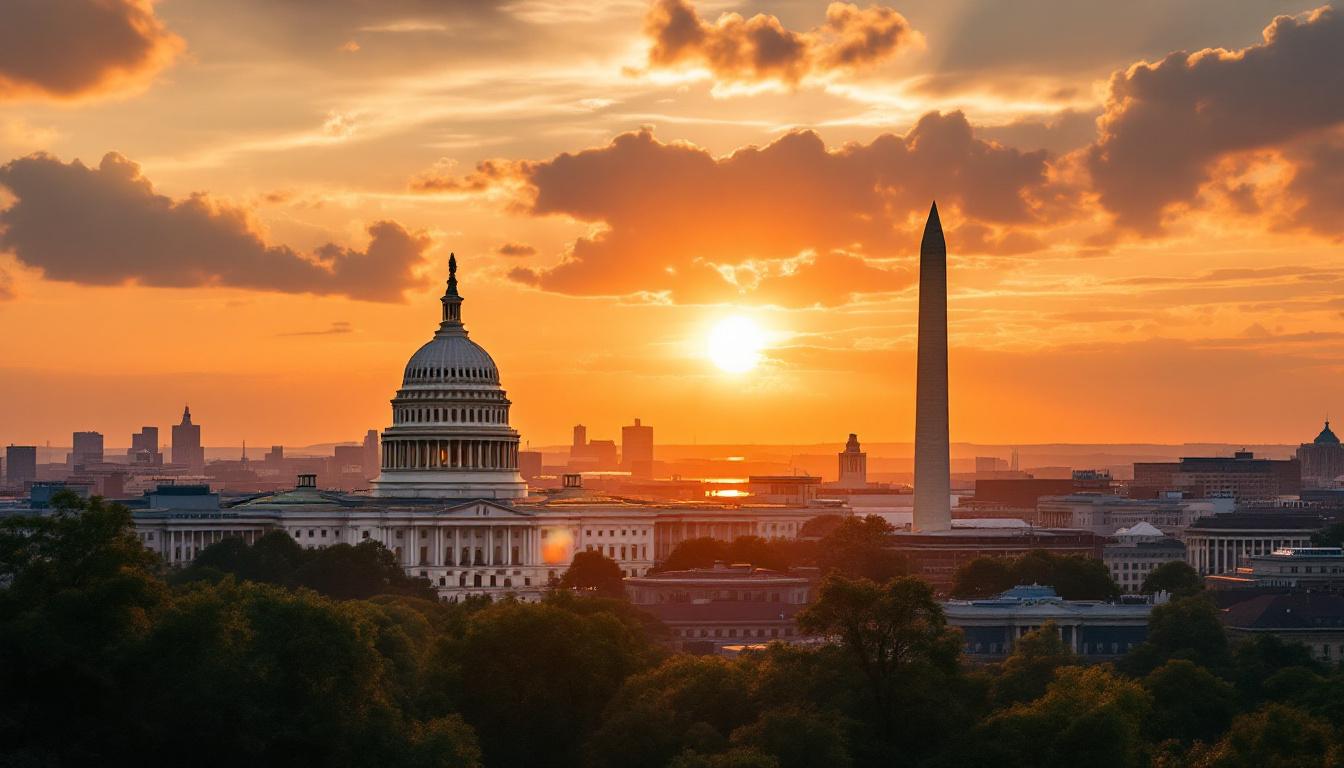
Washington is not a normal business-travel market. The city’s revenue calendar is set by the legislative calendar, its corporate-hotel inventory is sized for principals rather than for volume travelers, and its hospitality pricing is more elastic to recess weeks and continuing-resolution deadlines than to ordinary commercial demand. For corporate government-affairs teams, lobbying firm travel desks, trade associations, and visiting principals from regulated industries, getting DC right in 2026 means understanding that this is a market where mis-timing the calendar by a single week can mean the difference between a $695 ADR at the Hay-Adams and a $1,295 ADR at the same property for the same room category.
This brief is built for the people who book DC for senior visitors several times a quarter: government-affairs coordinators, executive-assistant teams supporting C-suite Hill visits, lobbying-firm office managers running drop-ins for client principals, embassy commercial sections handling delegation logistics, and corporate security teams running advance for high-profile travelers. It is not a tourism brief. It assumes the visitor’s purpose is testimony, meeting with members and committee staff, regulator engagement, association board meetings, or executive participation in trade-group fly-ins.
The Three-Airport Question: DCA, IAD, and BWI Routing for Corporate Visitors
The single most consequential routing decision for a DC business trip is which of the three regional airports the principal flies into. The wrong choice can add 75 minutes of ground transit each way, miss a Hill meeting window entirely, or force a same-day cancellation when a vote series compresses the schedule.
Ronald Reagan Washington National (DCA)
DCA is the closest commercial airport to the central business and government districts, sited across the Potomac in Arlington with the Capitol dome visible from the north-facing windows of the new Terminal 2 concourses. Ground transit to a Penn Quarter, K-Street, or Capitol Hill hotel runs 12 to 20 minutes outside of peak, and 25 to 35 minutes during the morning and evening rush, with the Metro Blue and Yellow lines providing a 15-minute rail option from inside the terminal to L’Enfant Plaza or Metro Center.
DCA’s operating constraints matter for routing. The perimeter rule limits most flights to within 1,250 miles, with a small number of grandfathered beyond-perimeter exceptions to Western hubs. There is no DCA service from Europe, Asia, or Latin America. The slot-controlled environment means schedule reliability is comparatively strong, but it also means that capacity is finite: when weather or Air Traffic Control flow-management programs hit the Northeast, DCA recovers more slowly than its larger neighbors because slot constraints prevent backfilling.
For a principal flying from a domestic East Coast or Midwest origin, DCA should be the default. The ground-time savings versus IAD typically run 45 to 60 minutes each direction, which on a same-day Hill trip can be the entire margin between a viable trip and a cancellation.
Washington Dulles International (IAD)
IAD sits 26 miles west of central DC in Loudoun County, with the Metro Silver Line now providing a one-seat rail ride into the city that takes approximately 50 minutes from the airport station to Foggy Bottom. By road, an early-morning arrival can clear to a downtown hotel in 35 to 40 minutes; an afternoon arrival routinely takes 60 to 90 minutes when traffic on the Dulles Access Road and the I-66 inner loop builds.
IAD is the international gateway. All scheduled long-haul service from Europe, Asia, the Gulf, and most of Africa and Latin America operates through Dulles. For inbound visitors from London, Frankfurt, Tokyo, Dubai, Doha, Singapore, or Sao Paulo, there is no choice: IAD is the airport. The same applies to most premium transcontinental products from West Coast hubs that operate as widebody flights.
For domestic visitors, IAD becomes the better choice in two specific scenarios. First, when the principal is flying private and the operator prefers Dulles’s general-aviation infrastructure over DCA’s more constrained FBOs. Second, when the meeting agenda is in the Northern Virginia corridor — Tysons Corner, Reston, or the Dulles Technology Corridor — rather than in the District itself. For meetings actually inside the District, DCA almost always wins on ground time.
Baltimore/Washington International Thurgood Marshall (BWI)
BWI sits 32 miles northeast of central DC near Baltimore, with ground transit to a downtown DC hotel typically running 55 to 75 minutes by car and approximately 90 minutes by MARC commuter rail plus Metro. BWI’s strengths are leisure-carrier capacity, particularly Southwest’s hub operation, and lower point-to-point fares on routes that DCA serves at premium pricing.
For corporate-affairs travel, BWI is rarely the right answer. The ground-time penalty versus DCA is severe, the connection options into central DC are weaker than IAD’s Silver Line, and the schedule reliability does not consistently outperform DCA’s slot-controlled environment. BWI makes sense when the principal is flying on a corporate-discount Southwest contract, when fare differentials are unusually large, or when the meeting venue is actually in the Baltimore-Columbia corridor rather than in DC.
Routing Rule of Thumb
The decision tree for 2026 DC routing is: domestic East Coast or Midwest origin with a District meeting agenda routes through DCA; international origin or West Coast widebody premium routes through IAD; Northern Virginia agenda routes through IAD; everything else defaults to DCA when slots are available, with IAD as the fallback when DCA is sold out or weather-impacted.
Corporate Hotel Inventory by Neighborhood
DC’s corporate-grade hotel inventory clusters in five neighborhoods, each with a distinct profile for proximity, principal-suitability, and demand pattern. Understanding the cluster geography matters because the right hotel choice depends on where the meetings actually are, not on which property has the strongest brand name.
Capitol Hill and the East End
Capitol Hill itself has limited corporate luxury inventory. The neighborhood is dominated by congressional office buildings, residential blocks, and the small-property hotels that have historically served visiting members’ families and lobbying-firm associates. Principals who need to be on the Hill for early-morning hearings most often stay in Penn Quarter or downtown and accept a 10-to-15-minute transit, rather than staying on the Hill itself.
The East End — the corridor running west from Union Station through Penn Quarter toward the White House — is where the corporate-hotel inventory becomes dense. This is the zone within walking distance of Hill office buildings to the east and the K-Street corridor to the west, and it is where most government-affairs travelers should be placed.
Penn Quarter and CityCenter
Penn Quarter and the adjacent CityCenter development represent the most concentrated cluster of new corporate-grade inventory in DC. The Waldorf Astoria Washington DC, in the restored Old Post Office building on Pennsylvania Avenue, anchors the high end of the cluster. Its location halfway between the Capitol and the White House makes it geographically optimal for principals whose agenda spans both ends of Pennsylvania Avenue, and its post-renovation product is the newest luxury inventory in the city.
The Conrad Washington DC, at CityCenter, sits at the center of the retail and dining development that has reshaped this part of downtown over the past decade. It is the preferred choice for technology-sector and consumer-brand principals whose agenda is more commercial than legislative — meetings with trade associations, K-Street consultancies, and regulatory affairs counsel rather than direct Hill engagement.
K-Street and the Lobbying Corridor
The K-Street corridor itself, running from Mount Vernon Square west through Farragut Square to Washington Circle, contains most of DC’s large law firms, lobbying shops, and trade-association headquarters. Hotel inventory along K-Street is heavily corporate, with properties like the Hamilton, the Madison, and the Mayflower serving the daily expense-account flow of consultants and corporate-affairs staff.
The St. Regis Washington DC, on 16th Street just north of Lafayette Square, sits at the eastern end of this corridor and within walking distance of both the White House complex and the K-Street firm offices. Its location and product position it as the preferred property for visiting CEOs whose agenda combines White House or OMB meetings with K-Street consultancy engagements.
The Jefferson, also on 16th Street, occupies a smaller and more discreet position in the inventory. The property’s 99-room count, its residential character, and its strict no-press posture make it the default for principals whose visits require absolute privacy — Fortune 100 CEOs in sensitive regulatory matters, foreign-government ministers, and senior figures from the financial services sector whose presence in Washington is itself confidential.
Foggy Bottom and the West End
Foggy Bottom and the adjacent West End sit between the K-Street corridor and Georgetown, with George Washington University and the State Department defining the neighborhood’s character. The Park Hyatt Washington DC, on M Street at 24th, is the dominant corporate-luxury property in this cluster, with a renovated product, strong food and beverage, and a quiet residential feel that distinguishes it from the busier downtown properties.
The Ritz-Carlton Washington DC, also in the West End, serves a similar profile with a longer-tenured property and a strong base of repeat corporate clientele. Both properties suit principals whose primary agenda is at the State Department, the World Bank/IMF complex on 19th Street, or the law-firm offices that have migrated west of K-Street in recent years.
Georgetown
Georgetown’s commercial corridor along M Street and Wisconsin Avenue is geographically furthest from the Hill and the K-Street corridor — typically a 15-to-25-minute drive depending on traffic on the Whitehurst Freeway and Pennsylvania Avenue. The neighborhood is preferred by principals who want separation from the working districts, who have evening social commitments at Georgetown residences, or whose agenda includes Georgetown University engagements.
The Four Seasons Hotel Washington DC, at the eastern edge of Georgetown on Pennsylvania Avenue, anchors the neighborhood’s corporate inventory. Its position straddles the Georgetown-West End boundary, making it the most operationally efficient of the Georgetown options for principals who also have downtown meetings. The Four Seasons is the long-standing default for visiting heads of state, foreign-government ministers staying outside the embassy circuit, and Fortune 50 chief executives whose visits combine government meetings with private dinners at Georgetown residences.
The Rosewood Washington DC and the Ritz-Carlton Georgetown round out the neighborhood’s high-end inventory, both with smaller footprints and a more residential character than the Four Seasons.
Downtown and Lafayette Square
The Hay-Adams Hotel, on Lafayette Square directly opposite the White House, holds a position in the DC inventory that no other property can match: it is the closest hotel to the President’s residence, with views from the upper-floor rooms looking directly across the square at the North Portico. The property is consistently the first-choice hotel for visiting heads of state attending bilateral meetings at the White House, for cabinet-rank foreign officials, and for Fortune 50 CEOs whose Oval Office or West Wing schedule makes the 90-second walk across the square operationally valuable. Its 145-room count keeps it small, its food and beverage program is strong, and its security posture is set up for the kind of high-profile guest list it routinely hosts.
Inventory Summary Table
| Property | Neighborhood | Best For | Approximate ADR (Q1 2026) |
|---|---|---|---|
| Hay-Adams | Lafayette Square | White House-adjacent meetings, heads of state | $850 to $1,400 |
| Jefferson | 16th Street | Maximum-privacy principals, sensitive matters | $750 to $1,100 |
| Waldorf Astoria DC | Pennsylvania Avenue | Hill + White House combined agenda | $700 to $1,200 |
| St. Regis DC | 16th Street | CEO with K-Street and White House schedule | $700 to $1,050 |
| Four Seasons Georgetown | Georgetown/West End boundary | Heads of state, Fortune 50 CEOs | $850 to $1,400 |
| Park Hyatt DC | Foggy Bottom/West End | State Department, IMF/World Bank principals | $650 to $950 |
| Conrad DC | CityCenter | Tech and consumer-brand commercial agenda | $550 to $850 |
| Ritz-Carlton DC | West End | Repeat corporate base, legal/financial | $625 to $925 |
These ADR ranges represent typical Tuesday-through-Thursday rates during non-peak weeks and exclude State of the Union week, inauguration windows, and major fly-in events where corporate-grade inventory routinely transacts at premium pricing.
K-Street Dining: The Lobbying-Corridor Restaurant Inventory
DC’s business-dining inventory is purpose-built for the city’s political and corporate-affairs economy. The properties that matter are concentrated in a small geographic zone, the booking dynamics are tighter than in any comparable American market, and the choice of restaurant for a given meal carries meaning that travelers from other markets often underestimate.
The K-Street and Connecticut Avenue Cluster
The Lafayette, in the Hay-Adams Hotel, serves the breakfast-meeting circuit for the senior-most level of the DC business and political community. Its dining room is where lobbying-firm chairmen meet visiting CEOs before a 9:00 AM Hill drop-in, where former cabinet secretaries lunch with current ones, and where the morning’s news cycle is informally negotiated. Booking access at the Lafayette is gated by relationship and by the hotel’s own guest priority; for non-guests, advance booking through a professional concierge or through the principal’s lobbying firm is the only reliable path.
Plume, the fine-dining room at the Jefferson Hotel, occupies a similar position for dinner. The room is small, the booking calendar is tightly held, and the guest list on any given evening reflects the kind of confidential conversation that the Jefferson is built to host. Plume is the default choice for the most sensitive client-principal dinners — the ones where being photographed entering the restaurant would itself create a news cycle.
Cafe Milano, in Georgetown, is the most visible high-end Italian room in DC and the most reliable choice for principals who want to be seen rather than hidden. The room is loud, the booking is contested, and the Saturday-night guest list routinely includes cabinet members, senators, ambassadors, and the chairmen of the city’s largest law firms. Cafe Milano is the wrong choice for a confidential dinner and the right choice for a dinner where the principal wants Washington to register their presence.
The Pennsylvania Avenue and Penn Quarter Cluster
Fiola, on Pennsylvania Avenue in Penn Quarter, sits in the geographic center of the city’s business-dining inventory and serves the lunch-meeting market for the lobbying firms, law firms, and trade associations clustered along Pennsylvania Avenue between the Capitol and the White House. The room is the default choice for a working lunch where the agenda is substantive and the booking needs to be reliable.
Del Frisco’s Double Eagle Steakhouse and the Capital Grille on Pennsylvania Avenue serve the steakhouse-lunch market that dominates DC’s K-Street corridor. Both rooms are loud at lunch, both are heavily booked by the lobbying firms for client entertainment, and both function as the default expense-account venue when the agenda is firm-led rather than principal-led.
The Logan Circle and 14th Street Cluster
Le Diplomate, on 14th Street in Logan Circle, has been the dominant French brasserie in DC since its opening and remains the booking-of-choice for principals who want a contemporary, non-traditional Washington dinner environment. The room sits outside the historic K-Street and Pennsylvania Avenue corridors and draws a younger, more commercially-oriented crowd than the Lafayette or Cafe Milano. For technology-sector and consumer-brand principals whose agenda is commercial rather than legislative, Le Diplomate is often the better cultural fit.
The 14th Street corridor more broadly — including Pearl Dive Oyster Palace, Estadio, and Ghibellina — represents the contemporary dining inventory that DC has built over the past fifteen years and that now competes with the traditional K-Street cluster for the commercial-dining market.
Booking Discipline
DC’s business-dining inventory is small enough that the corporate-grade rooms book out two to three weeks in advance for prime times during a normal week, and four to six weeks in advance during peak weeks. Last-minute booking through hotel concierge desks works at the Lafayette, Plume, and the Park Hyatt’s Blue Duck Tavern for hotel guests; for non-guests, last-minute access generally requires either a lobbying-firm or law-firm relationship with the restaurant or a willingness to accept a 5:30 PM or 9:30 PM table.
The Congressional Calendar and Its Demand Impact
DC’s business-travel demand is more sensitive to the congressional calendar than to any other variable. Understanding the legislative-session pattern is essential for any team booking DC visits at scale, because the same hotel and the same meal can transact at radically different prices depending on whether Congress is in session.
Session Weeks and Demand
The standard congressional calendar runs in session weeks of three or four days, typically Tuesday through Thursday or Monday through Thursday, with members returning to home districts on Thursday afternoon or Friday morning. Hotel demand for corporate-affairs visitors mirrors this pattern: Tuesday and Wednesday nights are the peak booking nights of the week, with rates routinely running 60 to 100 percent above the property’s weekend leisure rate.
Sunday and Monday nights are softer demand, as visiting corporate principals tend to arrive Monday afternoon or Tuesday morning rather than the night before. Thursday nights run between session peak and weekend leisure rates, with corporate demand winding down as members leave town. Friday and Saturday nights are the softest corporate-demand nights of the week, with most properties dependent on leisure and group business to fill rooms.
Recess Weeks and Demand Collapse
Congressional recess weeks — the periods when both chambers are formally not in session, including the August recess, the year-end recess, and the various district work periods scattered through the year — produce the sharpest demand declines in the DC corporate-hotel market. With members and their senior staff out of town, the corporate-affairs travel volume that drives weekday demand evaporates almost entirely, and properties accustomed to running 85 to 95 percent occupancy during session weeks can fall below 50 percent.
For booking teams, recess weeks represent the best value windows in the DC calendar. The Hay-Adams, Jefferson, and Four Seasons Georgetown all routinely transact at 30 to 45 percent discounts to their session-week ADRs during the August recess and the late-December recess. For visits that are not calendar-driven by legislative business — board meetings, internal corporate offsites, trade-association meetings whose dates are flexible — booking into a recess week can produce material cost savings without operational compromise.
Peak Weeks and Surge Pricing
A small number of weeks each year produce sustained surge pricing across the DC corporate-hotel inventory. State of the Union week, when the President addresses a joint session of Congress in late January or early February, drives ADRs at the corporate-grade properties to 200 percent of their normal session-week levels. Inauguration week, every four years, produces the most severe pricing event in the DC calendar, with rates at properties like the Hay-Adams and Four Seasons Georgetown routinely exceeding $2,500 per night for standard rooms and with minimum-stay requirements of four to seven nights.
Major trade-association fly-ins — the National Association of Manufacturers, the Business Roundtable, the various industry-specific associations whose Washington Week events bring thousands of executives into the city — produce localized surge pricing in the weeks they occupy, with the impact concentrated at properties geographically aligned with the association’s meeting venues.
2026 Calendar Markers
For 2026 planning, the calendar weeks to mark are: the State of the Union week in late January or early February, depending on the President’s scheduling; the spring district work period typically falling in early April; the Memorial Day recess; the July 4 recess; the August recess running through early September; the Columbus Day district work period; the Thanksgiving recess; and the year-end recess running from mid-December through early January 2027. Each of these recess windows represents a demand-soft period when corporate-grade inventory becomes meaningfully more accessible and more affordable.
Government Shutdown Contingency Planning
A material risk for any DC business-travel program in 2026 is the possibility of a federal government shutdown driven by the appropriations and continuing-resolution calendar. Shutdowns happen rarely but, when they do, they reshape the operating environment for corporate-affairs visitors in ways that warrant explicit contingency planning.
How Shutdowns Affect Business Travel
A shutdown does not close the city, the hotels, or the restaurants. It does, however, substantially reduce the population of federal employees available for meetings, send committee staff to furlough status in many cases, close federal buildings to non-essential visitors, and in some cases suspend regulatory rulemaking processes that corporate-affairs teams are actively engaged in.
For a corporate-affairs visit whose entire purpose is a meeting with federal regulators at the SEC, FTC, FCC, or a similar agency, a shutdown can mean the meeting is canceled with limited notice and the visit becomes unproductive. For a Hill visit, the impact is less severe because congressional members and their personal-office staff are not subject to the appropriations-driven furlough, but committee staff often are, and the agenda of the visit can shift substantially in scope.
Booking Flexibility and Cancellation Policies
For visits planned during periods when shutdown risk is elevated — typically the weeks immediately preceding a continuing-resolution expiration or fiscal-year-end deadline — booking teams should explicitly negotiate flexible cancellation terms at the property level. Most corporate-grade DC hotels will accommodate a 48-hour or 24-hour cancellation window when the booking is for the senior level and when the relationship justifies it; the request should be made explicitly at the time of booking rather than relied on at the time of cancellation.
Airline ticketing should similarly use refundable or change-flexible fare classes when the visit is anchored to a date that falls within a shutdown-risk window. The premium for a refundable domestic ticket on the East Coast routes is typically $200 to $400 over a non-refundable equivalent, which is a small price for the optionality when the underlying trip is itself a multi-thousand-dollar program.
2026 Shutdown Risk Windows
For 2026, the fiscal-year-end deadline of September 30 and the various continuing-resolution expirations through the year define the shutdown-risk calendar. Corporate-affairs teams should treat the two weeks preceding each of these deadlines as elevated-risk periods and should build flexibility into bookings that fall within them. The risk varies year to year depending on the political configuration of Congress and the White House, but the structural pattern of the appropriations calendar produces these risk windows consistently.
Security Protocols for High-Profile Visitors
DC is a uniquely sensitive operating environment for principal-level visitors because of the concentration of federal law enforcement, the visibility of the high-value targets the city hosts, and the protective-detail infrastructure that visiting principals’ own security teams interact with.
Working with Hotel Security
The corporate-grade DC properties — the Hay-Adams, Jefferson, Four Seasons Georgetown, Waldorf Astoria, St. Regis, and Park Hyatt — all operate security postures that are calibrated for the kind of guest list they host. Each property has an established protocol for high-profile arrivals, including discreet entry through service entrances when appropriate, suite floors with controlled elevator access, and coordination with both Secret Service protective details and private security teams.
For a Fortune 100 CEO whose visit involves White House meetings, the property’s security team will routinely coordinate with the corporate security director’s advance team to align arrival timing, motorcade staging, and floor access. The protocols are well-established, and the properties’ staff are accustomed to executing them. The principal’s own security director should make first contact with the hotel’s director of security at least 72 hours before arrival to confirm protocols and walk through the advance.
Motorcade and Ground-Transit Considerations
Motorcades in DC operate against a backdrop of Secret Service and Metropolitan Police Department traffic-control infrastructure that visiting corporate motorcades do not enjoy. A standard three-vehicle corporate motorcade for a Fortune 100 CEO is treated as ordinary traffic and is subject to ordinary congestion, with no police escort, no closed-intersection privileges, and no priority routing. Building this into the ground-transit timing for any meeting that has a hard start window is essential; the rule of thumb is to add 50 percent to standard transit-time estimates when the meeting is at the White House complex, the Capitol, or a federal building, because the security perimeter around these venues itself adds friction to arrival timing.
Press and Reputational Considerations
For principals whose presence in Washington is itself sensitive — typically because of pending litigation, regulatory enforcement, or active controversy — the choice of hotel, restaurant, and ground transit carries press-management weight. The Jefferson, the Hay-Adams’s discreet F Street entrance, and the Four Seasons Georgetown’s covered porte cochere are all built for arrivals that are not intended to generate photographs. The Lafayette breakfast room, Cafe Milano on a Saturday night, and Plume in the right configuration are all visible enough that a principal seated there will be noted by the Washington reporting community within hours. The choice of which environment to use for which engagement is itself a strategic decision and should be made in coordination with the principal’s communications team.
GBTA Washington DC Per Diem Reference
The Global Business Travel Association’s per diem framework, used by corporate travel programs to set reimbursement and budgeting standards, sets specific rates for the DC market that diverge materially from the federal General Services Administration per diem rates that govern federal-employee travel.
For 2026, the GSA per diem for Washington DC (defined as the District of Columbia and the counties of Montgomery, Prince George’s, Arlington, Fairfax, Alexandria, and Falls Church) varies by season, with peak-season lodging rates substantially higher than off-peak. The current federal lodging per diem for DC in peak months is approximately $292 per night, with a meals and incidental expenses (M&IE) rate of $86 per day. These rates set the baseline for federal-employee reimbursement but are far below the actual corporate-grade lodging cost at properties like the Hay-Adams or Four Seasons Georgetown.
Corporate travel programs using the GBTA Hotel Index or comparable benchmarking data typically set DC corporate per diems substantially above the federal rate, with the executive level often running $650 to $950 per night for lodging plus $150 to $250 per day for meals. The wide spread between federal per diem and corporate practice reflects the fundamental difference in market segment: federal employees are placed in mid-tier business hotels, while corporate-affairs visitors are placed in luxury inventory that is priced for a different demand profile.
For lobbying firms and trade associations whose travel programs are subject to client billing scrutiny, documenting the rationale for corporate-grade lodging — typically meeting-proximity, security posture, and principal-level appropriateness — is good practice and supports the rate when bills are reviewed. The GBTA framework provides defensible benchmarking for this purpose.
Operating Checklist for the 2026 DC Corporate Visit
The DC market rewards operational discipline. A short checklist for booking teams managing corporate-affairs visits in 2026:
Confirm the meeting agenda before locking the airport. DCA for District meetings, IAD for international or Northern Virginia agenda, BWI rarely. Map the hotel to the meeting cluster: Penn Quarter or East End for Hill-anchored agendas, Foggy Bottom or West End for State/IMF/World Bank, Georgetown for principals who want separation, Lafayette Square or 16th Street for White House-adjacent. Check the congressional calendar against the proposed dates and shift to a recess week if the agenda permits, for material rate savings. Build flexibility into bookings that fall within shutdown-risk windows around continuing-resolution deadlines and fiscal-year-end. Book dining two to three weeks ahead minimum, longer during peak weeks. Coordinate security with the hotel director of security at least 72 hours before a principal arrival. Document the per-diem rationale for corporate-grade lodging when client billing scrutiny applies.
The teams that book DC well treat it as a market with its own operating physics rather than as a generic American business destination. The investment in calendar literacy, neighborhood geography, and property-level relationship pays back across the full year of visits.
Frequently Asked Questions
Should a Fortune 100 CEO visiting for a White House meeting always stay at the Hay-Adams?
The Hay-Adams is the operational default for a White House-anchored agenda, but the choice depends on the rest of the visit. For a CEO whose agenda is exclusively a White House meeting, the Hay-Adams’s 90-second walk across Lafayette Square to the North Portico is unmatched, and the property’s security and protocol staff are accustomed to that exact use case. For a CEO whose agenda combines a White House meeting with K-Street consultancy engagements and Hill testimony, the Waldorf Astoria’s central position on Pennsylvania Avenue may be operationally better. For a CEO whose presence is sensitive and who wants to avoid photographs at arrival, the Jefferson is the right answer despite the additional five-minute drive to the West Wing.
How far in advance should a lobbying firm book the Lafayette breakfast room for a client principal?
For a Tuesday or Wednesday morning during a congressional session week, three to four weeks of lead time is the operating minimum and four to six weeks is preferred. The Lafayette’s prime breakfast tables (8:00 AM through 9:30 AM) are tightly held and a portion of the inventory is held back for hotel guests. For a non-guest booking, the firm’s relationship with the Hay-Adams matters, and a senior associate at the firm should make the request rather than a junior assistant. For State of the Union week and inauguration week, lead time extends to two to three months and access is no longer guaranteed at any price for non-guests.
When is the August recess booking window for DC corporate hotels and what discount is realistic?
The August recess in 2026 runs from approximately the first week of August through Labor Day, with both chambers formally out of session through early September. Booking windows open at most properties 9 to 12 months in advance, but real-time discount availability for the August window typically becomes most attractive 30 to 60 days out, when the properties’ revenue management teams adjust to the actual booked pace. Realistic discounts versus a comparable session week at the corporate-grade properties run 30 to 45 percent at the Hay-Adams, Jefferson, and Four Seasons Georgetown, with similar discounts at the Park Hyatt, Conrad, and Ritz-Carlton. The discount is largest at the properties most dependent on weekday corporate demand and smallest at properties that maintain weekend leisure occupancy.
What is the contingency protocol if a federal shutdown is declared mid-visit?
If a shutdown is declared while a corporate-affairs principal is already in DC, the immediate operational steps are: confirm with the principal’s host firms which scheduled meetings remain on the calendar (Hill meetings with member personal staff generally proceed; meetings with furloughed committee staff and federal agency personnel typically do not); reassess whether the remainder of the visit retains business value or whether early departure makes sense; contact the hotel to confirm cancellation terms for the remaining nights (most corporate-grade properties will waive cancellation penalties in declared-shutdown circumstances if the relationship justifies it); and rebook the principal’s outbound flight to a flexible fare class if a return-flight change becomes necessary. The decision to depart early or to use the unscheduled time for non-government meetings (private-sector counterparties, trade associations, law firms) is a function of the principal’s calendar and the visit’s underlying business case.
How does the choice of restaurant affect the press visibility of a sensitive client-principal dinner?
DC’s restaurant inventory operates on a known visibility spectrum that working journalists, communications professionals, and political consultants all read fluently. Plume at the Jefferson, the private dining rooms at the Hay-Adams, and the smaller back-of-room tables at Fiola are environments where a principal can dine without generating a news cycle. Cafe Milano on Saturday night, Le Diplomate on Friday night, and the Lafayette during the morning rush are environments where the principal’s presence will be noted by other diners and where photographs may circulate. For a sensitive dinner — typically one involving litigation counsel, an active regulatory matter, or a not-yet-public business arrangement — the booking should be made into the low-visibility inventory, in a private room when one is available, and with the principal’s communications team aware of the venue choice. The decision should be made deliberately rather than left to default booking preferences.
Does the Silver Line extension to IAD change the routing calculus versus DCA for domestic East Coast visitors?
The Silver Line’s extension to Dulles, in operation since late 2022, materially improved the IAD ground-transit option but did not displace DCA as the preferred airport for District-focused agendas. The 50-minute Silver Line trip from IAD to Foggy Bottom is competitive with peak-hour driving but slower than off-peak driving from DCA, which runs 15 to 25 minutes to the same destination. For a domestic East Coast visitor whose meeting agenda is in the District and whose schedule has any time pressure, DCA remains the operational default. The Silver Line’s primary benefit is for international visitors arriving at IAD who can now reach the District without depending on car service or rideshare, particularly during peak-hour ground-transit windows when road transit times can exceed 90 minutes.