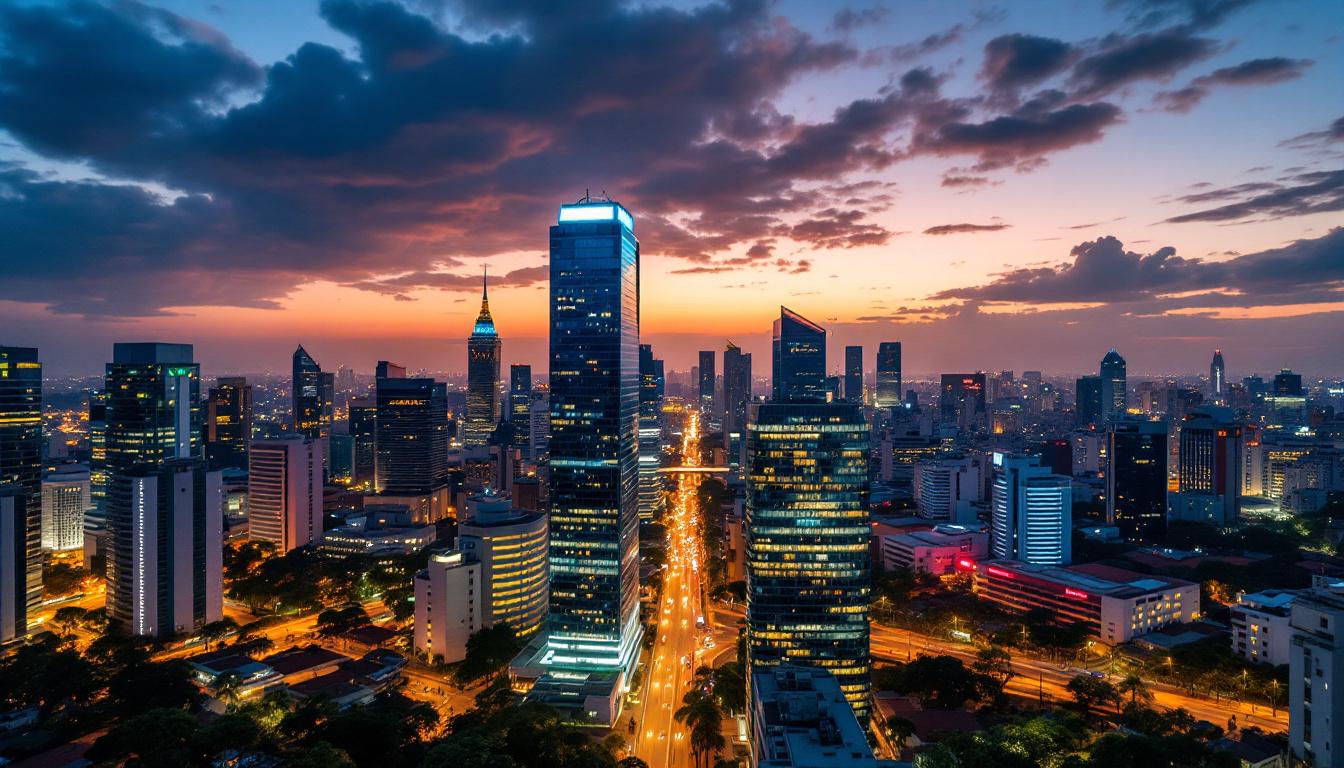
São Paulo is the only Latin American city where a North American coverage team can compress an entire regional itinerary into a single week and still be home for the next Monday morning. The Brazilian capital of capital, host to the bulk of B3-listed market capitalization and the regional headquarters of nearly every multinational operating south of the Rio Grande, runs on a rhythm that is closer to New York or London than to anywhere else in the hemisphere. The trade-off is friction. The airport that handles the majority of inbound long-haul traffic sits forty-five kilometers from the financial corridor that justified the trip. The city itself is structurally congested in ways that have no real parallel in North America. And the personal-security calculus, while improved over the last decade, still imposes operating constraints that US deal teams routinely underestimate on their first visit.
This guide is written for the inbound North American visitor whose week in São Paulo is built around meetings on Avenida Brigadeiro Faria Lima, in Itaim Bibi, in the Vila Olímpia office towers, or at the legal and consulting offices clustered around Jardins. It assumes the traveler is making the trip because there is a reason — an IPO roadshow, an M&A diligence session, a board meeting at a US-listed Brazilian issuer, an investor day, or the quarterly round of LatAm fund-manager meetings — and that the airline cabin, the hotel, the ground transport, and the dinner choices are all operational decisions rather than discretionary ones.
The Airport Question: GRU, CGH, and VCP
São Paulo is served by three civil airports, and the distinction between them matters more than most US travelers realize before they arrive.
Guarulhos (GRU)
Aeroporto Internacional de São Paulo / Guarulhos – Governador André Franco Montoro, ICAO code SBGR, is the primary international gateway and the airport every long-haul flight from the United States lands at. It sits in the municipality of Guarulhos, roughly twenty-eight kilometers northeast of the central business district as the helicopter flies and forty to forty-five kilometers by road. Terminals 2 and 3 handle international arrivals, with Terminal 3 reserved for Star Alliance and selected oneworld carriers operating widebody equipment from North America and Europe.
The friction at GRU is not the terminal experience itself, which is functionally competent and offers immigration kiosks for US passport holders, but the surface transfer to the city. The Rodovia Hélio Schmidt and the Marginal Tietê between GRU and the western office corridor are among the most congested arterials in the Americas. A transfer that maps at forty minutes off-peak can stretch to two and a half hours during the morning and evening commuter windows, and there is no rail option that meaningfully serves the financial corridor. The CPTM Linha 13-Jade connects GRU to the regional rail network at Engenheiro Goulart, but the practical journey time to Faria Lima with the required transfers exceeds the worst-case car transfer.
For inbound visitors, this airport is non-negotiable for long-haul itineraries. Plan around the transfer rather than against it.
Congonhas (CGH)
Aeroporto de São Paulo / Congonhas, ICAO code SBSP, is the in-town domestic airport, embedded in the southern part of the city in the Campo Belo district. CGH sits roughly ten kilometers from Faria Lima and, in light traffic, can be reached from the hotel cluster in under twenty minutes. In peak traffic the same trip can take an hour, but the worst-case CGH transfer is consistently better than the best-case GRU transfer.
CGH is dominated by the LATAM and Azul domestic shuttle to Rio de Janeiro Santos Dumont (SDU) and a handful of other regional services. North American travelers connecting onward to Rio, Brasília, Belo Horizonte, or the secondary Brazilian markets will typically transit through CGH rather than backtracking to GRU. The airport has historically operated under slot constraints and a runway length limitation that excludes widebody operations, which is exactly why it has remained operationally relevant: it functions as the city’s executive shuttle hub rather than as an overflow international gateway.
Viracopos (VCP)
Aeroporto Internacional de Viracopos, ICAO code SBKP, sits in Campinas, roughly one hundred kilometers northwest of central São Paulo. It is the secondary international gateway and the main cargo hub for the metropolitan region. For inbound business travelers, VCP is rarely the right answer — Azul operates the largest schedule from VCP and has historically used it as a hub, but the ground transfer time to the financial corridor is consistently the worst of the three options. The exception is travelers whose itinerary is built around a specific Azul connection or who are visiting the Campinas industrial belt directly.
The operational default for inbound North American visitors should be: arrive GRU, depart GRU, use CGH for any intra-Brazil onward connections, and avoid VCP unless a specific routing or destination requires it.
North American Origin Routing and Premium-Cabin Patterns
The premium-cabin geography between the major US gateways and GRU is more concentrated than it appears on a route map. Five carriers operate the bulk of the meaningful inventory: American Airlines, United Airlines, Delta Air Lines, LATAM, and Avianca, with the latter serving the connection-via-Bogotá market rather than nonstop GRU service from the US.
Miami (MIA) and the South Florida Corridor
Miami is the dominant US gateway for São Paulo, both in terms of frequency and in terms of premium-cabin seat availability. American Airlines operates multiple daily flights between MIA and GRU, predominantly with 777-300ER equipment configured with Flagship Business Class in a 1-2-1 reverse herringbone layout. LATAM operates a parallel schedule from MIA, with 777-300ER and 787-9 equipment running both daily and double-daily depending on season.
For coverage teams based on the East Coast, MIA is the path of least resistance. The total elapsed time from any major Northeast or Mid-Atlantic city via MIA is competitive with the JFK and EWR nonstops, the premium-cabin seat selection is the deepest in the network, and the connection at MIA itself is operationally well-understood. The schedule pattern departs MIA in the late evening and arrives GRU in the morning, which is structurally well-suited to a Monday-morning start in São Paulo with a Sunday-night departure from the US.
New York (JFK) and Newark (EWR)
American operates a daily JFK–GRU nonstop with 777-200ER equipment. United operates EWR–GRU nonstops with 777-200ER and 787-10 equipment, with the 787-10 deployment offering the more contemporary Polaris cabin. LATAM has historically operated JFK–GRU service as well, with current schedule depending on the season.
The JFK and EWR nonstops are the right answer for senior bankers, lawyers, and IR teams flying out of Manhattan and the Tri-State corridor. The premium cabin pricing is structurally higher than the MIA-connecting alternative, but the time savings on a multi-day São Paulo itinerary justify the differential for billable-time-constrained travelers.
Houston (IAH), Dallas (DFW), and Atlanta (ATL)
United operates IAH–GRU nonstop service, typically with 787-9 equipment. American operates DFW–GRU nonstop with 777-200ER equipment. Delta operates ATL–GRU nonstop with 767-400ER and, on selected rotations, A350-900 equipment, with the A350 offering the meaningfully better Delta One product.
For travelers based in the Houston energy corridor, the Dallas legal and consulting cluster, and the Atlanta corporate base, these nonstops are the operational default. The Delta ATL–GRU rotation on A350 equipment is particularly worth pursuing for SkyMiles loyalists and for travelers whose corporate travel program is built around Delta.
Los Angeles (LAX) and San Francisco (SFO)
The West Coast picture is thinner. LATAM operates LAX–GRU nonstop with 777-300ER equipment. There is no current daily nonstop from SFO to GRU; West Coast travelers connect via LAX, IAH, DFW, MIA, or occasionally JFK depending on schedule and fare. The total elapsed time from SFO to GRU is consistently above fourteen hours regardless of routing, which is a meaningful consideration when scheduling against Pacific Time work-week constraints.
The Avianca Bogotá Routing
Avianca’s Bogotá-hub model creates a viable connecting alternative for travelers originating in secondary US markets or for those with corporate travel programs aligned with the Star Alliance. The BOG–GRU leg is operated with A330 equipment, with a business-class product that is competitive on the regional sector. The Bogotá connection adds elapsed time relative to a nonstop but opens up a wider US-origin map than the nonstop carriers can support.
The Faria Lima Corridor: Why the Geography Matters
The single most important geographic fact about doing business in São Paulo is that the financial corridor is not in the historic center. It is in the western part of the city, organized around Avenida Brigadeiro Faria Lima, with the dependent neighborhoods of Itaim Bibi and Vila Olímpia immediately to the south and east, and the Jardins residential and dining district immediately to the north.
This concentration is the operational equivalent of saying that everything in midtown Manhattan happens between 47th and 57th. The major Brazilian and international investment banks, the local offices of the global law firms, the LatAm-focused asset managers, the Big Four accounting practices, the consulting firms, and the IR offices of the largest B3-listed and US-listed Brazilian issuers all sit within roughly a three-kilometer radius of the intersection of Faria Lima and Rua Iguatemi. A morning of meetings at four different banks can be done entirely on foot if the weather cooperates and the schedule is generous.
The implication for hotel selection is straightforward: if the trip is about meetings in this corridor, the hotel should be in this corridor. The savings from staying in a Paulista Avenue property or, worse, in the historic center are not real once the daily car transfers are factored in.
Avenida Faria Lima
Faria Lima itself is a five-kilometer north-south axis running from the Pinheiros River on the south to the Iguatemi shopping center and the boundary with Jardim Paulistano on the north. The southern half of the avenue, between Avenida Cidade Jardim and the river, hosts the densest concentration of investment banking and asset management offices. The northern half is more mixed, with retail, hospitality, and medical office tenants alongside the financial firms.
Itaim Bibi
Itaim Bibi sits immediately east of Faria Lima and hosts the second tier of office inventory, plus a meaningful share of the city’s better dinner and bar inventory. The boundary between Faria Lima and Itaim is administrative rather than functional; for the visiting analyst, the two read as one neighborhood.
Vila Olímpia
Vila Olímpia sits south of Itaim, on the eastern bank of the river. It is the newer office cluster and hosts the local headquarters of a meaningful share of the technology, e-commerce, and back-office operations of the multinationals. The hotel inventory here is more limited than in Faria Lima proper, but the transit time to the main meeting cluster is short enough that Vila Olímpia hotels remain operationally viable.
Jardins
Jardins, north of Avenida Paulista and stretching toward the Ibirapuera Park, is the traditional luxury residential and dining district. The hotel inventory in Jardins is the most established in the city in terms of brand prestige, and the dining concentration is the densest in São Paulo. For trips that mix business meetings in Faria Lima with evening dinners with clients or with personal time on the back end, Jardins hotels offer the better balance of locations.
Corporate Hotel Inventory
The hotel inventory in the Faria Lima–Itaim–Jardins triangle is deeper than the city’s reputation as a difficult market would suggest. The properties below are the ones that show up consistently on the preferred-hotel programs of the major US banks, law firms, and consultancies, and on the in-house travel programs of the US-listed Brazilian issuers.
Fasano São Paulo
Fasano, on Rua Vittorio Fasano in Jardins, is the local benchmark for high-end hospitality and is the property most consistently used by senior US deal teams, board members of US-listed Brazilian companies, and visiting fund managers when budget is not the binding constraint. The building was designed by Isay Weinfeld and Marcio Kogan, and the operational standard is comparable to the best of the Aman and Rosewood properties globally. The hotel houses the Fasano restaurant on the ground floor, which functions as the city’s premier business dining venue for power lunches and senior-level dinners.
The trade-off with Fasano is location. Jardins is fifteen to thirty minutes by car from Faria Lima depending on traffic, and the morning commute during the rainy season can be more painful than the geography suggests. For trips built around back-to-back Faria Lima meetings, a hotel inside the financial corridor itself will save real time over the course of the week.
Palácio Tangará
Palácio Tangará, an Oetker Collection property in the Burle Marx Park area of Panamby, is the other end of the high-end spectrum. It is a destination hotel rather than a transit hotel — the property sits inside a private park, well removed from the financial corridor, and the room product is consistently the best in the city. The location is a meaningful constraint for trips built around Faria Lima meetings, but for visitors arriving for a single high-stakes event (an investor day, a board meeting at the property, an offsite) Palácio Tangará reads as the right venue.
Hotel Unique
Unique, the Ruy Ohtake building on the edge of Jardim Paulista facing Ibirapuera Park, sits at the intersection of the Jardins dining cluster and the southern Paulista office corridor. The architecture is the distinguishing feature — the boat-hull form is one of the most recognized contemporary buildings in São Paulo — and the rooftop bar is a legitimate client-entertainment venue with the view to support it. The transfer time to Faria Lima is similar to Fasano, which is to say imperfect but manageable.
Tivoli Mofarrej São Paulo
Tivoli Mofarrej, on Alameda Santos in the Jardins–Paulista boundary, is the most established large-format luxury property in the city. The conference and meeting space is more developed than at Fasano or Unique, which makes Tivoli the right answer for trips that involve hosted meetings at the hotel itself — analyst days, small-format roadshow events, internal team offsites combined with external meetings. The location is reasonable for both Paulista Avenue and Faria Lima itineraries.
Renaissance Faria Lima
Renaissance São Paulo, on Alameda Santos in the Jardins-Paulista corridor, is the Marriott-portfolio property most commonly used by US corporate travel programs operating on Marriott-preferred terms. The product is solid corporate hospitality, the location is functional for both Paulista and Faria Lima itineraries, and the loyalty economics for Marriott Bonvoy travelers are real.
For travelers requiring an inside-the-corridor Marriott option, the JW Marriott in the Faria Lima area and the Marriott Executive Apartments product both offer the brand experience with materially better transfer times to morning meetings.
Hyatt and Hilton Inventory
The Grand Hyatt São Paulo, on Avenida das Nações Unidas in the Brooklin district south of Itaim, is the World of Hyatt flagship property in the city and the operational default for Hyatt-preferred corporate programs. The location is south of the main Faria Lima cluster but closer to the southern office towers and the Berrini financial sub-corridor. The Hilton São Paulo Morumbi serves a similar function for Hilton-preferred travelers.
The Pullman and Sofitel Properties
Accor operates Pullman and Sofitel inventory in the Vila Olímpia and Jardins areas respectively, with the Sofitel Ibirapuera and Sofitel Jequitimar positioning as upper-upscale alternatives to the Marriott portfolio. These properties show up on French and continental European corporate programs more consistently than on US programs but are operationally viable for any inbound visitor.
Helicopter Logistics
São Paulo operates the largest civilian helicopter fleet of any metropolitan area in the Western Hemisphere. The vertical infrastructure that supports this fleet is dense enough that a meaningful share of senior executives and visiting deal-team principals move between Faria Lima and CGH, and occasionally between Faria Lima and GRU, by helicopter rather than by car.
The CGH–Faria Lima Shuttle
The standard helicopter movement for an inbound visitor is the Congonhas-to-Faria Lima leg, used either to compress an arrival schedule on a domestic onward flight or to escape the city to a regional destination — Rio, Campos do Jordão, Trancoso, or one of the Sotogrande-style coastal compounds along the São Paulo and Rio coastlines. Flight time is six to eight minutes. The same trip by car can be forty-five minutes during peak.
Several operators run helicopter services from the rooftop helipads of the major Faria Lima office towers and the dedicated helipoint network across the city. The largest of these is Helisul, with a fleet that includes Airbus H125, H130, and EC135 equipment. Helimarte, Líder Aviação, and Helibras-affiliated operators run parallel services. The rates are pre-COVID-era restored, and a one-way Faria Lima–CGH transfer prices in the low thousands of reais for a four-seat aircraft on a chartered basis.
The GRU–Faria Lima Question
Helicopter transfer from GRU to Faria Lima is operationally available but less commonly used than the CGH alternative, primarily because the helipads at GRU itself are limited and the slot coordination is more involved. The trip is roughly twelve to fifteen minutes by helicopter against forty to ninety minutes by car. For inbound principals on tightly scheduled days — a same-day arrival into a morning board meeting, for example — the helicopter is the right answer despite the cost premium.
The Practical Calculus
For US deal teams, helicopter use is best understood as an optional optimization rather than a default. The right answer for most inbound visitors is to absorb the GRU surface transfer on arrival, fly out from CGH for any Rio or Brazilian secondary-market connections, and reserve the helicopter for either the CGH morning shuttle compression or for the same-day GRU departure during a constrained window. The hotel concierge teams at the corporate properties can coordinate the booking on twenty-four hours’ notice, and most of the senior bankers’ offices in the Faria Lima towers have rooftop helipad access that the visitor can use as the meeting host.
Business Dining
São Paulo’s restaurant scene is the deepest in Latin America and competitive with any city in the hemisphere outside New York. For business dining, the inventory sorts into a relatively narrow set of venues that show up repeatedly across the calendars of senior bankers, lawyers, and IR executives.
DOM
DOM, on Rua Barão de Capanema in Jardins, is the Alex Atala flagship and the restaurant most consistently cited as the city’s reference high-end venue. The cooking is built around Amazonian ingredients sourced through Atala’s long-standing relationships with indigenous communities in the Amazon basin, and the tasting menu format is the operational default. For client dinners with North American visitors who have not previously been to São Paulo, DOM is the right answer roughly four times out of five — the food is technically demanding without being inaccessible, the wine list is among the best in the city, and the room reads as a serious venue.
Maní
Maní, in Jardim Paulistano, is Helena Rizzo’s restaurant and the second of the city’s reference fine-dining venues. The cooking is contemporary Brazilian with strong Mediterranean influences, the room is more casual than DOM, and the menu is more flexible — a four-course dinner here can run as long or as short as the conversation requires. Maní is the better answer for client dinners that need to balance serious food with a more relaxed conversational dynamic.
Tuju
Tuju, in the Vila Madalena district, is the Ivan Ralston restaurant most consistently cited alongside DOM and Maní in the city’s top tier. The cooking is more experimental and the format more rigorously tasting-menu-driven. Tuju is the right answer for client entertainment where the food is the principal subject of the dinner and the conversation can accommodate longer service intervals.
Fasano
The Fasano restaurant inside the Fasano Jardins hotel is the city’s standard business dining venue. The Italian menu is the most consistent in São Paulo, the room is built for business conversation in a way that the fine-dining venues sometimes are not, and the wine list runs deep across both Italian and Brazilian production. For Faria Lima power lunches and for client dinners where the substance of the meeting matters more than the experiential framing, Fasano is the operational default.
A Casa do Porco
A Casa do Porco, in the República district near the historic center, is the Jefferson Rueda restaurant that has anchored every São Paulo restaurant list of the last several years. The cooking is built around pork in every form, the room is smaller and more casual than the Jardins fine-dining venues, and the booking pressure is consistently the most intense in the city. For client dinners with visitors who already know São Paulo and want a less formal experience, A Casa do Porco reads as a meaningful gesture.
The location in República means that car transfers from the Faria Lima hotel cluster run twenty to forty minutes depending on the evening’s traffic — meaningful, but absorbable for the right dinner.
The Steakhouse Inventory
The Brazilian steakhouse format is best handled in São Paulo at Varanda Grill in Vila Olímpia or at Esquina Mocotó for a more contemporary, regional take on Brazilian cooking with strong protein execution. For visitors expecting the rodízio churrasco format, the higher-end venues in Faria Lima — Templo da Carne Marcos Bassi and the Fogo de Chão flagship — represent the better expression of the category.
The Power Lunch Venues
For lunches in the Faria Lima corridor itself, the operational defaults are the Fasano-group properties (Gero, Parigi), the Italian restaurants in the immediate Faria Lima area (Famiglia Mancini for a more casual register), and the hotel restaurants at Renaissance and Tivoli. The walk-in pressure at lunch is meaningful — most of the better venues require booking at least twenty-four hours in advance, and the Friday lunch slot in particular is consistently full a week out.
Security and Personal Safety Protocols
São Paulo’s personal-security environment is materially improved relative to its reputation in the United States, but it is not equivalent to operating in a North American city. The risks are concentrated, predictable, and manageable with the right operational hygiene. Underestimating them is the most consistent mistake first-time visitors make.
The Threat Geography
The principal personal-security risk for inbound visitors in the Faria Lima–Itaim–Jardins triangle is petty crime and opportunistic theft — phone snatching at intersections, watch-and-jewelry theft from pedestrians, and pickpocketing in restaurants and bars. Violent crime against foreigners in the corporate corridor is statistically rare. The risk profile changes meaningfully outside the corporate corridor, and the historic center, the eastern peripheral neighborhoods, and the area around the Rodoviária bus terminal are not appropriate destinations for an unguided inbound visitor.
The express kidnapping risk — short-duration kidnapping for ATM withdrawal — is a recognized phenomenon in São Paulo, with the threat geography concentrated around poorly lit pickup locations, unverified taxi services, and unmonitored ride-share pickups. The risk has historically declined relative to the early 2000s, but the standard protocols remain operationally sensible for inbound corporate travelers.
Convoy and Chauffeur Best Practice
The single highest-impact security decision a visiting executive can make in São Paulo is to use a vetted chauffeur service rather than ride-share or street taxis. The cost differential against ride-share is meaningful — a full-day chauffeur runs four to eight hundred reais depending on the operator and vehicle class — but the security upside, the reliability of pickups in unfamiliar locations, and the operational compression of moving across the city with a driver who knows the meeting calendar all justify the spend for senior travelers.
The major chauffeur operators serving the corporate corridor include Premium and Eleve-class operators tied to the major hotels, plus dedicated services like Carey and the local Helisul ground operation. The standard arrangement is a dedicated driver for the duration of the visit, with the driver staging at the hotel between meetings.
For senior executives with elevated risk profiles — public company CEOs, US-listed Brazilian issuer founders, principals with publicly known transaction involvement — the convoy upgrade is the next operational step. The convoy model involves an armored primary vehicle with a chase car or lead car, professional close-protection personnel, and pre-cleared meeting locations. The major operators in this space include Brink’s-affiliated services, plus the in-house security teams of the largest Brazilian corporates that can be extended to host visitors on a contractual basis.
Hotel Security Protocols
The major corporate hotels in São Paulo operate to international security standards, with controlled access, secure parking, and 24-hour concierge presence. The standard protocols for inbound visitors — using the hotel as the principal pickup and drop-off point, avoiding street-hailed transport, declining to disclose hotel-room information to non-vetted parties — apply with the same force in São Paulo as in any other major Latin American city.
Phone and Device Discipline
Phone snatching is the single most common security incident affecting inbound business visitors. The operational rule is straightforward: do not use a phone on the street outside the hotel and major office buildings, do not carry a phone visibly in a hand, and do not stand at an unsecured intersection with a phone visible. The same rule applies to visible jewelry, watches above the cost threshold of basic timepieces, and any visible bag-and-wallet display in pedestrian environments.
The Cyber Hygiene Dimension
For US-listed Brazilian issuer visits and for IR-sensitive meetings, the standard MNPI-handling protocols around device security, hotel Wi-Fi use, and document handling apply with elevated weight in São Paulo. The corporate hotels offer business-center services for printing and document handling, but for IR-sensitive materials the visiting team should default to in-firm office facilities or vetted local counsel offices rather than hotel print services.
Per Diem Reality and Expense Management
The GBTA Brazil corporate-travel data consistently positions São Paulo as the most expensive Latin American city for business travel, with daily costs that converge with those of New York, London, and Tokyo when measured on a hotel-plus-meals-plus-ground-transport basis. For US corporate travel programs, the implication is that the standard LatAm per-diem schedules are typically inadequate for São Paulo and require either a city-specific adjustment or a meaningful exception protocol.
The Hotel Component
Corporate-rate inventory at the Faria Lima and Jardins hotels described above runs from roughly USD 350 per night at the more accessible end of the inventory (Renaissance, Tivoli, Marriott portfolio properties on volume-discounted corporate rates) to USD 700-plus at the high-end (Fasano, Palácio Tangará, Unique). Convention pricing during major industry events — the Brazilian banking and investment conferences, the major B3 corporate days, the international association meetings hosted in the city — pushes the rate distribution materially higher, and the lead-time for booking these windows extends to six months out.
The Ground Transport Component
A full-day chauffeur runs USD 80–160 depending on operator and vehicle class. A round-trip GRU transfer with a chauffeur runs USD 100–200. Helicopter transfers price from USD 600 one-way for a short-leg CGH–Faria Lima movement. Ride-share pricing is materially lower but, as noted above, is not the operational default for security-sensitive corporate travel.
The Meal Component
Business dining at the venues described above runs USD 100–250 per person at lunch and USD 150–400 per person at dinner, before wine. The wine markup at the high-end restaurants is meaningful, and the corporate-card protocols for client entertainment in São Paulo should anticipate wine spending at the same magnitude as the food spending for the higher-end venues.
The Practical Per-Diem Range
For a senior US-based traveler staying at a Jardins-tier hotel, using a chauffeur for the duration of the visit, and entertaining clients at the reference dining venues, the all-in daily spend in São Paulo runs USD 1,200–2,400. The lower end of the range is achievable for a more disciplined trip; the upper end is the realistic budget for a multi-day client-entertainment-heavy itinerary at the high end of the hotel inventory.
This range is materially above the standard US corporate travel per diem for international destinations and requires an exception protocol in most travel programs.
Cultural and Operational Norms
The operational norms of doing business in São Paulo are closer to continental European practice than to US practice, with several distinctive Brazilian features that inbound visitors should anticipate.
Meeting Timing
Morning meetings in São Paulo start later than the US default. A 9:30 AM start is more common than an 8:00 or 8:30 start, and the working day extends later into the evening. Lunch is a real meal — the one-hour-at-desk pattern common in US financial centers does not apply in São Paulo, and lunch with clients can run ninety minutes to two hours, particularly on Fridays.
Evening meetings genuinely happen in São Paulo. A 6:30 PM meeting is common, and dinners with clients routinely run until 10:30 or 11:00 PM. The implication for itinerary construction is that the visiting team should plan for longer days than the equivalent New York schedule and should not stack a 7:00 AM call back to the US after a São Paulo client dinner.
Language
English fluency at the senior level in the Faria Lima corridor is consistently strong. The IR teams of the US-listed Brazilian issuers, the local offices of the global investment banks, and the LatAm-focused asset managers all operate in English as a working language for inbound interactions. At the operational level — drivers, hotel staff outside the major corporate properties, restaurant service outside the international venues — Portuguese is meaningfully more useful than Spanish, and the visiting analyst who has a working command of Portuguese expressions will have a smoother trip than the one who assumes Spanish-language proximity.
Dress
Business dress in São Paulo is closer to the European register than to US business-casual. Suits are the default for client-facing meetings in the financial corridor, and the dress code at the high-end dining venues skews more formal than the equivalent New York register. The implication for the visiting team is to pack for a more formal trip than the US default.
Payment and Currency
Corporate-card acceptance in São Paulo is essentially universal at the venues described in this guide. The Brazilian Pix instant-payment system has become the dominant local payment rail for retail transactions, but inbound visitors will not need to engage with Pix during a standard business trip. The relevant currency consideration is the BRL-USD volatility, which has been meaningful over the last several reporting cycles and which affects the visible cost of the trip in USD terms more than it affects the underlying BRL cost.
Onward Travel: Rio, Brasília, and the Regional Network
For multi-city Brazilian itineraries, the operational pattern is to use São Paulo as the hub and run regional sectors from CGH on the LATAM and Azul shuttle network.
Rio de Janeiro
The CGH–SDU shuttle is the most heavily trafficked domestic sector in Brazil, with LATAM and Azul running near-continuous service throughout the business day. Flight time is roughly fifty minutes. SDU sits in central Rio, with car transfers to the Centro financial district running fifteen to thirty minutes depending on traffic. For combined São Paulo–Rio trips, the pattern is to run São Paulo as the primary leg and route Rio as a single-day or two-day extension.
Brasília
Brasília is two hours from São Paulo by air on either LATAM or Azul service from CGH. For inbound visitors whose itinerary involves government, regulatory, or state-owned-enterprise meetings, Brasília is the required destination, and the pattern is typically to fly out same-day from CGH and return to São Paulo by evening.
Belo Horizonte, Curitiba, Porto Alegre
The secondary Brazilian markets — Belo Horizonte for mining and industrial, Curitiba for automotive and agricultural, Porto Alegre for agribusiness and financial services — are all reachable on one-hour to two-hour LATAM or Azul service from CGH or VCP. For specialized sector itineraries these markets matter; for the standard São Paulo–Rio coverage trip, they do not.
Frequently Asked Questions
Should I fly nonstop from JFK or connect through MIA for a São Paulo trip?
The answer depends on the seniority and time-pressure profile of the traveler. For senior bankers and partners with billable-time constraints, the JFK or EWR nonstop is the better answer despite the higher fare — the time savings on a multi-day itinerary justify the differential. For more cost-sensitive travelers and for trips with flexible scheduling, the MIA connection on American or LATAM offers a deeper premium-cabin inventory and meaningfully better fare optionality. The MIA-connecting schedule pattern (late-evening departure, morning arrival) is structurally well-suited to a Monday-morning start in São Paulo.
How should I plan the GRU-to-Faria-Lima transfer on arrival?
The default plan should be a pre-arranged chauffeur pickup at the GRU international arrivals hall, with the driver staged in the meet-and-greet area and a confirmed mobile number for coordination. The transfer time should be budgeted at ninety minutes for any morning-arrival scenario and at sixty minutes for an evening or overnight arrival. Helicopter transfer from GRU to Faria Lima is operationally available but requires twenty-four-to-forty-eight-hour lead time and is more commonly used for departures than arrivals, given the unpredictability of customs and immigration processing times.
Is it safe to walk between meetings in the Faria Lima corridor?
Walking between meetings within the immediate Faria Lima–Itaim corridor is operationally fine during daylight hours, with standard urban-area awareness. The risks are concentrated in phone-snatching and watch-theft scenarios at intersections, which are managed by not using a phone visibly on the street and by not wearing visible jewelry or high-value timepieces. Walking outside the immediate corporate corridor, particularly toward the historic center or toward the eastern peripheral neighborhoods, is not the operational default for inbound visitors regardless of the time of day.
What is the realistic budget for a five-day São Paulo trip at the senior level?
For a senior US-based traveler staying at a Jardins-tier hotel (Fasano, Palácio Tangará, Unique), using a chauffeur for the duration, and entertaining clients at the reference dining venues, the all-in spend for a five-day trip runs USD 8,000–14,000 excluding airfare. Premium-cabin airfare from the US adds USD 4,000–8,000 depending on origin and booking lead time. The total trip cost at the senior level is therefore in the USD 12,000–22,000 range, which is materially above the standard US corporate per-diem assumption and requires explicit budgeting in advance.
How do I handle client dinners when I am the inbound visitor?
The convention in São Paulo is that the host — typically the Brazilian-side bank, law firm, or issuer — books and pays for the principal client dinner during the visit. The inbound visitor’s role is to be available, to be appropriately dressed for the venue, and to be prepared for the dinner to run later than the US default (typically 8:30 PM start, with dinner ending at 11:00 PM or later). Reciprocity is expected on the return visit when the Brazilian counterparty travels to the US, and the visiting US team should anticipate hosting a comparable dinner in New York, Houston, or Miami when the schedule permits.
Should I use ride-share or chauffeur services for getting around São Paulo?
For senior corporate travelers and for any IR-sensitive or MNPI-sensitive itinerary, the operational default is a dedicated chauffeur for the duration of the visit. The cost differential against ride-share is meaningful but absorbable in the context of the overall trip budget, and the security, reliability, and operational-compression benefits are material. Ride-share is operationally functional for more junior travelers and for non-sensitive itineraries, with the standard precautions around pickup location verification, ride confirmation through the app, and avoidance of street-hailed transport. For executive-level travelers with elevated risk profiles, the convoy upgrade with close-protection personnel and an armored vehicle is the appropriate next step.