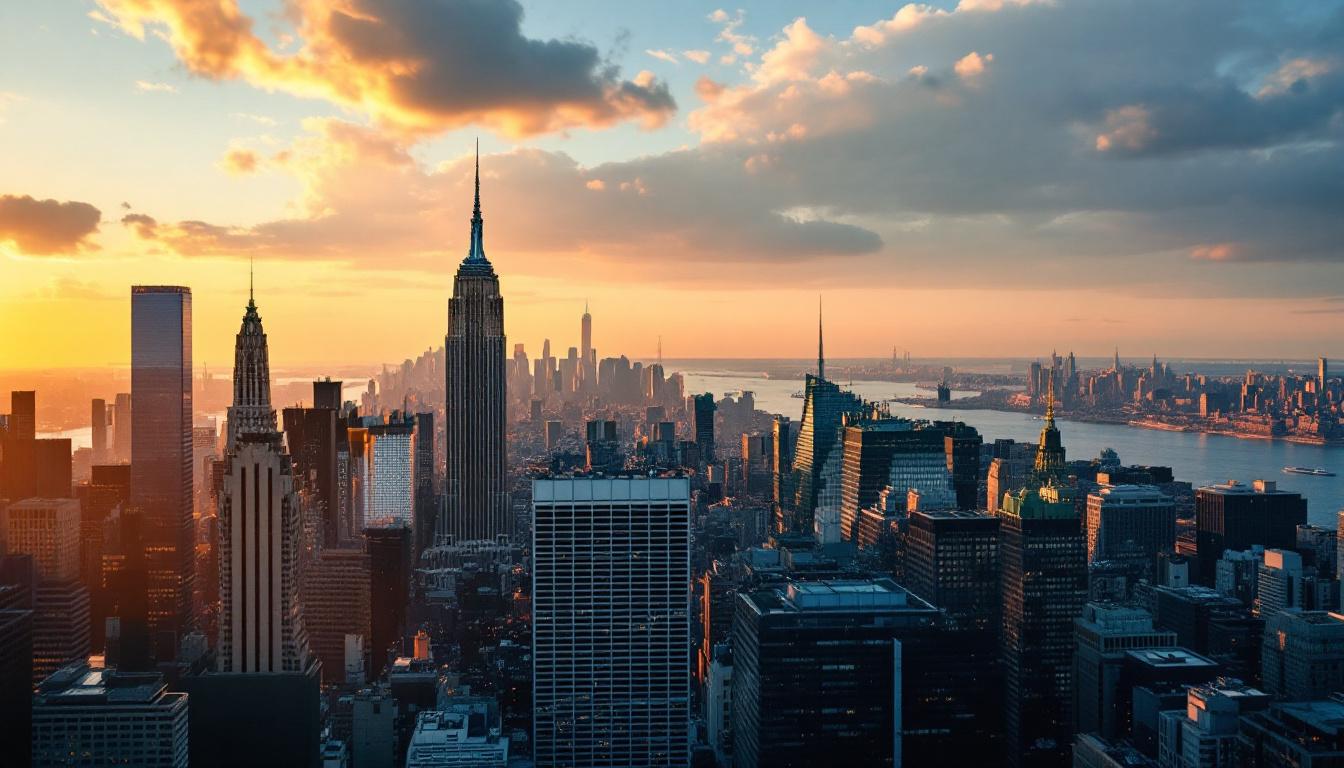
New York remains the most expensive, most operationally complex, and most strategically important business travel market in the Americas. For corporate travel managers running programs that touch Manhattan with any frequency, the city is less a destination than a permanent line item — a market where per-diems strain category caps, where ground transport decisions can swing trip cost by 40 percent, and where the wrong hotel submarket can add 35 minutes to a 7:45 a.m. meeting in a way that compounds across an entire account team.
This guide is written for the program owner who has to defend a New York policy carve-out to finance, the executive assistant routing a CFO into a Park Avenue board meeting on a Tuesday morning, and the visiting principal who needs to understand which restaurant the host firm will actually book when the agenda calls for “dinner near the office.” It does not cover tourist circuits, Broadway, or the 5th Avenue retail corridor. It covers airports, hotels, cars, conference rooms, dinner reservations, weather windows, and the GBTA-tracked cost realities that make New York the budget conversation every program has at least once a year.
The 2026 picture is this: Manhattan hotel ADRs have stabilized above 2019 levels and continue to push, FAA-led airspace reform at the three regional airports has reduced taxi delays modestly but added new ground-side complexity, and the post-2024 corporate return-to-office tide has restored midweek demand to a level that makes Tuesday and Wednesday nights the hardest inventory in North America. The operators who manage New York well are the ones who plan it like an industrial procurement exercise, not a trip.
The Three-Airport Decision
New York is served by three commercial airports under the Port Authority of New York and New Jersey: John F. Kennedy International (JFK), LaGuardia (LGA), and Newark Liberty International (EWR). Each has a distinct profile, and the correct choice for any given itinerary depends less on price than on which submarket the traveler is working, what time the meeting starts, and whether the inbound leg is domestic or international.
JFK — Queens
JFK is the only one of the three with meaningful international long-haul service. It is the right airport for inbound trans-Atlantic and trans-Pacific legs, for premium-cabin connections, and for any itinerary where the traveler is willing to trade ground time for in-flight product. Terminal 4 (Delta, SkyTeam) and Terminal 1 (in the middle of a multi-year redevelopment, with new gates phasing in through 2026) handle the heaviest international volumes. Terminal 8 (American, oneworld) anchors the trans-Atlantic premium business.
Ground time from Terminal 4 to Midtown East is realistically 45 to 75 minutes by car between 6 a.m. and 10 a.m., with significant variance based on whether the traveler is routed via the Van Wyck and Midtown Tunnel or the Belt Parkway and Brooklyn-Battery. Returning to JFK on a weekday between 3 p.m. and 7 p.m. is the single hardest ground-transport problem in the New York system; build 90 minutes for that move.
LaGuardia — Queens
LaGuardia is the closest commercial airport to Midtown — Terminal B can produce a 22-minute ride to 50th and Park at 6:30 a.m. — and is the right choice for domestic shuttle traffic, particularly the Boston, Washington National, and Chicago O’Hare corridors. The 2022-completed Terminal B and the more recent Terminal C (Delta) have transformed what was, a decade ago, the most embarrassing airport in the country into a credible domestic hub.
LaGuardia has no meaningful international service beyond a small Air Canada presence. It does not have a rail link in 2026 — the AirTrain proposal was canceled in 2023 — and ground access depends entirely on the Grand Central Parkway, the BQE, or the Queensboro Bridge, each of which can fail catastrophically in weather or police-action events. LGA is the right airport for predictable, domestic, single-day round-trips. It is the wrong airport for any itinerary where a delayed inbound creates downstream connection risk.
Newark Liberty — New Jersey
Newark is the United hub and the only one of the three with a direct rail connection to Manhattan via NJ Transit and Amtrak (Newark Airport station, AirTrain to terminals). It is the strongest airport for the Hudson Yards, Financial District, and West Side submarkets, and for travelers staying in Jersey City or Hoboken. United’s Polaris lounge in Terminal C is the best premium ground product of the three airports.
Newark’s reputation for delay is partially deserved and partially obsolete. The 2024-2025 FAA airspace redesign reduced average departure delays at EWR meaningfully, though weather-day performance remains worse than JFK and LGA because of runway geometry. Ground access via the Holland or Lincoln Tunnel is the chokepoint; the rail option is the operational hedge that experienced operators use.
Airport Selection Matrix
| Inbound profile | Preferred airport | Notes |
|---|---|---|
| Trans-Atlantic premium cabin | JFK T4 / T8 | Best long-haul product, worst ground time |
| Trans-Pacific premium cabin | JFK T1 / T4 | Limited alternatives |
| Boston / DCA / ORD shuttle | LGA | Closest to Midtown, weather-fragile |
| United domestic / Polaris | EWR | Rail hedge, Hudson Yards proximity |
| Same-day round-trip to Midtown | LGA | If weather is clear |
| Hudson Yards / Financial District base | EWR | Tunnel risk, rail option |
| Carrying checked international bags to Midtown East | JFK | Avoid LGA terminal-to-bridge friction |
Hotel Inventory by Submarket
Manhattan corporate hotel inventory is best understood as five distinct submarkets, each with its own demand profile, ADR floor, and meeting geography. The submarket choice should be driven by where the traveler is working, not where the brand is preferred. A 14-minute taxi between submarkets at 8:15 a.m. can become 38 minutes; the hotel-submarket-to-meeting-submarket alignment is the most under-managed variable in corporate New York travel.
Midtown East (Park Avenue, Madison, 42nd–59th)
Midtown East is the legacy corporate hotel core. It contains the largest concentration of Fortune 500 and AmLaw 100 office addresses (Park Avenue, Madison Avenue, the East 50s), the heaviest concentration of legal and banking dinner restaurants, and the bulk of the city’s traditional luxury inventory. Properties include the Lotte New York Palace, the St. Regis, the Peninsula, the Four Seasons (closed for renovation through portions of 2026; verify status at booking), the Park Hyatt, the Loews Regency, the Kimpton Hotel Eventi (technically Chelsea but services the corridor), and a deep bench of full-service brands.
ADR floor in 2026: $675-$900 midweek for upper-upscale, $1,100-$1,800 for true luxury. The Park Hyatt and St. Regis routinely clear $1,500 on Tuesday and Wednesday nights through earnings seasons.
Midtown East is the correct submarket for legal, banking, M&A advisory, and traditional consulting itineraries. It is wrong for tech principals working Hudson Yards or media buyers working downtown.
Midtown West (Times Square periphery, Theater District, West 40s–50s)
Midtown West is the convention and large-group submarket, anchored by the Marriott Marquis, the New York Hilton Midtown, and the Sheraton New York Times Square. The submarket serves the Javits Center via the 11th Avenue corridor, handles overflow from large pharmaceutical and technology conferences, and offers a substantially lower ADR floor than Midtown East — typically $400-$650 midweek for upper-upscale.
The submarket trades on price and group capacity. It is the right choice for delegations attending Javits-anchored conferences, for cost-sensitive corporate programs that need brand consistency, and for itineraries where the traveler will spend the day at the convention floor rather than at client offices. It is the wrong choice for any itinerary where the traveler needs to credibly entertain a Park Avenue counterparty in the lobby bar.
Financial District / Battery Park
Lower Manhattan inventory has grown substantially since 2015, driven by the World Trade Center site rebuild and the migration of certain investment banks and asset managers downtown. The Four Seasons Downtown, the Beekman, the Conrad, and the Pendry Manhattan West (technically Hudson Yards, but proximate) serve this submarket. ADR floor: $550-$850 midweek.
The Financial District is the correct submarket for travelers working Brookfield Place, the World Trade Center towers, the New York Stock Exchange perimeter, or any address south of Canal. It is wrong for any itinerary that requires Park Avenue access during the 7-10 a.m. peak — the FDR and West Side Highway both fail predictably in that window.
Hudson Yards / West Side
The Hudson Yards submarket is the newest corporate hotel inventory in Manhattan. The Equinox Hotel Hudson Yards, the Pendry Manhattan West, and a small number of smaller-format properties serve this submarket. ADR floor: $700-$1,100 midweek, with the Equinox the price ceiling.
Hudson Yards is the correct submarket for travelers working the BlackRock, KKR, Pfizer, WarnerMedia (now Discovery), and BCG offices that have anchored the development. It offers fast walking access to Penn Station, fast vehicle access to Newark via the Lincoln Tunnel, and reasonable proximity to the Javits Center. It is wrong for any traveler who values dense restaurant inventory in walking distance after 9 p.m.; the submarket still empties at night.
Tribeca / SoHo
Tribeca is the boutique-luxury submarket: the Greenwich Hotel, the Roxy, the Walker Hotel Tribeca, the Soho Grand. ADR floor: $650-$1,400 midweek, with the Greenwich Hotel the consistent ceiling.
Tribeca is the correct submarket for media, fashion, advertising, technology, and creative-industry principals — the traveler whose counterparty offices are in SoHo, Tribeca, or the Meatpacking District. It is wrong for legal and banking itineraries; the commute to Park Avenue at 8:30 a.m. is 30-45 minutes by car and is the trip most likely to generate a missed-meeting incident.
Submarket Selection Reference
| Submarket | ADR floor (midweek 2026) | Best for | Worst for |
|---|---|---|---|
| Midtown East | $675-$1,800 | Legal, banking, consulting | Tech/media downtown |
| Midtown West | $400-$650 | Javits conferences, groups | Park Avenue entertaining |
| Financial District | $550-$850 | Wall Street, downtown firms | 7-10 a.m. uptown moves |
| Hudson Yards | $700-$1,100 | West Side corporates, EWR routing | Late-evening dining proximity |
| Tribeca | $650-$1,400 | Media, fashion, creative | 8:30 a.m. Park Ave meetings |
The Manhattan Ground Transport Reality
There is no other North American city where the ground-transport decision matters more, and no other city where it is more frequently mishandled by visiting travel programs. Manhattan offers four functional ground options: chauffeured car, rideshare, taxi, and subway. The right answer depends on the use case, and the wrong answer is often the one the corporate card defaults to.
Chauffeured Car / Black Car Service
Chauffeured car service is the default for principal travel, for early-morning airport departures, for late-night returns from dinner, and for any itinerary where the traveler is moving more than two times in a single day on a tight schedule. Established New York operators charge $95-$140 per hour with three-hour minimums for sedan service; SUVs run $115-$165. Airport transfers from JFK to Midtown are typically $135-$195 flat plus tolls and gratuity.
The operational case for chauffeured service is not comfort. It is the ability to (a) hold a curb while a meeting runs long, (b) move bags and materials without re-summoning a vehicle, (c) operate reliably at 5:30 a.m. when rideshare supply is thin in residential blocks, and (d) bill predictably against a category cap. The financial case is harder than most travel managers admit — for a single airport transfer and one return, rideshare wins almost every time. For a full day of meetings with three or more movements, chauffeured service is typically cheaper and always more predictable.
Rideshare (Uber, Lyft)
Rideshare is the correct option for single point-to-point movements during the day, for return trips from dinner where the timing is uncertain, and for any movement where surge pricing is unlikely (off-peak, off-weather). Uber Black and Lyft Lux are the corporate-acceptable tiers; UberX and standard Lyft remain the cheaper options when policy permits.
The rideshare reality in 2026 is that New York’s Taxi and Limousine Commission cap on for-hire vehicle licenses, combined with congestion pricing (in effect since January 2025 below 60th Street), has produced higher fares and longer wait times below the cordon during the 5 a.m.-9 p.m. peak. Plan for $9 of congestion pricing surcharge on any entry into the Manhattan central business district, plus typical surge of 1.3x-1.8x during commuter and weather windows.
Yellow Taxi
The traditional yellow taxi is now a niche option. It remains useful for hailed street pickups when rideshare wait times exceed eight minutes, for trips from JFK on a flat-fare basis ($75 plus tolls, surcharges, and tip from JFK to anywhere in Manhattan as of the 2025 TLC rate adjustment), and for a small subset of travelers who prefer not to share location data with a rideshare app. Taxi supply is structurally limited in 2026, and most corporate travelers will default to rideshare or chauffeured service.
Subway
The subway is a legitimate option for time-sensitive moves during the 7-10 a.m. peak and the 4-7 p.m. peak, when surface traffic is at its worst. The Lexington Avenue 4/5/6 line is the workhorse of the East Side corporate corridor and will reliably move a traveler from 86th Street to Wall Street in under 30 minutes door-to-door, including walking time. The 1/2/3 lines serve the West Side and Hudson Yards. The N/Q/R/W serves Midtown and the connection to LaGuardia via the Q70 bus from 74th Street-Roosevelt.
Most corporate travel programs implicitly discourage subway use through expense policy. This is a mistake. For specific moves — Midtown East to Financial District at 8:30 a.m., for example — the subway is faster than any vehicle option by a margin that exceeds 15 minutes. The right policy is one that permits subway use at the traveler’s discretion and reimburses MetroCard or OMNY tap-and-go expenses without category friction.
Ground Transport Decision Reference
| Use case | Recommended option |
|---|---|
| Pre-7 a.m. airport departure from hotel | Chauffeured car |
| 9 a.m. JFK arrival to Midtown East hotel | Chauffeured car or rideshare |
| Single point-to-point mid-day move | Rideshare |
| Full day with 3+ movements + principal | Chauffeured car (full-day rate) |
| Midtown East to Financial District, 8:30 a.m. | Subway (4/5 express) |
| Hudson Yards to Newark, late afternoon | NJ Transit from Penn Station |
| Return from dinner, after 10 p.m. | Rideshare |
| Materials-heavy move during the day | Chauffeured car |
Where Boardrooms Eat
The list of New York restaurants where corporate dinners actually happen is shorter and more stable than the broader restaurant economy would suggest. The host firm’s choice of restaurant is itself a signal — a Park Avenue law firm taking a client to Daniel is making a different statement than a hedge fund taking the same client to Carbone — and the visiting principal benefits from understanding the geography of these decisions before the invitation arrives.
The Institutional Anchors
Daniel (East 65th Street) — Daniel Boulud’s flagship. The default high-end choice for legal, banking, and M&A dinners on the Upper East Side. Private dining rooms are bookable for groups of 8-30 and are the canonical venue for closing dinners. Dress code is enforced.
Le Bernardin (West 51st Street) — Eric Ripert’s seafood institution. Three Michelin stars. The default Midtown West choice for major banking and consulting entertainments, and the most frequent venue for sell-side analyst dinners during earnings seasons. Reservations are difficult; the lounge menu (Le Bernardin Privé) is the credible secondary option.
Marea (Central Park South) — Coastal Italian by Michael White. The default lunch and dinner venue for hedge fund and asset management entertaining. Proximity to the Time Warner Center, Park Hyatt, and Plaza-area offices makes it the easiest mid-Manhattan booking for a 12:30 client lunch.
Le Coucou (Lafayette Street, SoHo) — Daniel Rose’s French restaurant in the 11 Howard hotel. The default choice for media, fashion, and creative-industry dinners that need to be both impressive and downtown. Reservations are difficult, but the host firm with a corporate account holds capacity that walk-in attempts do not.
Carbone (Thompson Street, Greenwich Village) — Major Food Group’s red-sauce Italian. The cultural and political signal here is specific: Carbone is what a hedge fund principal books when he wants to communicate that he is not a banker. Reservations are essentially impossible without an account, and the table-side preparation is performative in a way that makes it unsuitable for sober deal dinners.
The Second Tier (Where the Actual Deals Get Signed)
The Grill (East 52nd Street, the old Four Seasons space) — Major Food Group’s reclamation of the Mies van der Rohe Seagram Building dining room. The current default for executive lunches in Midtown East. The Pool, in the same building, is the dinner counterpart.
Eleven Madison Park (Madison Square Park) — Three Michelin stars, plant-based since 2021. Has lost some institutional dinner traffic since the menu change but remains the choice for tech principals and ESG-aligned firms.
Atomix (East 30th Street) — Two Michelin stars, Korean tasting menu, 14-seat counter. The default for tech and venture entertaining where the host wants to demonstrate cultural fluency without resorting to a steakhouse.
Keens Steakhouse (West 36th Street) — The traditional Midtown West steakhouse, oriented toward midtown legal and corporate clients. Less institutional than the Smith & Wollensky / Sparks tier in cultural register, but more reliable on food.
Sparks Steak House (East 46th Street) — A specific kind of New York institution. The choice when the host wants to signal old-line New York, not contemporary refinement. Wine list is serious.
Estela (East Houston) — The default downtown choice for media and creative-industry dinners that need to be sophisticated but not formal. Smaller groups only.
The Polo Bar (East 55th Street) — Ralph Lauren’s restaurant. The default for fashion, retail, and luxury-goods entertaining. Reservations are a status signal in themselves.
Booking Reality
For any of the institutional anchors, a 24-hour booking window is not adequate. The host firm’s account manager, executive assistant, or corporate dining concierge should be booking 2-3 weeks ahead for Daniel, Le Bernardin, and Carbone; 1-2 weeks for the second tier. The visiting traveler who tries to make a same-day or same-week booking at this level without an account relationship will fail.
For traveling principals without a host firm, the practical workarounds are: (a) bar seating at the institutional anchors, which is often available with shorter notice, (b) the lounge or secondary menus at the same properties (Le Bernardin Privé, the bar at Daniel), and (c) the hotel concierge at the Lotte Palace, the St. Regis, the Pierre, or the Park Hyatt, who hold credible relationships with most of the venues listed above.
Conference and Event Infrastructure
New York’s conference infrastructure is concentrated in a small number of venues that handle the bulk of corporate event volume, with a larger second tier of hotel ballrooms and private venues that absorb mid-size programs.
Javits Center
The Jacob K. Javits Convention Center on 11th Avenue between 34th and 40th Streets is the city’s flagship convention facility. The 2021-completed expansion added 1.2 million square feet of total space, a 54,000-square-foot ballroom, and meaningful rooftop event capacity. Javits hosts the New York International Auto Show, NRF (the National Retail Federation annual show in January), the New York Comic Con, and most of the city’s largest pharmaceutical and technology trade shows.
The operational realities for delegations attending Javits events: (a) the 11th Avenue location is poorly served by the subway, with the closest stops a 12-minute walk away, (b) Hudson Yards-anchored hotels are the closest inventory, (c) the West Side Highway is the primary surface artery and fails predictably during show ingress and egress, and (d) the on-site catering operation is unionized and operates on schedules that constrain program flexibility.
Pier 36 / Basketball City
Pier 36 on the Lower East Side is a 60,000-square-foot waterfront venue used for product launches, fashion presentations, and large corporate galas. The venue is harder to reach than Javits but offers waterfront views and a different aesthetic register. It is the right choice for sponsor-driven launches and for events where the visual statement matters more than logistical simplicity.
Cipriani 25 Broadway
Cipriani 25 Broadway, in the old Cunard Building in the Financial District, is the city’s most architecturally distinctive private event venue — a 65-foot vaulted ceiling, marble columns, and a capacity of 800 standing or 500 seated. It is the default choice for financial-services galas, awards dinners, and high-end private events. Cipriani also operates 42nd Street and Wall Street properties with similar registers.
Hotel Ballrooms
For corporate events in the 200-800 attendee range, the hotel ballroom inventory is the primary infrastructure. The Plaza’s Grand Ballroom (capacity 1,200), the Waldorf Astoria’s Grand Ballroom (reopened in 2025 after the building’s protracted renovation), the New York Hilton Midtown’s Grand Ballroom, the Marriott Marquis’s Westside Ballroom, and the Lotte New York Palace’s Villard Ballroom are the most-booked spaces. ADR-equivalent venue pricing in 2026 runs $40,000-$200,000 for a single-day program before food, beverage, and AV.
Event Infrastructure Reference
| Venue | Capacity | Best for | Notes |
|---|---|---|---|
| Javits Center | 30,000+ | Trade shows, large conferences | Unionized, poor transit |
| Pier 36 | 4,000 standing | Product launches, galas | Waterfront, access friction |
| Cipriani 25 Broadway | 800 standing | Financial galas, dinners | Architectural statement |
| Plaza Grand Ballroom | 1,200 | Major corporate events | Premium pricing |
| Waldorf Grand Ballroom | 1,500 | Diplomatic, executive | Newly renovated |
| Hilton Midtown Grand Ballroom | 3,300 | Mid-large conferences | Group hotel proximity |
GBTA Per-Diem and Cost Reality
The Global Business Travel Association tracks New York as the most expensive corporate travel city in the Americas and one of the three most expensive globally. The 2026 picture has stabilized at a high level rather than continuing the post-2022 escalation, but the gap between New York and the second-tier U.S. business cities (San Francisco, Boston, Washington) has not narrowed.
2026 Cost Benchmarks
The following figures reflect GBTA-published industry benchmarks and observed corporate program data through Q1 2026, expressed in U.S. dollars per traveler per day:
| Cost category | Manhattan benchmark | Variance vs. major U.S. average |
|---|---|---|
| Hotel (upper-upscale, midweek) | $675-$900 | +85% to +110% |
| Hotel (luxury, midweek) | $1,100-$1,800 | +130% to +180% |
| Breakfast (in-hotel) | $48 | +60% |
| Lunch (business, mid-tier) | $85 | +50% |
| Dinner (client-facing) | $185-$350 | +75% to +110% |
| Ground transport (full day, rideshare) | $135 | +90% |
| Ground transport (full day, chauffeured) | $850-$1,200 | +40% |
| Total daily, unentertained traveler | $1,050-$1,400 | +90% |
| Total daily, entertaining traveler | $1,850-$2,800 | +110% |
The IRS High-Low per diem methodology designates Manhattan as a “high-cost locality,” with a 2026 per-diem of $309 (lodging $233, meals $76) for federal purposes. This is roughly 60 percent of what an entertaining corporate traveler will actually spend, which is the structural issue that drives the New York policy carve-out conversation at the corporate level.
The Carve-Out Conversation
Most mature corporate travel programs maintain explicit New York policy carve-outs that include: (a) elevated hotel ADR caps for Manhattan specifically, often pegged to a Smith Travel Research market index plus a margin, (b) expanded ground-transport categories that permit chauffeured service for principal travel without prior approval, (c) higher meal caps for client entertainment, typically with a separate cap for “deal dinners” versus standard business meals, and (d) explicit permission for premium subway/transit reimbursement.
The programs that do not maintain these carve-outs experience predictable friction: travel managers spending disproportionate time on New York expense exceptions, principals routing through workarounds, and a gradual drift toward off-program booking that erodes program-wide compliance data.
Security and Safety Considerations
Manhattan in 2026 is, by any defensible metric, a safe corporate travel city. Major-crime statistics remain at or below pre-pandemic levels in the central business districts, and the NYPD’s coverage of the Midtown, Hudson Yards, and Financial District corridors is dense. The specific risk categories that corporate travel programs should manage are narrower and more situational.
Property Crime
The dominant risk for corporate travelers is opportunistic property crime — bag thefts at restaurants, distraction thefts in hotel lobbies, and pickpocketing in dense subway and tourist areas (Times Square, Penn Station, Grand Central). The mitigation is operational: travelers should not leave bags or laptops unattended at restaurant tables or in hotel public spaces, and corporate phones and laptops should be on-person rather than in checked bags between hotel and airport.
Subway Safety
Subway crime, which received disproportionate media attention during the 2022-2024 period, has declined materially through 2025 and 2026. The remaining risk is concentrated on specific lines (the A, the 7) at off-peak hours (after 11 p.m., before 5 a.m.) and at specific stations (Times Square-42nd, 34th Street-Penn, 125th Street). Daytime corporate subway use during peak hours is appropriate from a security standpoint.
Demonstration and Protest Risk
New York hosts frequent demonstrations and protest activity, particularly in Midtown (the area around Trump Tower, 5th Avenue between 42nd and 59th, Times Square) and at the United Nations (East 42nd through 48th, First Avenue corridor) during General Assembly weeks. Corporate travel during UNGA (typically late September) requires explicit routing planning — the 1st Avenue and East 40s corridor is closed or heavily restricted to vehicle traffic during the week, and Midtown East hotels experience significant disruption.
Weather and Climate Events
The non-criminal safety risk that most disrupts New York corporate travel is weather. Nor’easters in January-March can shut down all three airports for 12-36 hours and constrain ground transport for longer. Heat events in July-August push real-feel temperatures above 100°F and create health risk for travelers walking between meetings. Hurricane remnants in September-October produce flooding that can close the FDR Drive and the Brooklyn-Battery Tunnel.
Weather Windows and Calendar Realities
Manhattan operates on a weather calendar that travel managers should understand explicitly.
January-February: Nor’easter season. Flight cancellations and ground-transport disruption are foreseeable. Budget 2-3 weather days per quarter. Hotel ADR is at its annual floor through mid-February; this is the cheapest window to run cost-sensitive programs.
March: Transitional. Variable but generally improving conditions. Rebound in conference volume begins mid-month.
April-June: The strongest weather window. Mild temperatures, low precipitation, manageable humidity. ADR rises through this period; June is one of the two annual peaks.
July-August: Heat and humidity dominate. Real-feel temperatures regularly exceed 95°F. Mid-August is the city’s traditional vacation window, and ADR softens meaningfully in the final two weeks of August.
September: The other annual peak. Post-Labor Day return-to-office tide combines with UNGA (late September), New York Fashion Week (early-mid September), and the kickoff of the financial-services conference calendar. Hotel inventory is the hardest of the year in the second and third weeks of September.
October: Strong conditions, very strong demand. The October ADR peak is the highest of the year in most submarkets.
November-December: Holiday-shoulder dynamics. The week of Thanksgiving and the period between December 20 and January 2 are low-demand for corporate travel; the weeks immediately before are high-demand for client entertainment and year-end programs.
Calendar Reference
| Window | Demand level | Weather risk | Notes |
|---|---|---|---|
| Jan 2 — mid-Feb | Low | High (nor’easter) | Annual ADR floor |
| Late Feb — Mar | Moderate | Moderate | Rebuilding period |
| Apr — Jun | High | Low | Strong window, rising ADR |
| Jul — early Aug | Moderate | Heat | Conference lull |
| Mid-Aug | Low | Heat | Vacation softness |
| Sep (post-Labor Day) | Peak | Low | UNGA, Fashion Week, hardest inventory |
| Oct | Peak | Low | ADR ceiling |
| Nov (pre-Thanksgiving) | High | Low | Year-end entertaining |
| Thanksgiving week | Low | Low | Soft window |
| Dec (early) | High | Moderate | Year-end programs |
| Dec 20 — Jan 1 | Low | Moderate | Holiday lull |
NYC-Specific Corporate Travel Policy Carve-Outs
The corporate travel program that treats New York the same as Atlanta or Chicago in its general policy will produce predictable failure modes: expense disputes, off-program booking, principal frustration, and a gradual drift in program compliance data. The mature program builds explicit New York carve-outs into the master policy document.
Hotel ADR Cap
A New York-specific hotel ADR cap pegged to an external benchmark (STR market index, GBTA-published rate, or a corporate rate negotiated through the program’s TMC) is the foundational carve-out. The cap should differ by submarket — a $750 ADR cap is workable in Midtown West but inadequate in Midtown East during October — and should include an explicit override mechanism for traveler-specific circumstances (board meeting timing, client co-location, security considerations).
Ground Transport Authorization
A standing authorization for chauffeured ground transport in three specific scenarios — pre-7 a.m. airport departures, post-9 p.m. business returns, and full-day principal-level itineraries — eliminates the expense-exception traffic that otherwise consumes travel-manager time. Below these thresholds, rideshare should be the default with no pre-approval requirement.
Client Entertainment Differential
The cap on client-facing dinners should be explicitly elevated for New York and should permit a higher cap for closing dinners and significant client events. The common structure is a $185 per-person standard cap with a $350 per-person deal-dinner cap, with the latter requiring post-event documentation rather than pre-event approval.
Transit Reimbursement
OMNY and MetroCard expenses should be reimbursable without category friction. The compliance and finance value of getting principals onto the subway for the 8:30 a.m. Midtown East to Financial District move is meaningful, and the policy that nominally permits it but creates expense-report friction is functionally a policy that prohibits it.
Conference Routing Specifics
For travelers attending Javits-anchored conferences, the policy should permit Hudson Yards or Midtown West hotel selections that may otherwise fall outside standard brand-preference rules. The friction cost of routing a 9 a.m. Javits arrival from a Midtown East hotel during NRF or a major pharmaceutical congress exceeds any brand-program savings.
Weather-Day Flexibility
A standing weather-day policy that permits 24-hour itinerary changes (flight rebooking, hotel extension, ground-transport adjustments) without prior approval during declared weather events eliminates a category of expense friction that disproportionately affects New York programs. This policy should be triggered by specific external markers — National Weather Service warnings, Port Authority airport delay declarations — rather than left to traveler discretion.
The Operator’s Summary
New York is not difficult because it is unfamiliar. It is difficult because it is the most demanding business travel market in the Americas in every operational dimension — cost, complexity, weather, security, ground-transport variance, and inventory pressure. The programs that work in New York are the ones that recognize these realities explicitly in policy, that maintain real relationships with hotel and ground-transport providers in the city, that route travelers based on submarket logic rather than brand preference, and that build the calendar literacy to know when to hold the line on ADR and when to spend.
For the visiting principal, the operational logic is simpler: stay in the submarket that matches the meeting, choose the airport that matches the inbound leg, default to chauffeured ground transport when movements compound, use the subway when traffic fails, and let the host firm book the dinner. The travelers who get New York wrong are the ones who treat it like any other city. The travelers who get it right are the ones who treat it like the institution it is.
Frequently Asked Questions
Which Manhattan airport is best for a one-day round-trip to a 10 a.m. Park Avenue meeting?
LaGuardia. The flight time and ground time combination beats both JFK and Newark for any Midtown East meeting starting between 9 a.m. and noon, provided the weather forecast is clean. Plan a 6 a.m. departure from your origin city onto LGA-bound metal, arriving at LGA between 7:30 and 8:30 a.m., with a 22-40 minute car ride to Park Avenue. The return should be a flight scheduled no earlier than 5:30 p.m. to absorb a typical meeting overrun.
How far ahead should I book a corporate dinner at one of the institutional restaurants?
For Daniel, Le Bernardin, Carbone, or Le Coucou, two to three weeks for a Tuesday-Thursday booking, four-plus weeks during September-October peak. For the second-tier institutional venues (The Grill, Marea, The Polo Bar, Atomix), one to two weeks is generally workable. The exception is when the host firm holds a standing account relationship with the venue, in which case the host’s executive assistant can typically pull a reservation inside 72 hours.
Is the subway acceptable for corporate travelers under most travel policies?
Increasingly, yes — and it should be. The 4/5 express line between Grand Central and the Financial District during the 7-10 a.m. peak is the single fastest corporate move in Manhattan and is materially faster than any vehicle option. Modern policies should permit traveler discretion on subway use, reimburse OMNY taps without category friction, and not require justification documentation. The policy that nominally allows subway use but penalizes it in practice is the policy that produces principal frustration.
When should I book a chauffeured car versus rideshare?
Chauffeured car for: pre-7 a.m. airport departures, post-9 p.m. business returns, full-day principal itineraries with three or more movements, and any movement involving materials, multiple passengers, or wait time at a venue. Rideshare for: mid-day point-to-point movements, single trips during off-peak hours, and any return where the timing is uncertain. The cost differential favors chauffeured service whenever the traveler is moving more than twice in a day with hold time at venues.
What is the realistic 2026 ADR for an upper-upscale Manhattan hotel during a midweek October stay?
Expect $750-$1,100 ADR in Midtown East, $550-$800 in Midtown West, $650-$950 in the Financial District, $750-$1,100 in Hudson Yards, and $700-$1,200 in Tribeca, with significant intra-week variance — Tuesday and Wednesday are typically the hardest nights and 15-25 percent higher than Sunday or Thursday in the same week. Pre-cordon (south of 60th) and conference-week pricing can add another 20-30 percent on top of these benchmarks.
How should I plan around UN General Assembly week in late September?
UNGA produces specific operational disruptions in Midtown East: the 1st Avenue corridor and the East 40s are heavily restricted to vehicle traffic, major Park Avenue intersections experience rolling closures, hotel inventory within walking distance of the UN headquarters tightens significantly, and ground-transport times triple or worse in the affected area. The mitigation is to either (a) avoid the week entirely if the meetings are not time-critical, (b) book hotel inventory west of 5th Avenue or south of 42nd Street to stay outside the security cordon, or (c) accept the disruption and build 60-minute buffers into every ground movement in the affected corridor.