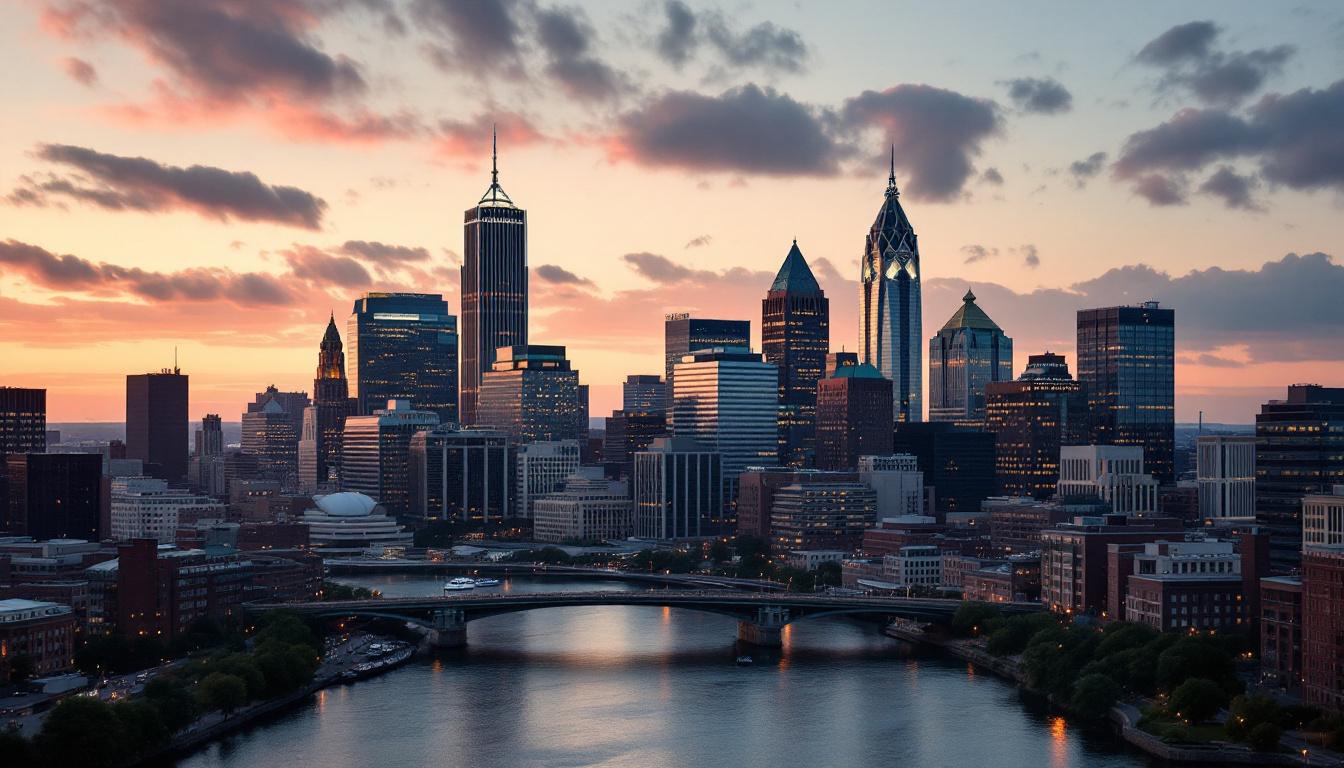
Boston is the densest concentration of corporate decision-making in the United States measured per square mile. The Route 128 belt, the Kendall Square biotech cluster, the Financial District asset-management corridor, and the Harvard-MIT recruiting axis collectively generate one of the highest corporate trip volumes per capita in the country. For travel managers, the city presents a distinct operating problem: a constrained downtown hotel footprint, a single international airport with capacity limits, weather-driven service disruption from November through March, and several anchor events that pull rates 200 to 400 percent above baseline for predictable windows.
This guide consolidates the operational variables a corporate travel program needs to manage Boston efficiently in 2026: airport routing for inbound visitors, hotel inventory by submarket, dining venues for deal teams, event-venue capacity for internal meetings and external conferences, demand-peak calendars, and per-diem benchmarks against GBTA published figures.
Airport Routing: Logan and the Inbound Visitor Problem
Boston Logan International (BOS) is the only commercial airport within reasonable proximity of the corporate core. Manchester (MHT) and Providence (PVD) function as overflow for leisure traffic but rarely make sense for business itineraries given the ground-time penalty. Worcester (ORH) carries limited JetBlue service and is operationally irrelevant for downtown-bound visitors.
Logan handled approximately 42.8 million passengers in 2025 and is projecting modest growth into 2026, constrained primarily by gate capacity rather than runway throughput. The five-terminal layout (A, B, C, E plus the new International Building C-E connector) is a meaningful operational consideration for international arrivals because Customs and Border Protection processes only in Terminal E, and connecting passengers face a re-check sequence that adds 45 to 90 minutes to itinerary planning.
Inbound Routing from Major Origin Markets
For West Coast corporate visitors, the transcontinental options are concentrated on JetBlue, American, Delta, United, and Alaska. JetBlue Mint dominates premium leisure but the Mint Studio cabin on A321LR aircraft has been increasingly absorbed into pharma and consulting itineraries given the lie-flat product on the SFO-BOS and LAX-BOS routes. Delta One on the 757-200 operates the same markets and carries the SkyTeam corporate-deal anchor for procurement programs holding Delta volume agreements.
From Europe, BOS is one of the better-connected secondary US gateways. British Airways, Virgin Atlantic, Aer Lingus, Lufthansa, Swiss, Air France, KLM, ITA, Iberia, TAP, and El Al all operate scheduled service, with the IAG group (BA, Aer Lingus, Iberia) carrying the largest share of premium-cabin biotech and finance traffic. The Aer Lingus DUB pre-clearance routing is materially useful for European visitors transiting onward to West Coast destinations: pre-clearing US Immigration in Dublin reduces BOS arrival friction substantially when connecting through to SFO or LAX.
From Asia, BOS direct service is thinner. Cathay Pacific operates HKG-BOS, Japan Airlines flies NRT-BOS, and Air China runs PEK-BOS, but most Asia-origin corporate traffic still routes through JFK, EWR, or ORD. For deal-team itineraries originating in Singapore, Tokyo, or Seoul, travel managers should evaluate whether a same-day connection through JFK saves enough total trip time to justify the connection complexity given LGA-BOS shuttle alternatives.
Ground Transport from BOS
The Sumner and Ted Williams Tunnels are the only road links between Logan and downtown, and both are demand-constrained at peak hours. Rush-hour transit times to the Financial District run 25 to 45 minutes by car or rideshare against an 8-minute baseline at off-peak. The MBTA Silver Line bus service runs from Logan terminals directly to South Station with a free transfer, providing a reliable 22-minute transit time that ignores tunnel congestion. For visitors staying in the Seaport, the Silver Line stops at World Trade Center and Courthouse stations and is consistently faster than rideshare during morning and evening peaks.
The Blue Line subway connection requires a shuttle bus from terminal curbside to Airport Station, then a 6-minute train ride to State Street or Government Center. For visitors with downtown meetings and minimal luggage, this is the fastest published option, though most corporate programs default to rideshare or pre-booked black car for executive-level travelers.
Black-car operators serving the Boston corporate market at scale include Boston Coach, Commonwealth Worldwide, and Dav El. Standard sedan rates run $115 to $145 one-way airport to downtown depending on time of day and corporate-account discount tier. For executives with sensitive travel-pattern requirements (M&A counterparties, board-level meetings), Commonwealth Worldwide carries the largest share of Fortune 500 corporate accounts in the market and maintains the most consistent driver vetting.
Submarket Geography: Where Corporate Boston Actually Lives
Boston’s corporate footprint splits across four primary submarkets, each with distinct hotel inventory, dining infrastructure, and meeting-venue characteristics. Understanding which submarket a visitor’s meetings cluster in is the single most important variable in hotel selection.
Financial District
The Financial District (also called the FiDi or Downtown Crossing) is the traditional banking, asset-management, and legal-services core. State Street Corporation, Eaton Vance, Wellington Management, John Hancock, and the major law firms (Ropes & Gray, Wilmer Hale, Goodwin, Mintz) anchor the submarket. The geography is compact, walkable in 12 to 18 minutes end-to-end, and well-served by the Orange and Red Line subway connections.
Hotel inventory in the Financial District skews business-traveler functional rather than luxury-trophy. The Langham Boston (the former Federal Reserve building on Post Office Square) and the Boston Harbor Hotel at Rowes Wharf are the two anchor luxury properties. The Langham reopened in 2021 following a $200 million renovation and now competes effectively with Back Bay flagships for senior-executive traffic. The Boston Harbor Hotel retains the waterfront-proximity argument but the interior product is aging.
The Godfrey Hotel, Ames Hotel, and Kimpton Marlowe Cambridge function as the mid-tier business-traveler tier. The Ames is operationally tired and most corporate programs have shifted away from it. The Hyatt Centric Faneuil Hall is the consistent reliable choice in the $350 to $450 weeknight range for non-senior travelers.
Back Bay
Back Bay is the larger luxury submarket and the default location for corporate visitors whose meetings cluster around the Copley Square corridor, the John Hancock Tower, the Prudential complex, and the consulting offices along Boylston Street. McKinsey, BCG, Bain (technically Brookline-adjacent but Back Bay-functional), Liberty Mutual, and the larger life-sciences corporate-affairs offices anchor the submarket.
Back Bay hotel inventory is the deepest in the city. The Four Seasons Boston on Boylston Street facing the Public Garden is the longest-tenured luxury anchor and retains the largest share of senior-executive long-stay business. The Mandarin Oriental Boston, attached to the Prudential complex, competes for the same traveler profile and has the advantage of direct enclosed-walkway access to Saks Fifth Avenue, the Prudential offices, and the Hynes Convention Center. The Mandarin’s Press Lounge and signature dining at Bar Boulud have become consistent deal-meeting venues.
The Ritz-Carlton Boston Common (on the Common’s south edge) is a hybrid Back Bay-Theater District property that competes with the Four Seasons on the same corridor. The Newbury Boston (the former Taj Boston, before that the Ritz) reopened in 2021 following a comprehensive renovation by Major Food Group’s hospitality arm and now operates as one of the strongest food-and-beverage hotels in the city. The Newbury’s Contessa rooftop and the Street Bar have become anchor venues for industry dinners and post-meeting drinks.
XV Beacon, technically on Beacon Hill but operationally Back Bay-adjacent, retains a distinct boutique-luxury identity. The 63-room property is the smallest luxury inventory in the corporate core and the rate ceiling reflects scarcity rather than amenity depth. It functions well for senior executives who want privacy and a residential feel rather than a flagship-hotel experience.
The Lenox Hotel, Fairmont Copley Plaza, Westin Copley Place, and Sheraton Boston anchor the larger group-rooms tier. The Fairmont Copley Plaza retains the historical-property argument and remains a default location for legal and accounting industry events. The Westin and Sheraton at the Hynes Convention Center are the closest large-block options for Hynes-anchored events.
Seaport District
The Seaport (formerly the Innovation District) is the newer corporate growth submarket and has become the operational center of gravity for tech, life-sciences corporate offices that don’t need wet-lab proximity, and the larger venture-capital and growth-equity firms. General Electric headquartered there briefly, Vertex Pharmaceuticals anchors the corner of Fan Pier, and the Amazon, PwC, and State Street campus footprints have continued to expand.
Hotel inventory in the Seaport is newer, more uniform in product, and oriented toward business-traveler operational efficiency rather than character. The Envoy Hotel (Autograph Collection), Yotel Boston, Aloft Boston Seaport, and the Element by Westin are the mid-tier inventory. The Westin Boston Seaport District and the Renaissance Boston Waterfront are the larger group-rooms options adjacent to the Boston Convention and Exhibition Center. The Omni Boston Hotel at the Seaport opened in 2021 and added 1,054 rooms to the submarket, materially shifting the BCEC group-booking math.
For senior executives, the Seaport luxury inventory is thinner. The St. Regis Residences Boston includes a hotel component but the inventory is small. Most senior travelers with Seaport meetings still hotel in Back Bay and accept the 12 to 18 minute rideshare commute, particularly for itineraries with non-Seaport secondary meetings.
Cambridge and Kendall Square
Cambridge is operationally a separate market for corporate travel purposes. The Kendall Square biotech cluster (the largest concentration of pharma, biotech, and venture-backed life-sciences companies in the world) anchors the submarket, with Moderna, Biogen, Vertex’s wet-lab operations, Takeda, Sanofi, Novartis Institutes for Biomedical Research, the Broad Institute, and the Whitehead Institute all within a six-block walking radius. The MIT campus directly adjoins Kendall and provides the academic-industry interface that defines the submarket.
Hotel inventory in Kendall is constrained. The Kimpton Marlowe, Royal Sonesta Boston, Boston Marriott Cambridge, Le Meridien Cambridge, and the Hyatt Regency Cambridge are the primary options. The Charles Hotel in Harvard Square is the more upscale anchor 1.8 miles away and remains the default for Harvard-affiliated visits and Harvard Business School recruiting. None of these are luxury-flagship product. For biotech corporate visitors who need both Kendall lab visits and Back Bay or downtown meetings, most programs hotel in Back Bay and accept the 15 to 25 minute commute via Red Line subway (15 minutes) or rideshare (15 to 30 minutes depending on Longfellow Bridge traffic).
Encore Boston Harbor and Everett
Encore Boston Harbor in Everett opened in 2019 as the only resort-casino property in the metropolitan area. The 671-room Wynn-operated property functions partially as a leisure-and-events anchor and partially as a higher-end conference venue for groups that want a discrete off-campus location. Corporate-meeting use of Encore has grown more than initially projected: the property’s meeting-space floorplate, the on-site dining inventory, and the relative distance from the central business district (which is itself a feature for confidential meetings) have made it a useful option for board offsites, banker-investor dinners, and mid-sized corporate conferences. The ground-time penalty from Logan is approximately 20 minutes off-peak and 35 to 45 minutes at peak, which has limited Encore’s appeal for itineraries with downtown secondary meetings but supports its use for dedicated multi-day events.
Dining Infrastructure for Deal Teams
Boston’s high-end dining inventory is sized for the corporate-meeting demand it serves. The biotech IPO and M&A cycle, the asset-management industry, and the consulting deal-team flow generate consistent reservation demand at a small set of venues that have become functional extensions of the deal-making infrastructure.
Menton
Barbara Lynch’s Menton in Fort Point (technically adjacent to but functionally part of the Seaport) is the city’s tasting-menu anchor and the default location for board-dinner and investor-dinner events that require the highest-tier room. The Chef’s Table and the private dining room are the operational deal-team spaces and book three to six weeks ahead for prime weekday slots during BIO conference week and JPM derivative weeks. The four-course prix fixe runs $135 per person and the seven-course tasting $185, before pairings. Menton retains the city’s most consistent staffing seniority in service.
No.9 Park
Barbara Lynch’s other primary venue, No.9 Park on Beacon Hill facing the State House, is the longer-tenured deal-meeting venue in the corporate core. The property has operated since 1998 and remains a reliable choice for State House lobbying-related dinners, Financial District-anchored M&A meetings, and the larger legal-industry events. The private dining rooms accommodate parties of 8 to 24, which fits the operational size of most deal teams. Reservations book two to three weeks ahead at baseline.
Sorellina
Sorellina in the Trinity Place complex behind the John Hancock Tower is the Back Bay’s primary deal-team Italian venue. The property has been a Bostonian Group anchor since 2007 and carries a different demand profile than Menton or No.9 Park: louder, less formal, more suitable for celebratory dinners and team-builds than for confidential negotiation. Mistral (the older Bostonian Group property in the South End) plays the same role for the longer-tenured Back Bay and South End-resident corporate clients. Both venues book 7 to 14 days ahead for weeknight prime time.
Grill 23 & Bar
Grill 23 on Berkeley Street is the operational anchor for the financial-services dining sector in Back Bay. The property has been continuously operated since 1983 and retains the highest share of asset-management and consulting weekly dinner traffic of any single venue in the city. The wine program is the deepest in the corporate core. The private dining rooms (the Wine Room, the Boardroom, and the larger downstairs spaces) accommodate parties from 12 to 60 and are the default off-site venue for legal-firm associate-recruiting dinners, banker pitch dinners, and consulting-firm partner events. Reservations for the main dining room book at lower friction than the private rooms (4 to 10 days for weeknight) but private room availability for prime weeks (JPM week, Harvard Business School recruiting, BIO conference) is constrained 30 to 60 days out.
Kendall Square and Cambridge Dining
The dining infrastructure in Kendall Square and Cambridge serves a different operational need than the downtown corporate-dining venues. Most biotech deal meetings cluster around lunch and early dinner given the science-team schedule, and the venues optimize for proximity to lab buildings rather than for trophy-restaurant atmospherics.
In Kendall, Loyal Nine (Cambridge Crossing), Bambara at the Kimpton Marlowe, and the Catalyst Restaurant in Technology Square handle the everyday biotech corporate lunch traffic. For higher-tier dinners, most Kendall-anchored events still relocate to Back Bay or Beacon Hill venues. The exception is when the meeting attendees include senior MIT or Harvard faculty, in which case the Charles Hotel’s Henrietta’s Table or Harvest in Harvard Square become the operational choice given the academic-side preference for the Harvard footprint.
Oleana in Inman Square, Giulia in Porter Square, and Toscanini’s (for the academic-meeting coffee tradition that anchors much of MIT industry-relations) are the secondary venues that show up regularly on corporate-visitor itineraries despite not being downtown-proximate.
Event Venues: Boston Convention and Exhibition Center versus Hynes
Boston’s two anchor convention facilities serve materially different event scales and corporate use cases. Understanding which venue a target event is using is a primary input to hotel selection, ground-transport planning, and travel-policy compliance.
Boston Convention and Exhibition Center
The BCEC in the Seaport opened in 2004 and provides 516,000 square feet of contiguous exhibit space and 160,000 square feet of meeting space. It is the larger venue and hosts the city’s biggest single events: the BIO International Convention rotation, the HIMSS healthcare technology conference rotation, the Society for Neuroscience annual meeting when it cycles through Boston, and the American Society of Hematology annual meeting (ASH) which has used the BCEC for several recent cycles.
The BCEC’s hotel-room anchor is the adjacent Westin Boston Seaport District (1,054 rooms), the Renaissance Boston Waterfront (471 rooms), and the Omni Boston Hotel at the Seaport (1,054 rooms). The Aloft and Element by Westin (330 rooms combined) provide overflow. For events drawing 15,000+ attendees, the Seaport submarket hotel inventory is fully absorbed and overflow extends to Back Bay, Cambridge, and even the Route 128 corridor properties.
Ground access to the BCEC is the Silver Line bus directly from Logan (22 minutes to World Trade Center station, then a 6-minute walk) or rideshare from any downtown submarket (8 to 18 minutes depending on Seaport Boulevard traffic). The walk from Westin and Omni properties is 4 to 7 minutes. The BCEC is the operationally easier venue for travel managers handling out-of-town attendees because the airport-to-venue transit is the city’s most reliable.
Hynes Convention Center
The Hynes Convention Center in Back Bay provides 193,000 square feet of exhibit space and 70,000 square feet of meeting space, making it roughly one-third the BCEC’s exhibit capacity. The Hynes hosts the smaller and more specialized events: the New England Vascular Society, the New England Direct Marketing Association annual conference, and the larger university-affiliated academic conferences that prefer the Back Bay corporate corridor over the Seaport.
The Hynes’s hotel-room anchor is the connected Sheraton Boston (1,220 rooms) and the adjacent Westin Copley Place (803 rooms). The Hilton Boston Back Bay, Marriott Copley Place, and the Lenox Hotel provide additional inventory within a five-minute walk. For events drawing under 8,000 attendees, the Hynes-anchored hotel inventory is sufficient. The Hynes is the operationally easier venue for corporate attendees with Back Bay-clustered secondary meetings because the venue-to-corporate-meeting walking transit is minimal.
The longer-running Massachusetts Convention Center Authority discussion about consolidating event volume at the BCEC and repurposing the Hynes for non-convention use has been periodically active but the Hynes continues to operate at its historical scale and the 2026 event calendar remains stable.
Other Corporate Meeting Venues
For corporate meetings that don’t fit the convention-center scale, the city’s hotel-based meeting space is the operational alternative. The Mandarin Oriental, Four Seasons, and Boston Harbor Hotel all carry meaningful ballroom and breakout-room inventory for 50 to 400 person events. The InterContinental Boston on the waterfront has the largest hotel-based ballroom in the city and handles many of the larger industry awards dinners and association annual meetings. The Boston Park Plaza and the Sheraton Boston handle larger associate-recruiting and corporate-training events at lower rate tiers.
Off-property meeting venues with growing corporate-use volume include the State Room at 60 State Street (the Longwood Venues property that handles many of the senior-executive recognition events), the Boston Public Library’s McKim Building, the Museum of Fine Arts (for biotech investor-relations and pharma corporate-affairs events), and the Isabella Stewart Gardner Museum (for the smaller, higher-touch hosted events). Encore Boston Harbor’s meeting space inventory has continued to grow into the corporate-offsite use case despite the geographic friction.
Demand-Peak Calendar: When Boston Hotel Rates Disconnect from Reality
Boston’s corporate-travel demand calendar has several anchor events that pull hotel rates 200 to 400 percent above baseline for predictable windows. Travel-policy compliance during these windows requires either advance booking (typically 90+ days for senior-executive rates) or acceptance that the corporate-rate program will not deliver against published GBTA per-diem ceilings.
JPM Week and the Adjacent Biotech-Conference Cycle
The J.P. Morgan Healthcare Conference itself runs in San Francisco in early January, but the cascade of associated meetings, investor-dinner events, and bilateral deal meetings that the conference triggers spills over to Boston in a meaningful way during the two weeks before and after the San Francisco conference. The Boston-based biotech and pharma leadership teams that travel to JPM compress their pre-conference investor preparation work and post-conference deal-meeting follow-up into the bracketing weeks, pulling rates at Back Bay and Seaport luxury properties up by 40 to 80 percent during what would otherwise be the lowest-demand weeks of the calendar year.
The more directly impactful Boston-anchored events during this cycle are the smaller investor-relations roadshow days that biotech companies time around the JPM cycle: BIO CEO and Investor Conference (which moved to New York several years ago but retains Boston-pre-event activity), the Truist Securities Life Sciences Summit, the Cantor Fitzgerald Global Healthcare Conference, and the various Cowen, Stifel, and Leerink-hosted bilateral meeting days. The cumulative effect is a January-February rate environment in Back Bay and the Seaport that runs 30 to 50 percent above the lowest-rate weeks of March and November.
BIO International Convention
The BIO International Convention rotates among Boston, San Diego, Philadelphia, and a small number of other cities, returning to Boston approximately every third year. The 2026 BIO International Convention runs in Boston June 8-11, 2026, at the BCEC. The event draws approximately 16,000 to 20,000 attendees and absorbs essentially the entire Seaport hotel inventory, the BCEC-proximate Back Bay properties (Westin Copley, Sheraton Boston, Marriott Copley), and the larger Cambridge inventory.
Hotel rates during BIO week run 250 to 400 percent above baseline. Four Seasons Boston published rates during BIO week 2026 have already been quoted at $1,650 to $2,400 per night for standard rooms, against a low-demand baseline of $625 to $850. The Mandarin Oriental, Newbury, and Ritz-Carlton track similar ratios. Even mid-tier properties (the Envoy, the Yotel, the Aloft) run $650 to $950 against $245 to $385 baselines.
For travel managers, BIO week is the highest-priority advance-booking event of the Boston calendar year. Programs that book BIO week inventory under 60 days out typically cannot deliver any rate within published per-diem ceilings and must rely on company-block availability negotiated by the event-sponsoring biotech firms or accept policy exception costs.
Harvard and MIT Recruiting Cycles
The Harvard Business School and MIT Sloan recruiting cycles drive a sustained demand pattern from September through November for corporate-recruiting visitor traffic. The HBS recruiting calendar peaks during the October-November interview-blitz weeks when the consulting firms, banks, private equity firms, and growth-equity funds rotate through campus on an essentially industrialized schedule. The MIT Sloan calendar runs slightly later, with the heaviest recruiting traffic in November and early December.
The hotel-demand pattern is concentrated at the Charles Hotel in Harvard Square (the default property for HBS-visiting senior executives), the Kimpton Marlowe and Royal Sonesta in Kendall (for MIT-visiting executives), and the Back Bay luxury properties for the firms that prefer to hotel their senior partners downtown and shuttle them to campus. Rates during the peak weeks run 30 to 60 percent above baseline at the Charles Hotel and 15 to 35 percent above baseline at the downtown anchors. The pattern is predictable enough that consulting-firm and bank travel-procurement teams negotiate block-rate agreements two to three years in advance.
Boston Marathon and the April Demand Cluster
Boston Marathon weekend (April 19-21, 2026) is the city’s largest pure-leisure demand event and absorbs most of the available hotel inventory in Back Bay and the Financial District. The corporate-travel relevance is primarily defensive: travel managers should avoid scheduling non-essential corporate visits during marathon weekend and should expect that any necessary visits will run at 150 to 250 percent of baseline rates. The marathon also drives elevated demand for the surrounding two weeks given the marathon-tourism extended-stay pattern.
Graduation Cycles
Harvard, MIT, Boston University, Boston College, Northeastern, and the smaller universities collectively run graduation ceremonies across a tight three-week window from mid-May through early June. The cumulative hotel demand is materially constraining: travel managers planning corporate visits during late May should expect rate elevation of 40 to 80 percent and inventory constraints across all submarkets. Corporate-visit scheduling against this window should be avoided when itinerary flexibility exists.
GBTA Per-Diem and the Corporate-Rate Math
The Global Business Travel Association publishes per-diem benchmarks that travel programs use as policy reference points. For Boston in 2026, the GBTA published lodging per-diem is $271 for the standard rate period (October through July at the federal General Services Administration rate level that most corporate programs reference), with elevated rates during certain peak months.
The operational reality is that the published per-diem rates do not reflect actual transacted rates at the corporate-traveler-relevant hotel inventory for senior-executive travel. Average daily rates at the Four Seasons, Mandarin Oriental, and Ritz-Carlton during standard demand weeks run $625 to $1,100 for non-suite inventory. The Newbury, Boston Harbor Hotel, and Langham run $485 to $850. The Liberty Hotel runs $385 to $625. Even the mid-tier inventory (Westin Copley, Sheraton Boston, Hilton Back Bay) runs $315 to $545 weeknight during standard weeks.
For Boston-specific travel-policy design, most corporate programs operate one of three frameworks: a single per-diem ceiling that triggers exception approval for any booking above ceiling (which generates high exception volume in Boston), a tiered per-diem structure that allows different rate ceilings by traveler seniority level (which is the most common approach for finance and consulting firms operating in the city), or a corporate-rate-program-based framework that accepts negotiated corporate rates at preferred properties as policy-compliant regardless of per-diem ceiling (which is increasingly the default at large enterprise programs).
GSA published per-diem for Boston for fiscal year 2026 runs $258 standard months, $343 October peak, and $397 September peak. Most corporate programs ignore the GSA peaks as too restrictive for the actual demand environment and rely on annual rate-negotiated agreements with their three to five preferred properties in each submarket.
Weather and Service Disruption
Boston weather generates predictable operational friction from November through March. The city averages 43 inches of snowfall per winter with significant year-over-year variance, and the snow-driven flight-cancellation pattern at Logan is one of the most consistent disruption sources in the US corporate-travel calendar.
For travel managers, the operational implications are: build itinerary buffers of 60 to 90 minutes for departure flights December through February when weather forecasts indicate active systems; expect 5 to 12 percent of December-February Logan flights to cancel or delay materially during any given week with active weather; maintain backup hotel inventory holds for cancelled-flight scenarios where travelers must extend; and plan rideshare and black-car timing with weather-buffer margins of 30 to 60 percent above clear-weather baseline.
The MBTA subway and commuter rail systems handle snow with mixed reliability. The Green Line trolley network is the most weather-sensitive and routinely experiences delays of 20 to 45 minutes during snow events. The Red, Orange, and Blue Lines are more reliable. Rideshare surge pricing during snow events routinely runs 3.5x to 6.5x baseline during peak hours.
Operational Recommendations for 2026
Boston’s corporate-travel program design in 2026 should reflect several specific operating realities: the BIO International Convention week of June 8-11 is the highest-priority advance-booking event of the year and any non-BIO-attending corporate visits during that week should be postponed or scheduled at Cambridge or Route 128 corridor properties where rate elevation is lower; the September and October recruiting peak at HBS and MIT Sloan should drive 60-day advance booking discipline for any visits in those windows; the November through March weather period requires structural itinerary buffers and elevated backup-inventory planning; and the JPM-bracketing weeks in early January and late January should be flagged as elevated-rate periods despite the absence of a Boston-anchored event.
For visitor-routing decisions, the BOS-routed itinerary is operationally superior to MHT, PVD, and JFK-LGA-shuttle alternatives in all but the narrowest set of edge cases. The Aer Lingus DUB pre-clearance routing remains the most useful international-arrival option for European visitors with onward-connecting itineraries.
For hotel selection, the submarket-meeting clustering is the dominant variable. Senior-executive visitors with mixed Back Bay and Seaport meetings should default to Back Bay luxury properties (Four Seasons, Mandarin Oriental, Newbury, Ritz-Carlton, XV Beacon) with rideshare to Seaport secondary meetings. Visitors with primarily Kendall-anchored itineraries should accept the Cambridge inventory limitations and book the Charles Hotel, Royal Sonesta, or Kimpton Marlowe. Visitors with BCEC-anchored conference attendance should book the Westin Boston Seaport District, Omni Boston Hotel, or Renaissance Boston Waterfront for walking-distance access.
For dining-reservation infrastructure, Menton, No.9 Park, Sorellina, Mistral, and Grill 23 are the operational anchor venues for deal-team dinners and require advance booking of 14 to 60 days depending on demand cycle. Corporate-program OpenTable concierge integration and AmEx Centurion dining-team support both materially reduce the friction on prime-week reservations.
Frequently Asked Questions
What is the most reliable airport routing for a senior executive flying into Boston for a same-day meeting?
For a same-day meeting, the BOS direct routing is materially superior to alternatives. JetBlue Mint and Delta One transcontinental service from SFO, LAX, and SEA provides lie-flat product on early-morning departures that arrive BOS by mid-afternoon for evening-meeting fit. From New York, the Delta Shuttle and American Eagle frequent service from LGA provides 60 to 90 minute total transit including curb-to-curb car service from Logan. Itineraries that route via JFK or EWR introduce connection variability that is rarely justified by fare savings for senior-executive same-day travel.
How should travel managers handle the BIO International Convention demand peak in June 2026?
BIO week (June 8-11, 2026) is the highest-rate week in the Boston calendar year. For attending corporate teams, advance booking through the BIO official housing block or through company-specific block-rate agreements with Seaport and Back Bay properties should occur 120 to 180 days before the event. For non-attending corporate visits to Boston during BIO week, postpone if possible; if not, expect rates at 250 to 400 percent of baseline and consider Cambridge, Route 128 corridor, or Encore Boston Harbor properties where rate elevation is lower. The exception-approval volume during BIO week is the highest single week of the Boston travel-policy year for most programs.
Which hotel submarket should we default to for biotech corporate visitors?
Submarket selection should follow the visitor’s meeting concentration rather than industry default. Biotech corporate visitors with Kendall Square wet-lab meetings should hotel at the Royal Sonesta Boston, Kimpton Marlowe, or Charles Hotel for walking-distance access. Biotech corporate-affairs visitors with non-lab meetings (legal, banking, investor-relations) should hotel in Back Bay (Four Seasons, Mandarin Oriental, Newbury) and accept the 15-minute Red Line or rideshare commute to Kendall. Biotech visitors attending BCEC-anchored conferences (BIO, ASH, others) should hotel in the Seaport (Westin Boston Seaport District, Omni Boston Hotel) for walking access. The mixed-itinerary default is Back Bay luxury inventory with intra-day ground transport.
What is the corporate-rate negotiation leverage at Boston hotels in 2026?
Negotiation leverage varies materially by submarket and demand-cycle position. Back Bay luxury properties (Four Seasons, Mandarin Oriental, Ritz-Carlton, Newbury) have continued to operate at high occupancy through 2024 and 2025 and offer limited negotiation flexibility for programs under $2 million annual room-night volume. The mid-tier Back Bay inventory (Westin Copley, Sheraton Boston, Hilton Back Bay) offers more flexibility, typically 8 to 15 percent off published rates for programs above $750,000 annual volume. The Seaport mid-tier inventory (Envoy, Yotel, Aloft) is the most flexible, with negotiation latitude of 12 to 22 percent for moderate-volume programs. Cambridge and Kendall inventory negotiation is constrained by the small total inventory and the consistent biotech-corporate demand.
How should travel managers plan around Boston winter weather disruption?
Build structural buffers into itinerary planning from late November through mid-March. Departure flights during this window should be booked 90 to 120 minutes earlier than the standard clear-weather buffer would suggest, and same-day return itineraries from Boston should generally be avoided for meetings ending after 4 PM. Maintain a small backup-inventory reserve at preferred hotels for cancellation-extension scenarios. For visitors traveling from outside the Northeast who are weather-inexperienced, brief them on rideshare surge timing and MBTA subway reliability before departure. The cumulative weather-disruption cost for Boston-routed corporate travel December through February typically runs 8 to 14 percent above clear-weather baseline cost when measured across full programs.
What is the realistic per-diem ceiling for senior-executive Boston travel in 2026?
The GBTA and GSA published per-diem rates substantially underprice the actual transacted rates at the hotel inventory that senior executives use. Realistic policy-compliant ceilings for senior-executive Boston travel in 2026 run $750 to $950 weeknight standard rate at the Back Bay luxury inventory (Four Seasons, Mandarin Oriental, Ritz-Carlton), $525 to $725 at the second-tier luxury (Newbury, XV Beacon, Boston Harbor Hotel, Langham), and $385 to $545 at the mid-tier business inventory (Liberty Hotel, Hyatt Centric Faneuil Hall, Loews Boston). Most enterprise programs handle Boston as a designated high-rate market and operate per-diem ceilings 40 to 80 percent above the GBTA published reference, or rely on the corporate-rate-negotiated program structure where policy compliance is defined against the negotiated rate rather than against a per-diem ceiling.