The bottom line: IATA projects 7% YoY growth in managed corporate travel spend for 2026, with aggregate volume expected to exceed 2019 levels for the first time — driven by M&A, intra-Asia recovery, and a structural shift toward premium cabin spend.
The International Air Transport Association has released its 2026 corporate travel outlook, projecting seven percent year-on-year growth in managed business travel spend and forecasting that aggregate corporate travel volume will exceed pre-pandemic 2019 levels for the first time since the disruption that began in March 2020.
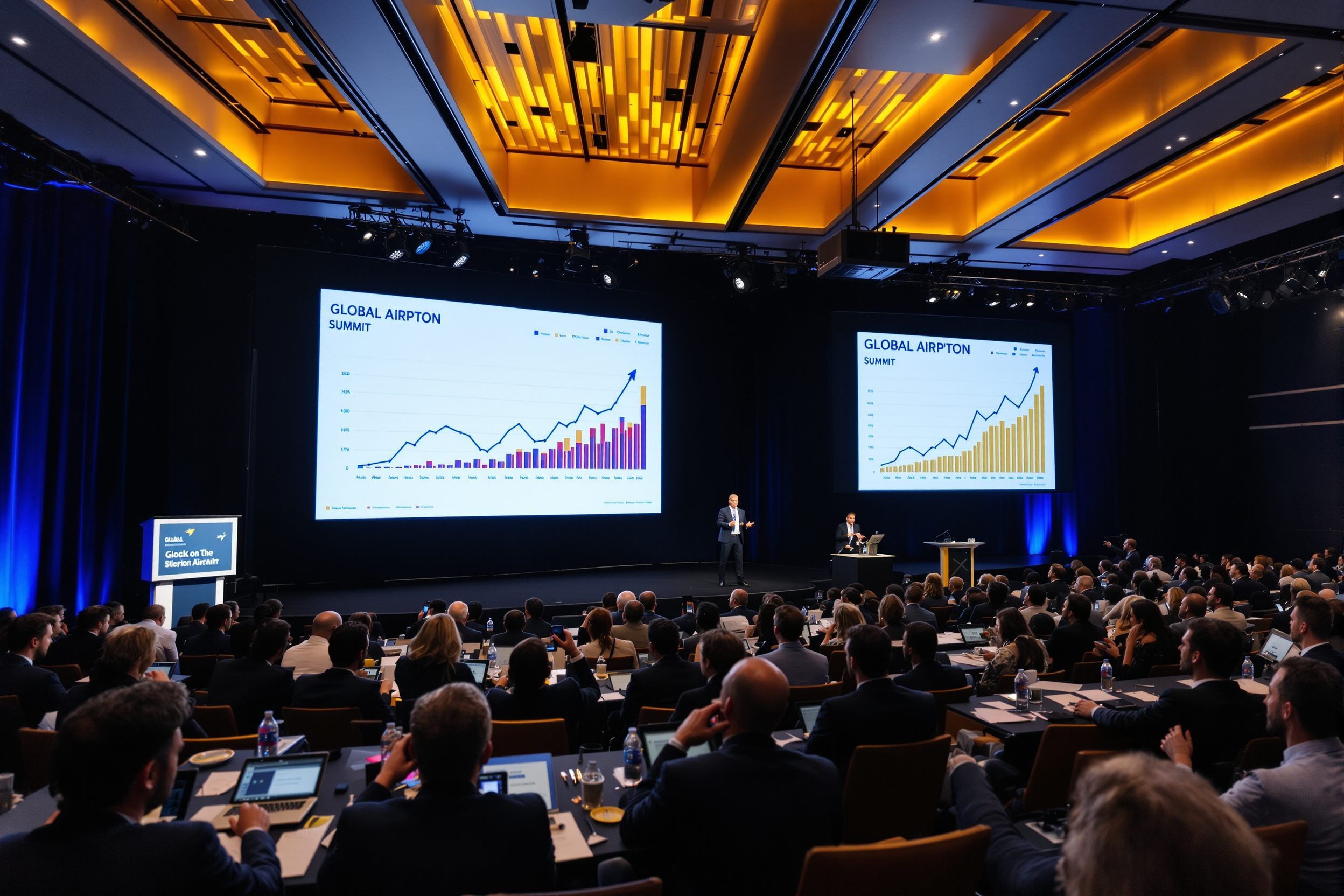
The report, published at IATA’s annual aviation summit in Geneva this week, draws on transaction-level data from the four largest global travel management companies and complements that view with primary survey data from corporate travel managers at 1,840 multinational firms.
What’s driving the recovery
Three factors are highlighted as the principal drivers. First, sustained growth in cross-border merger and acquisition activity, particularly in financial services and technology, has driven a step-change in investment banking and law firm travel. Second, the strong recovery of intra-Asia business travel — particularly between China, Japan, Korea, Singapore, and India — is now adding meaningfully to the overall picture after lagging the trans-Atlantic recovery for several years. Third, the gradual normalization of work patterns has reduced the friction associated with multi-day customer-facing trips.
Notably, the report notes that internal travel — meetings between employees of the same firm — remains substantially below 2019 levels and is unlikely to return to those volumes within the forecast horizon. The shortfall in internal travel is structural rather than cyclical, reflecting the persistence of distributed work patterns and the maturity of remote collaboration tools.
Where the growth is concentrated
By region, North America is forecast to grow at five percent, Europe at six percent, and Asia-Pacific at eleven percent — the latter representing the strongest growth in any major region globally. The Middle East continues to outperform with forecast growth of nine percent, supported by the emergence of Saudi Arabia as a major new corporate travel destination and the continued growth of UAE-based hub carriers.
By industry, technology and financial services lead the growth profile. Pharma and life sciences are expected to grow at six percent, supported by clinical trial expansion and a return to in-person investigator meetings. Energy and natural resources, after several years of underperformance, are projected to grow at four percent.
Premium cabin demand
One of the report’s more notable findings concerns the structural shift toward premium cabin travel. Across all regions, the share of corporate spend allocated to business class is forecast to rise from 38 percent in 2024 to 43 percent in 2026 — a meaningful shift driven both by formal premium-cabin policy adjustments at large multinationals and by the de facto effect of constrained economy supply on long-haul routes.
The shift is most pronounced on transatlantic routes, where business class loads have remained at over 84 percent year-round through the past four quarters — a level that historically has supported premium yield growth in the high-single-digit range.
Cost pressures
The forecast comes against a background of continued cost pressure. IATA’s index of average corporate-negotiated airfares has risen 14 percent over the past 24 months, with hotel rates up 11 percent over the same period. Most of that increase is now baked into 2026 baseline budgets at major firms, but the report warns that further upside risk remains if oil prices firm in the second half of the year.
For corporate travel managers, the IATA outlook reinforces the operational reality that 2026 will be characterized by sustained demand against a structurally constrained supply environment — a combination that argues for continued investment in negotiation, policy clarity, and traveler well-being.