
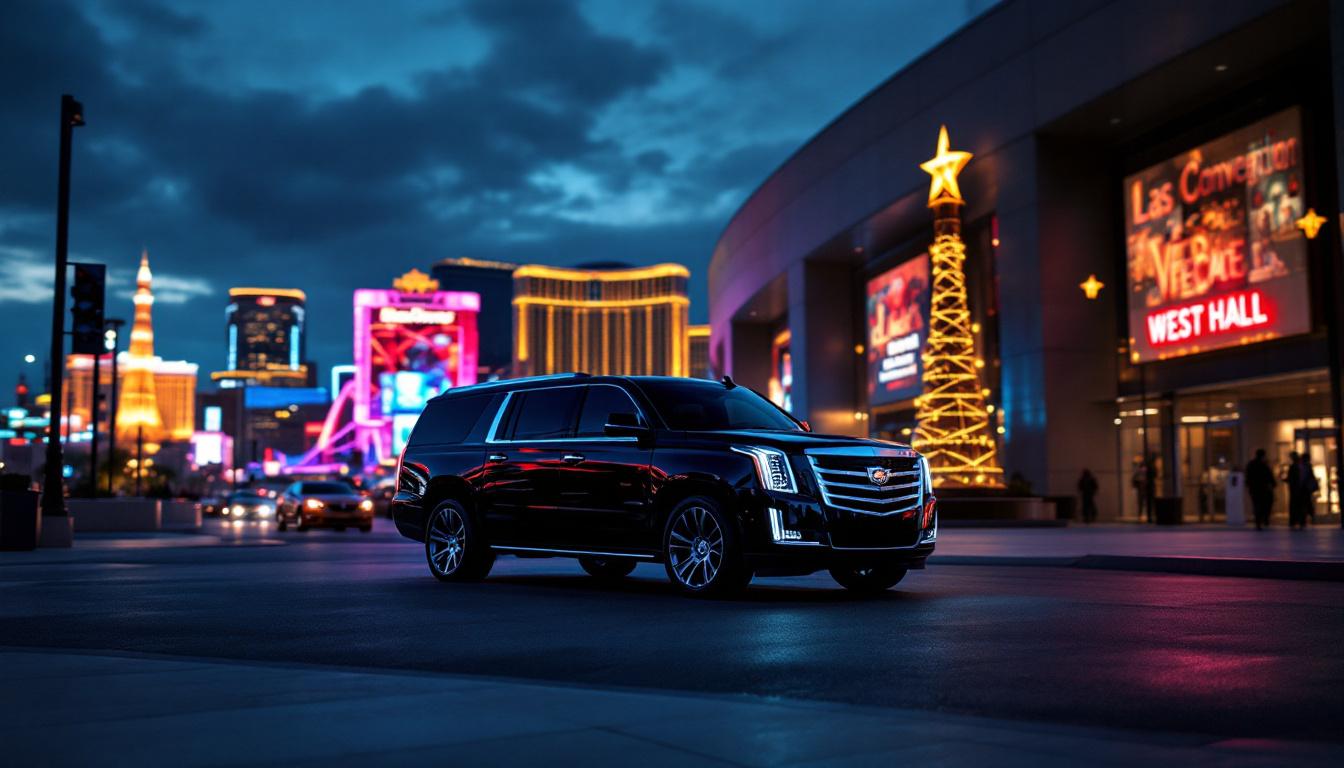
The National Association of Broadcasters Show returns to the Las Vegas Convention Center the week of April 11-15, 2026, and for the third consecutive year the event will operate at a scale that meaningfully distorts citywide travel inventory, ground transportation capacity, and exhibitor freight throughput. NAB has historically drawn between 60,000 and 90,000 registered attendees in its post-pandemic configuration, with the Association reporting 61,250 verified attendees and 1,200+ exhibiting companies for the 2024 edition and a registration uptick disclosed for 2025. For corporate travel managers booking media-company employees into Las Vegas during NAB, the operational reality has diverged sharply from the headline attendance numbers — and the divergence is what this analysis is concerned with.
The Business Travel Authority desk has spent the preceding eight weeks working sources inside three broadcast networks, two streaming-platform infrastructure teams, two systems integrators, the Las Vegas Convention and Visitors Authority public-affairs office, and operations leadership at two of the four largest ground-transport providers serving Harry Reid International. The picture that emerges is one of an event whose logistics complexity has outrun the standard corporate-travel playbook that most media companies still apply to it. NAB is not CES, and it is not IBC, and the failure to model it correctly has cost media companies meaningful budget and meaningful staff productivity for at least three booking cycles.
The Scale Problem: What NAB Actually Does to Las Vegas
NAB Show 2026 will occupy roughly 1.1 million net square feet of exhibition space across the Las Vegas Convention Center’s Central, North, and West Halls, with the West Hall — completed in 2021 at a reported construction cost of $989 million — serving as the primary venue for the Capitalize and Create content categories. The LVCVA has publicly stated that the West Hall expansion brought total LVCC exhibition capacity to approximately 2.5 million square feet, making it the second-largest exhibition complex in North America after McCormick Place. NAB does not fill the entire complex, but it fills enough of it — and concentrates enough high-density technical exhibits in West Hall — to produce surge conditions that radiate outward through the Strip’s hotel inventory, the airport, and the ground transportation network.
The Las Vegas Convention and Visitors Authority publishes monthly visitor volume statistics, and the April readings show a consistent pattern. April 2024 recorded approximately 3.39 million visitors to Las Vegas, with NAB Show week alone contributing roughly 60,000 incremental attendees concentrated in a four-day arrival window. Hotel occupancy across the Las Vegas market reached 84.8% in April 2024 per LVCVA data, but the convention-corridor subset — the cluster of properties within walking distance or short-shuttle range of LVCC — operated effectively at sell-out for the Sunday-through-Tuesday peak. Average daily rate compression during NAB has historically run 180% to 240% above the prior-Sunday baseline, with rate elasticity most pronounced at properties marketing themselves to convention-attached corporate travelers.
The implication for travel managers is structural: NAB is not a single-property event and cannot be priced as one. The room block strategy that works for IBC in Amsterdam — anchor two or three properties and absorb modest spillover — produces predictable failure in Las Vegas because the inventory math does not support it. Corporate room blocks contracted at the point of NAB Housing’s opening in late November typically clear at a 30% to 50% discount to walk-up rates by the Monday of show week, but contracted blocks are also frequently undersized relative to actual attendee headcount, with the gap absorbed at spot-market rates that vendor commitments do not anticipate.
Harry Reid International Airport: The Surge Window
Harry Reid International Airport (LAS) processed 58.4 million passengers in calendar year 2024, marking the second consecutive year of record-setting throughput per Clark County Department of Aviation data, and the facility continues to operate at a level that the airport’s master plan describes as approaching practical capacity. The 2024 figure exceeded the 2019 pre-pandemic baseline by roughly 11%, and LAS has now been the eighth-busiest U.S. airport for two consecutive reporting periods.
NAB Show concentrates arrivals into a tighter window than most Las Vegas conventions. The arrival pattern recorded in 2024 and 2025 shows the bulk of attendee inbound traffic landing on the Saturday and Sunday immediately preceding the Monday opening, with exhibitor and integrator personnel arriving earlier — typically the prior Wednesday through Friday to manage freight delivery, booth construction, and equipment commissioning. Departures concentrate on the Wednesday afternoon following the Tuesday keynote programming and on the Thursday evening following exhibitor breakdown, producing two distinct surge peaks that the airport’s terminal operations and the ground-transport curbsides absorb on a compressed timeline.
The TSA checkpoint wait-time data published by LAS shows checkpoint A at Terminal 1 reaching extended-wait status — 30 minutes or longer — during three discrete windows in NAB 2025 week: Sunday between 11:00 and 14:00 (inbound peak rebound), Wednesday between 12:00 and 16:00 (departure peak one), and Thursday between 16:00 and 21:00 (departure peak two). For corporate travelers booking return flights, the Thursday-evening departure window is the most operationally challenging, because it coincides with the end of exhibitor breakdown and with general-attendee departure tail, producing checkpoint queues that have historically pushed TSA PreCheck wait times above 25 minutes — a threshold that effectively eliminates the value of PreCheck for short-fused itineraries.
LAS Surge Windows: NAB 2025 Reference Data
| Window | Day / Local Time | Throughput Indicator | Operational Implication |
|---|---|---|---|
| Inbound Peak | Sunday 11:00-15:00 | Baggage claim 1-3 capacity | Curbside ground hold > 18 min |
| Inbound Spillover | Sunday 18:00-22:00 | Terminal 3 international arrivals | Rideshare staging full |
| Midweek Departure | Wednesday 12:00-16:00 | Checkpoint A, B, C | TSA standard > 35 min |
| Late Departure Peak | Thursday 16:00-21:00 | Checkpoint B (Terminal 1) | PreCheck > 25 min |
| Tail Departure | Friday 06:00-10:00 | International / red-eye | Curb relatively manageable |
Source: Aggregated from LAS published checkpoint data and TBA desk interviews with two ground-transport dispatch operations, March 2026.
The practical implication is that corporate travel policy for NAB attendees should treat the Thursday-evening departure as a constrained resource, not as a default. Several media-company travel teams interviewed for this piece have moved to a working assumption of Friday-morning departures for any attendee whose Thursday programming runs past 14:00 local, with the incremental room-night cost absorbed against the productivity and missed-connection risk of forcing a Thursday-evening flight. The math is straightforward: an additional Thursday-night room at peak NAB rates of $480 to $720 net of resort fee compares favorably to the cost of a rebooked Friday-morning flight after a Thursday miss, which typically clears at $900 to $1,400 incremental in domestic premium cabins.
Las Vegas Convention Center West Hall: The Freight Choreography
West Hall is where NAB’s most operationally complex exhibitors stage their work, and West Hall’s freight choreography is what most corporate-side travel programs fail to model. The hall opened in June 2021, brought 600,000 square feet of net exhibition space onto LVCC’s footprint, and was designed with freight-handling features — including expanded dock capacity and integrated marshaling yards — specifically intended to reduce the freight-bottleneck conditions that had historically constrained large technical shows. NAB has been the primary beneficiary of those design choices.
Freight at NAB moves on a calendar that begins approximately 14 days before show open. Targeted freight delivery — the term of art for time-windowed dock assignments — runs from the Tuesday of the preceding week through the Saturday immediately before show, with marshaling-yard staging concentrated in the four days immediately preceding open. The Las Vegas Convention Center’s marshaling operation, run by the LVCVA’s official services contractor, handles roughly 8,000 to 12,000 freight pieces during NAB week, with peak truck arrivals at the gold-lot marshaling yard exceeding 400 trucks per day during the Wednesday-Thursday-Friday concentration of the preceding week.
Exhibitor staff travel — distinct from corporate-attendee travel — is structured around this freight calendar. Booth-build crews, system integrators, and exhibitor technical leads typically arrive on the Wednesday or Thursday preceding show open, which places their inbound travel a full four to five days ahead of the corporate-attendee surge. The hotel-inventory implication is that exhibitor staff and integrator personnel pre-absorb a meaningful share of the lower-rate, longer-stay inventory at properties west of the Strip and at airport-adjacent properties, leaving the late-arriving corporate attendee population to compete for a thinner inventory pool at a steeper rate curve. Travel programs that recognize this dynamic and either book early on a non-cancellable basis or accept off-Strip placement for non-VIP attendees have outperformed those that have not, and the gap is widening.
LVCC West Hall: Freight and Move-In Calendar, NAB 2026
| Date | Phase | Primary Activity | Hotel Demand Profile |
|---|---|---|---|
| Tuesday April 1 | Pre-targeted | First major freight delivery window | Integrator-only |
| Wednesday-Friday April 2-4 | Targeted freight | Marshaling yard peak | Build-crew arrivals |
| Saturday April 5 | General freight | Booth-build acceleration | Build crews + early exhibitors |
| Sunday-Monday April 6-7 | Move-in | Booth completion and rehearsal | Exhibitor leadership arrivals |
| Tuesday April 7 | Final move-in | Pre-show walkthroughs | First corporate attendees |
| Wednesday April 8 | Press / Conference | Conference programming opens | Corporate attendee inflow |
| Thursday-Sunday April 9-12 | Pre-show / Show | Press conferences, opening | Peak hotel demand |
| Monday April 13 | Show Day 1 | Exhibition halls open | Sustained peak |
| Wed-Thu April 15-16 | Show / Move-out | Show close + breakdown begins | Departure surge |
The freight choreography also affects ground transportation. Marshaling-yard truck traffic peaks on Paradise Road, Swenson Street, and Convention Center Drive between 06:00 and 11:00 daily during the move-in week, producing predictable congestion that affects rideshare and taxi routings between LAS and LVCC. Corporate travel programs that schedule attendee airport pickups in the 09:00-11:00 window during the immediately preceding week — typically for executive walkthroughs, sponsor activations, or media briefings staged ahead of public show open — have repeatedly underestimated ground-transit times by 30% to 60%. The mitigation is straightforward: stage executive arrivals before 08:00 or after 11:30 local, or accept a routing via the I-15 corridor that bypasses the Convention Center Drive bottleneck.
Strip Inventory: Wynn, Encore, Aria, Cosmopolitan and the Mid-Tier Pressure Curve
The inventory pressure that NAB generates on the Strip is concentrated at properties whose convention positioning matches the show’s attendee profile, which skews toward broadcast, post-production, content distribution, and adjacent technology sectors with relatively high per-attendee discretionary spend. The four properties most consistently referenced in corporate travel briefings — Wynn, Encore, Aria, and Cosmopolitan — collectively control roughly 11,700 rooms within a defined Strip subset that NAB attendees disproportionately book.
Wynn Resorts’ Las Vegas property operates Wynn Las Vegas (2,716 rooms) and Encore (2,034 rooms) as a paired complex, with the Wynn Convention Center expansion completed in 2020 adding 430,000 square feet of meeting space immediately adjacent to LVCC’s North Hall via the Wynn-LVCC pedestrian connection. The property’s positioning makes it the highest-demand Strip inventory for NAB exhibitors and corporate attendees with senior-tier travel policies; rate compression at Wynn during NAB week has been the steepest in the comparison set, with published rack rates exceeding $1,100 net of resort fee for the Monday and Tuesday show-peak nights in recent cycles.
Aria, operating 4,004 rooms within the MGM Resorts portfolio, sits at a slightly farther geographic remove from LVCC — approximately 3.2 miles via Las Vegas Boulevard — but compensates with the convention infrastructure of the adjacent ARIA Convention Center expansion (200,000 square feet added in 2018) and with what the property markets as its CityCenter integration. The Aria room block is the most frequently contracted by media-company corporate travel teams within the comparison set, and the property’s NAB-week inventory absorption is the most predictable on a year-over-year basis. Rate compression at Aria has historically tracked 150% to 200% of baseline, modestly less severe than Wynn but still well above the citywide composite.
Cosmopolitan, with 3,033 rooms, occupies a positioning that has shifted under MGM ownership since the 2022 acquisition, and the property’s NAB-week inventory has been more variable than the others in the comparison set. The terraced suite inventory in particular — roughly 600 keys across the East and West towers’ terrace categories — is heavily booked by exhibitor hospitality programs and by entertainment-vertical attendees, with a different demand profile than the convention-attached corporate population. Corporate travel teams report less success contracting predictable blocks at Cosmopolitan than at Aria, and the property is more frequently used for executive-tier and entertainment-marketing placements than for general attendee blocks.
Strip Property Inventory and NAB-Week Rate Behavior
| Property | Approx. Keys | Distance to LVCC | Baseline-to-Peak Rate Multiple | Corporate Block Predictability |
|---|---|---|---|---|
| Wynn Las Vegas | 2,716 | 0.5 mi (skybridge) | 2.4x - 2.8x | High but at top of market |
| Encore | 2,034 | 0.5 mi (skybridge) | 2.3x - 2.7x | High but at top of market |
| Aria | 4,004 | 3.2 mi | 1.8x - 2.2x | Highest for media-company blocks |
| Cosmopolitan | 3,033 | 2.9 mi | 1.9x - 2.4x | Variable, hospitality-heavy |
Source: TBA desk analysis of corporate travel manager interviews, March 2026, cross-referenced with publicly disclosed property room counts.
The mid-tier pressure curve — properties between $250 and $450 net during NAB week — is where most of the corporate attendee inventory clears, and this is also where booking discipline matters most. The Las Vegas Hotel Association tracks rate behavior at this tier, and the consistent finding across recent NAB cycles is that the booking curve for mid-tier convention-attached inventory steepens roughly six weeks before show, with rate increases of 12% to 18% per week becoming common in the final five weeks before open. Travel programs that defer booking past the 90-day window are no longer absorbing modest rate inefficiency; they are accepting a structurally different price point, and in some cases an off-Strip placement that the program’s service-level expectations were not built to accommodate.
Exhibitor Freight Handling vs. Corporate Attendee Programs: Two Different Travel Products
One of the persistent misalignments in NAB corporate travel planning is the conflation of exhibitor logistics with corporate-attendee logistics. They are functionally distinct travel products, served by different cost structures, and corporate travel teams that route both through the same managed-travel program produce predictable cost overruns on the exhibitor side and predictable service failures on the attendee side.
Exhibitor freight handling at NAB operates on the trade-show industry’s standard model, which is unfamiliar to most general corporate travel managers. The Convention Service Contractor designated by the show — currently Freeman for NAB Show — controls the marshaling yard, the dock assignments, and the material-handling pricing that exhibitors absorb on a per-hundredweight basis. Material handling charges, often called drayage in industry shorthand, run between $135 and $185 per hundredweight for standard targeted-window freight, with surcharges for after-hours delivery, off-target arrival, and special-handling categories that can push the effective rate above $300 per hundredweight for non-compliant deliveries. For an exhibitor with a 40-foot trailer of booth equipment and demo hardware, total drayage exposure can exceed $40,000 before any travel cost for staff is contemplated.
The travel that wraps around this freight is necessarily structured to support it. Booth-build crews stay multiple weeks; technical commissioning leads arrive a full week before show open and depart on the Friday or Saturday after move-out; and the cost structure of these stays — typically negotiated as extended-stay rates at properties not on most corporate programs’ preferred-property lists — has more in common with project-services lodging than with executive travel. Properties west of the Strip on Spring Mountain Road, along Sammy Davis Jr. Drive, and in the Convention-Center-adjacent corridor on Paradise Road absorb most of this inventory at rates that, while elevated during NAB week, run well below the headline Strip rates.
Corporate attendee programs, by contrast, are structured around the conference-and-meetings portion of NAB rather than the exhibition floor’s operational substrate. Attendees from media companies typically arrive on the Saturday or Sunday immediately before show open, stay three to four nights, and depart on Wednesday or Thursday. Their per-night spend is concentrated at the Strip’s convention-tier properties, their ground-transport patterns are heavily weighted toward the LAS-to-Strip-to-LVCC triangle, and their service expectations match enterprise-grade managed-travel norms rather than project-services pragmatism.
When media companies route both populations through the same managed-travel framework, the typical failure mode is either over-application of executive-tier service expectations to the exhibitor-staff population (producing 30% to 50% cost overruns) or under-application of attendee-tier service standards to senior attendees (producing the most common form of NAB travel complaint — senior staff placed in inappropriate inventory because the program’s NAB room block was sized for total headcount rather than tiered by role). The corrective is a tiered program structure that separates exhibitor-services travel from corporate-attendee travel at the contracting stage, with the former routed through extended-stay-focused properties and the latter through the convention-Strip inventory.
Badge Tiers and the Conventional Corporate Per-Diem Policy
NAB Show’s badge structure is more granular than most corporate travel programs treat it. The show publishes badge tiers including Conference, Exhibits-Only, Sponsor, Press, and Exhibitor categories, with the Conference tier itself subdivided into Conference Flex Pass and various track-specific passes. Pricing for the Conference Flex Pass in the 2025 cycle ran $899 for early-bird registration and approximately $1,499 for on-site registration, with the Exhibits-Only pass running approximately $149 in the same cycle.
The badge tier matters for corporate per-diem policy because it correlates with the daily expense profile in ways that standard per-diem tables do not capture. A Conference Flex Pass attendee at NAB will typically log expenses at the high end of the meeting-and-conference per-diem range — official conference receptions, sponsor activations, and the higher-end restaurant inventory clustered around LVCC and the upper-Strip — while an Exhibits-Only attendee, often a business-development or partnerships staffer with a tighter day plan, will produce a lower per-diem profile but a higher ground-transport profile owing to the off-site meeting schedule.
The federal General Services Administration (GSA) publishes the Las Vegas per-diem rate that most corporate programs reference as a benchmark, and the GSA Las Vegas rate for FY2026 runs $172 for lodging and $86 for meals and incidentals (M&IE) at standard rates. The disconnect during NAB week is that the GSA lodging rate falls below market-clearing rates for convention-adjacent inventory by a factor of 2x to 4x, producing one of two policy outcomes: either the program waives the GSA cap for NAB week and absorbs market rates, or the program enforces the cap and pushes attendees to off-Strip inventory that materially degrades the attendee experience and increases ground-transport spend.
The cleaner approach, in the desk’s view based on practitioner interviews, is a NAB-specific per-diem table that explicitly recognizes the event’s rate environment and prices lodging at a defined multiple of the GSA baseline — typically 2.5x for convention-adjacent inventory and 1.8x for off-Strip placements — with meal per-diems elevated modestly to reflect the higher restaurant-spend baseline of the convention corridor. Programs that have moved to this structure report higher policy compliance, lower exception-request volume, and a meaningful reduction in the volume of post-trip expense-report friction that NAB has historically produced.
Sample NAB-Specific Per-Diem Structure (For Reference, Not Endorsement)
| Component | GSA Baseline (FY2026) | NAB Convention-Adjacent | NAB Off-Strip | Notes |
|---|---|---|---|---|
| Lodging | $172 | $430 | $310 | Net of resort fee where applicable |
| M&IE (Day 1 / Last) | $64.50 | $90 | $80 | 75% of full-day per IRS rules |
| M&IE (Full Day) | $86 | $120 | $105 | Elevated for convention corridor |
| Ground (per day) | Not separately captured | $85 | $65 | Includes LAS transfers amortized |
Source: GSA per diem rates published at gsa.gov; NAB-specific values illustrative based on TBA desk practitioner interviews.
Ground Transport: LAS to LVCC, and the Configurations That Work
The geography matters. Harry Reid International Airport sits roughly 3.8 miles south of the Las Vegas Convention Center via Paradise Road, and the route — Wayne Newton Boulevard north to Swenson Street north to Paradise Road north — covers the ground in 12 to 18 minutes under ordinary conditions and 28 to 42 minutes under NAB peak conditions. Two parallel routings exist: Las Vegas Boulevard (the Strip itself) and Interstate 15. The Strip routing is consistently the slowest during NAB week and should not be used for time-critical transfers. The I-15 routing is faster but adds approximately 1.4 miles to the total.
Four configurations dominate ground transportation between LAS and LVCC during NAB week, and each carries a distinct cost-and-reliability profile.
The first is rideshare — Uber and Lyft — which operates from the consolidated Terminal 1 Level 2M rideshare hub and the Terminal 3 Level 0 rideshare zone. Rideshare pricing during NAB peak windows runs at 1.8x to 2.6x baseline owing to dynamic pricing, with shared-ride options producing additional service variability. Median wait times during the Sunday inbound peak in NAB 2025 ran 14 to 22 minutes from request to vehicle assignment, with curbside-to-pickup adding another 6 to 11 minutes. Total LAS-to-Strip ground time including wait runs 45 to 70 minutes during peak windows, a meaningful departure from the brand promise of on-demand transportation.
The second is taxi, dispatched from the Terminal 1 Level 1 and Terminal 3 Level 0 taxi queues. Taxi pricing in Clark County is regulated by the Nevada Transportation Authority, and the metered rate structure produces predictable LAS-to-Strip fares of $26 to $42 depending on routing and destination. Taxis are notably faster on average than rideshare during NAB peak windows because the queue management and the curbside loading are more efficient, with median wait times of 6 to 12 minutes during the Sunday peak in NAB 2025.
The third is the corporate motorcoach and shared-charter program, contracted typically through a destination management company and used most often by companies sending more than 15 attendees on shared inbound flights. Motorcoach service from LAS to designated Strip pickup points runs $1,800 to $3,200 per coach per round trip during NAB week, with capacity of 47 to 56 passengers, producing a unit cost of $35 to $60 per attendee that is competitive with taxi pricing once driver gratuity and overhead are included. The reliability advantage is meaningful: motorcoach service operates on a scheduled basis from a dedicated curb position, which removes the rideshare wait variability entirely.
The fourth is contracted black car and private sedan service. Pricing runs $95 to $145 per one-way transfer for sedan service and $180 to $260 for SUV service, with NAB-week surcharges of 15% to 25% common. Travel programs that use this configuration for senior staff and executive-tier attendees absorb the premium against the reliability and the discretion benefits, and the cost is a small fraction of the totality of executive-tier NAB spend.
Ground Transport Comparison: LAS to LVCC, NAB 2025 Reference
| Mode | Median Cost (One-Way) | Median Wait (Sunday Peak) | Total Door-to-Door Time | Reliability Profile |
|---|---|---|---|---|
| Rideshare (UberX / Lyft) | $42 - $68 (surge) | 14-22 min | 45-70 min | Variable, surge-exposed |
| Taxi (metered) | $26 - $42 | 6-12 min | 28-44 min | Predictable, regulated |
| Motorcoach (shared) | $35 - $60 effective | Scheduled | 35-50 min | Highest reliability |
| Black car / Sedan | $95 - $145 | Scheduled | 25-40 min | Highest service tier |
The Las Vegas Monorail, while operationally available with stations at MGM Grand, Bally’s/Paris, Flamingo/Caesars Palace, Harrah’s/The Linq, Las Vegas Convention Center, Westgate, and SLS, does not serve Harry Reid International Airport directly, which materially limits its utility for LAS-to-LVCC transfers. The Monorail is, however, the single most efficient internal transit option between mid-Strip properties and LVCC during NAB, and corporate programs that build Monorail use into the attendee day plan — particularly for attendees lodged at Aria’s nearest interchange or at Cosmopolitan — recover meaningful productive time relative to taxi or rideshare loops on Las Vegas Boulevard. The Monorail’s NAB-week schedule typically extends operating hours, with the 2025 cycle running 06:00 to 02:00 daily during show week.
Alternate Hotel Inventory: Henderson and Summerlin
The off-Strip inventory pools that absorb NAB spillover are concentrated in two geographic clusters: Henderson, to the southeast of LAS and LVCC, and Summerlin, to the northwest. Both have absorbed an increasing share of NAB attendee placements over the preceding three booking cycles as Strip inventory has tightened and as the cost differential has widened.
Henderson, anchored by the M Resort (390 rooms) at the south end of Las Vegas Boulevard and by the Green Valley Ranch (495 rooms) and Westin Lake Las Vegas (493 rooms) properties further east, sits roughly 11 to 18 miles south of LVCC depending on the specific property. Drive times to LVCC during NAB week run 22 to 38 minutes via I-215 and I-15, with morning inbound traffic peaking between 07:30 and 09:00 local. The Henderson cluster’s rate environment during NAB has historically run 35% to 50% below convention-corridor rates, producing a meaningful arbitrage for travel programs willing to absorb the ground-transport overhead. Properties in Henderson are also closer to the Henderson Executive Airport (HND), which corporate flight departments occasionally use for private-aviation NAB attendees seeking to avoid LAS congestion.
Summerlin’s inventory is anchored by Red Rock Casino Resort & Spa (796 rooms), JW Marriott Las Vegas Resort & Spa (548 rooms), and the Westgate-managed properties in the Summerlin master-planned community. Drive times from Summerlin to LVCC during NAB week run 25 to 42 minutes via Summerlin Parkway and US-95, with the morning peak less acute than the Henderson inbound owing to the more dispersed origin geography of Summerlin-staying attendees. Rate behavior during NAB has historically tracked Henderson’s pattern with similar discount magnitude, and the resort-amenity inventory at Red Rock and JW Marriott has been an attractive option for attendee programs with a meaningful spousal-travel or extended-stay component.
Off-Strip Inventory: Drive Time and Rate Profile, NAB 2026
| Cluster | Anchor Properties | Approx. Drive to LVCC | NAB Rate vs. Strip Convention | Notes |
|---|---|---|---|---|
| Henderson | M Resort, Green Valley Ranch, Westin Lake LV | 22-38 min | 50-65% of Strip | I-215/I-15 routing |
| Summerlin | Red Rock, JW Marriott, Suncoast | 25-42 min | 50-65% of Strip | Summerlin Parkway / US-95 |
| Airport-Adjacent | Hilton LAS Convention, Renaissance LV | 8-14 min | 75-85% of Strip | Closest off-Strip cluster |
| Downtown / Fremont | Plaza, Golden Nugget, Circa | 18-26 min | 55-70% of Strip | Limited convention positioning |
The Henderson and Summerlin clusters are not substitutes for convention-corridor inventory for all attendee profiles. They work well for budget-controlled programs, for project-services and exhibitor-staff lodging, and for extended-stay configurations supporting setup and breakdown crews. They work less well for senior-tier attendees with dense schedules of cross-property meetings, for press and analyst attendees with constrained windows between activations, and for any attendee whose role requires repeated daily traverses between LVCC and Strip properties. Programs that recognize these constraints and tier the inventory accordingly recover the rate arbitrage without absorbing the productivity penalty.
Airline Capacity and the Booking Curve
Harry Reid International Airport is served by 32 passenger airlines per Clark County Department of Aviation data, with Southwest Airlines holding the largest market share at approximately 38% of LAS passenger volume. The airline-capacity environment for NAB week is generally healthier than the hotel-capacity environment because LAS is a destination airport with substantial connecting and origin-and-destination demand outside the convention calendar, but specific origin-pair pricing tightens predictably in the four weeks before show.
Origin-pair behavior during NAB 2025 showed the steepest fare compression on the New York / Newark, Los Angeles, San Francisco, and Atlanta routings — the four largest media-company origin clusters — with average fare increases of 35% to 80% above the prior-quarter mean for travel within the show-week window booked inside 21 days. Premium-cabin inventory cleared faster than economy on the long-haul routings (JFK / EWR / LGA, ATL, BOS), with first-class and domestic-business seats on Sunday afternoon and Wednesday afternoon flights typically sold out at the T-7 mark. Corporate travel programs that have moved NAB bookings to a T-60 minimum lead time on premium-cabin segments have absorbed predictable savings of 20% to 35% relative to T-21 booking patterns.
Charter and private-aviation activity into Henderson Executive Airport and into the FBO operations at LAS picks up meaningfully during NAB week. The North Las Vegas Airport (VGT) and Henderson Executive Airport (HND) together handle the bulk of business-aviation traffic, with NAB week typically producing a 40% to 60% increase in jet movements relative to the April baseline. Corporate flight departments running senior leadership into NAB on private aircraft should anticipate FBO congestion and longer ramp times during the Sunday inbound and Wednesday outbound peaks, with handler scheduling tightening within 14 days of show.
What This Means for Media-Company Travel Programs
Five operational implications consolidate the analysis above into actionable form for corporate travel managers serving media-company NAB programs.
First, the booking curve has moved meaningfully forward. The historical playbook of contracting room blocks at the December NAB Housing opening and absorbing modest spillover at spot rates has become uneconomic. Programs that have moved to a September contracting cycle, with non-cancellable inventory commitments at the convention-corridor properties and a tiered spillover plan into Henderson and Summerlin, have outperformed those that have not by an average of 18% to 24% on per-attendee total lodging spend in the past two cycles.
Second, the exhibitor-staff travel program should be operationally segregated from the corporate-attendee program. The lodging requirements, the trip lengths, the property tiers, and the cost-control levers are different enough that combining them in a single managed-travel structure produces predictable failure modes. The cleanest configurations the desk has reviewed run exhibitor-staff travel through a project-services framework — extended-stay properties, multi-week rates, simplified expense categories — while routing corporate-attendee travel through the firm’s enterprise-grade managed-travel platform.
Third, ground transportation should be planned as a constrained resource rather than as a commodity. The reliability differential between contracted motorcoach service, regulated taxi, and unregulated rideshare during NAB peak windows is large enough that defaulting attendees to rideshare produces routine schedule slips that compound across the day. Programs with a defined ground-transport tier — motorcoach for shared inbound flights, taxi or contracted sedan for individual transfers — recover meaningful productive time and reduce the most common form of NAB attendee complaint.
Fourth, the per-diem framework should be NAB-specific. General Las Vegas per-diem tables do not produce market-clearing outcomes for the convention corridor during show week. A documented NAB-specific structure, communicated to attendees at booking and to finance at expense-reconciliation, reduces post-trip friction and preserves the program’s policy authority.
Fifth, the departure-day planning should be treated as the most operationally fragile portion of the trip. Thursday-evening departures into a tightened TSA window, with rideshare surge pricing and Strip traffic at their peak, produce the largest single category of NAB travel disruption. The mitigation is either an earlier Wednesday departure for attendees whose programming allows it, or a Friday-morning departure with the incremental room night absorbed as a cost of program reliability.
NAB Show 2026 will run a familiar playbook in a Las Vegas market that has continued to densify around it. Media companies that have operationally evolved their corporate-travel approach to the show will continue to outperform those that have not, and the gap — measured in cost, attendee experience, and downstream productivity — has widened to a point where it is no longer a marginal program-management consideration.
Frequently Asked Questions
What are the official NAB Show 2026 dates and location?
NAB Show 2026 runs Saturday April 11 through Wednesday April 15, 2026, at the Las Vegas Convention Center, with exhibition halls open Monday through Wednesday and conference programming beginning Saturday. The show occupies Central, North, and West Halls at LVCC and includes adjacent activations at the Wynn Convention Center via the LVCC pedestrian connection. Official dates and the registration schedule are published at the National Association of Broadcasters’ show site at nabshow.com.
How early should media-company travel teams contract NAB hotel blocks?
The desk’s working recommendation, based on practitioner interviews and observed booking-curve behavior over the preceding three cycles, is to contract convention-corridor inventory by mid-September of the year preceding the show. The NAB Housing portal typically opens to attendees in late November or early December, but corporate group contracting through the show’s official housing partner and through direct-property channels is generally available earlier and produces meaningfully better rate and inventory outcomes. Programs deferring contracting past the year-end window have absorbed predictable rate compression of 20% to 35% above the September baseline.
What is the standard ground-transport configuration for corporate attendees from LAS to the Strip?
There is no single standard, and the appropriate configuration depends on the attendee tier and the program’s reliability requirements. For senior-tier attendees and any time-critical transfer, contracted black car or sedan service is the most consistent option, with pricing in the $95 to $145 range per one-way transfer including NAB-week surcharges. For grouped inbound flights, contracted motorcoach service produces the best unit economics at $35 to $60 per attendee while operating on a scheduled basis from a dedicated curb. Taxi service is a viable default for individual transfers given the Clark County metered-rate structure and the historically shorter wait times relative to rideshare during peak windows. Rideshare is the highest-variability option during NAB peak surge and should not be the default for time-critical transfers.
How does NAB-week hotel pricing compare to the federal GSA per-diem rate for Las Vegas?
The FY2026 GSA lodging rate for Las Vegas is $172, which falls well below market-clearing rates for convention-corridor inventory during NAB week. Strip convention-adjacent rates during peak NAB nights run 2x to 4x the GSA baseline, with mid-tier inventory clearing in the $350 to $480 range net of resort fee and upper-tier inventory clearing at $800 and above. Corporate programs typically address this gap either by waiving the GSA cap for NAB week or by establishing a documented NAB-specific lodging cap at a defined multiple of the GSA baseline, with the latter approach producing better policy-compliance outcomes in practice.
What off-Strip inventory clusters absorb NAB spillover bookings, and what are the trade-offs?
The two primary off-Strip clusters are Henderson, with anchor properties at M Resort, Green Valley Ranch, and Westin Lake Las Vegas, and Summerlin, with anchor properties at Red Rock Casino Resort & Spa and JW Marriott Las Vegas Resort & Spa. Both clusters offer rate environments approximately 35% to 50% below convention-corridor rates during NAB week, with drive times to LVCC of 22 to 42 minutes depending on the specific property and the traffic window. The trade-offs include longer commute times, reduced access to cross-property executive meeting opportunities, and an increase in per-day ground-transport spend that partially offsets the lodging arbitrage. These clusters work well for budget-controlled programs and for exhibitor-staff lodging; they work less well for senior attendees with dense intra-corridor meeting schedules.
What is the most operationally fragile portion of an NAB attendee’s trip from a travel-management perspective?
Based on observed patterns across recent NAB cycles, the Thursday-evening departure window is the single most operationally fragile portion of a typical NAB itinerary. This window coincides with end-of-exhibitor-breakdown traffic, general attendee departure tail, peak Strip congestion, and elevated TSA checkpoint wait times at LAS Terminal 1 that have pushed standard-lane waits above 35 minutes and PreCheck waits above 25 minutes during the corresponding window in recent cycles. The two most common mitigations are scheduling Thursday departures before 14:00 local, ahead of the surge window, or scheduling Friday-morning departures with the incremental room night absorbed as a cost of program reliability. The latter approach typically produces better outcomes for attendees whose Thursday programming runs into the afternoon and for any itinerary with a tight connection on the return.