
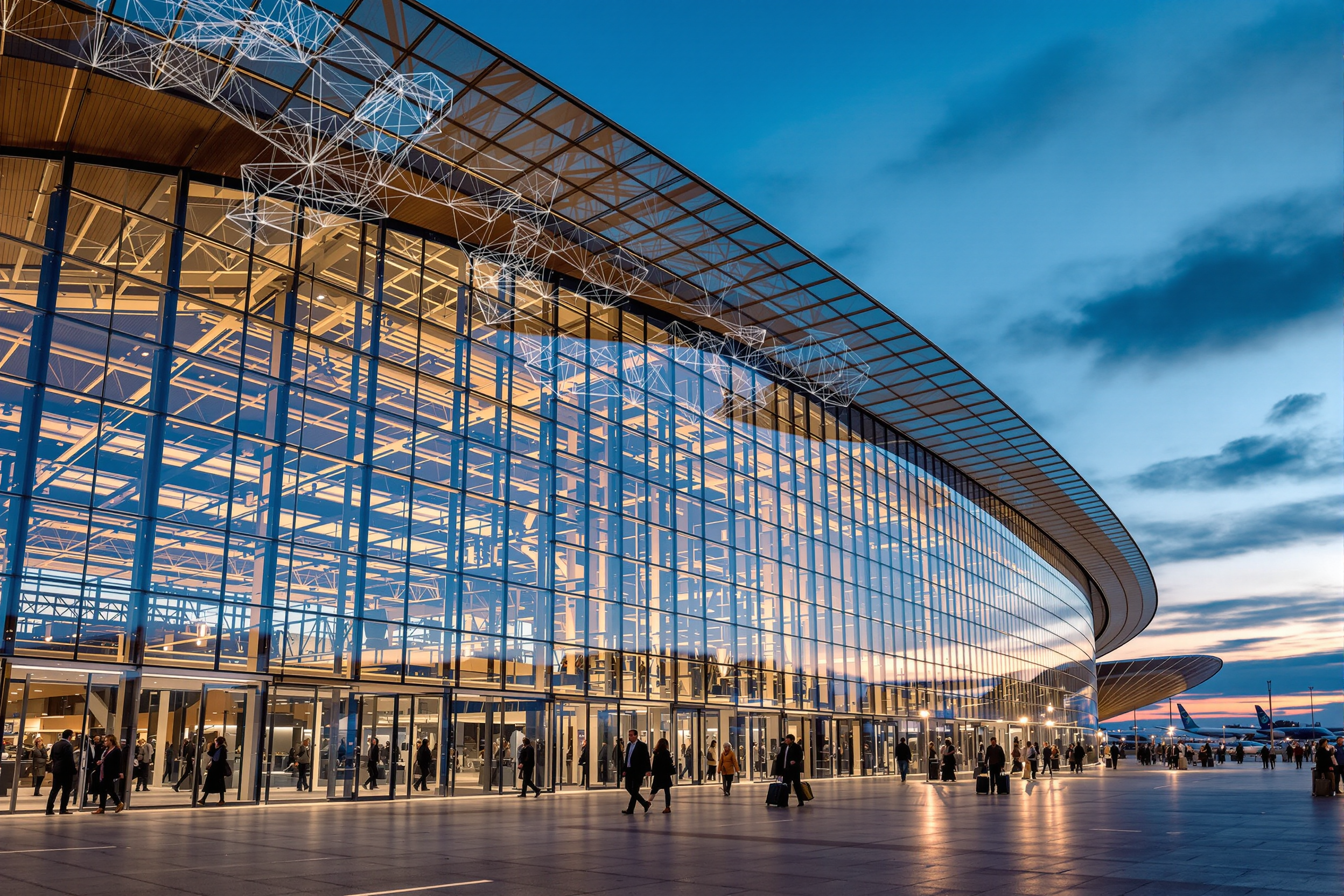
The bottom line: Heathrow has approved a £1.4 billion Terminal 2 expansion adding twelve gates, doubling security capacity, and introducing a 4,800-passenger-per-hour immigration hall — phase one opens early 2028.
Heathrow has formally given the green light to a £1.4 billion expansion of Terminal 2, ending three years of design work and securing the future of the Star Alliance hub at Britain’s busiest airport. Construction is scheduled to begin in earnest by the second quarter of next year, with the new pier and gates entering service in phases between 2028 and 2030.
The expansion adds twelve gates to the eastern side of the existing satellite, with capacity for two A380-class aircraft and ten widebody-compatible stands. Crucially, the project also doubles the size of the central security hall and introduces a redesigned baggage system capable of handling 6,400 bags per hour at peak — roughly forty percent above current throughput.
Resolving long-standing pinch points
Terminal 2, despite being the newest of Heathrow’s main terminals, has long suffered from constraints that frustrate the airlines based there. The current satellite is connected to the main building by a single underground transit, creating a single point of failure that has caused operational disruption on multiple occasions. The new pier introduces a second transit corridor with redundant motive power, addressing one of the most criticized aspects of the existing facility.
Star Alliance carriers — particularly Lufthansa, Air Canada, ANA, and United — have lobbied actively for the expansion, citing the inability to schedule simultaneous bank arrivals during the morning long-haul wave. With the new gates in place, the alliance will be able to operate up to fourteen long-haul arrivals between 0530 and 0830, compared with the current cap of nine.
Centralized arrivals immigration
Perhaps the most significant operational change is the move to a centralized arrivals immigration zone capable of processing 4,800 passengers per hour, up from the current peak of 2,900. The project includes 90 e-gate positions and twelve manned desks for non-eligible passport holders, with new generation facial recognition technology that the Home Office expects to reduce average processing time to 22 seconds per passenger for eligible holders.
For business travelers, the practical impact will be most visible in the reduction of immigration queue times during the early morning long-haul arrivals window — historically Heathrow’s most heavily criticized passenger experience pinch point.
Funding and timeline
The £1.4 billion price tag will be funded through a combination of regulated airport charges, retained earnings, and a new £600 million debt facility arranged with a consortium of UK and continental European banks. The Civil Aviation Authority has confirmed that the cost recovery profile is consistent with the H7 regulatory settlement.
Phase one — the eastern pier extension and four new gates — is targeted for an early 2028 opening to coincide with the Star Alliance’s 27th anniversary. The full project, including the centralized immigration hall and expanded baggage system, is expected to be complete by mid-2030. Construction is being managed by a joint venture of Mace and Ferrovial Construction.